Not to throw my husband under the bus, but I had to tug his sleeve about something the other day. It wasn’t malicious—he wasn’t trying to be a bad parent. At dinner, our son asked for a cookie and Ben told him to finish what was on his plate first. I couldn’t help but whisper-yell, “Don’t force him to eat it if he’s not hungry!” By the time evening faded, I can’t even remember whether Teddy got the cookie or not.
You might be wondering why I would argue with a harmless “finish your plate” moment.
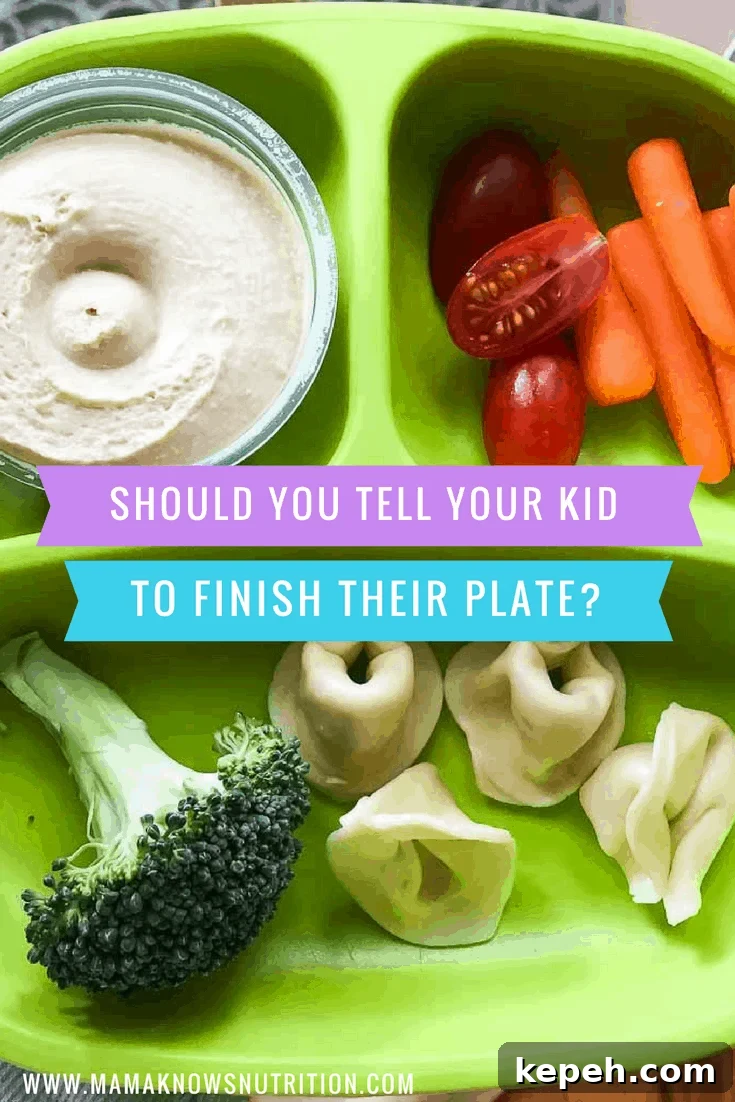
Healthy eating is about more than the foods we offer our children. How they learn to eat—the habits and cues they follow—matters just as much. Many of us are products of the “clean plate club.” If you were raised to always finish your food, you probably still eat past fullness on occasion because finishing was expected as a child. Maybe dessert was only allowed after the plate was empty, or you were praised for clearing your vegetables. Those early lessons can become lifelong patterns that are difficult to change.
I get why parents do it. When a child is picky, underweight, or seems uninterested in food, it’s natural to try to ensure they get enough to eat. The intention is caring: you want your child to have enough nutrition. But despite how counterintuitive it feels, routinely insisting that kids finish everything on their plate can work against them.
Toddlers and young children are at a crucial stage of developing their relationship with food. They are learning to recognize and respond to internal hunger and fullness cues—those internal messages that say, “I’m still hungry,” or “I’ve had enough.” Many adults struggle with stopping when they’re full precisely because those internal signals were ignored or overridden in childhood.
It’s hard to step back, but trusting a child’s innate ability to regulate intake is important. Consider your own appetite: you don’t eat the exact same amount every day. Some days you’re more active and hungrier; other days you may barely want a snack. Children are the same. There is no reliable way for a parent to know how much a child truly needs at a given meal—that’s their job to learn.
If you currently tell your kids to finish their plate, don’t feel guilty. Most parents do it out of love and concern. Instead of being hard on yourself, try a different approach: see what happens when you stop prompting them to finish. Treat it like an experiment. Offer balanced, appropriately portioned meals, serve food without pressure, and allow your child to decide how much to eat. Often, kids will eat enough over time to meet their needs.
Some practical tips to try:
- Serve consistent family meals and customary portion sizes without coaxing or forcing.
- Offer a variety of healthy foods and let children choose what and how much to put on their plate.
- Avoid using dessert as a reward for finishing the main meal; this can teach children to ignore fullness cues.
- Stay neutral during mealtime—provide structure (timing, choices) but avoid pressure or coaxing.
- Trust that a child’s appetite will balance out over days and weeks, not necessarily at each single meal.
In my next post I’ll address dessert: should children get dessert if they didn’t finish their meal or didn’t touch it at all? And is it better to serve dessert alongside the meal or afterward? I’ll share strategies to keep dessert from becoming a bargaining tool and to preserve children’s ability to listen to their bodies.