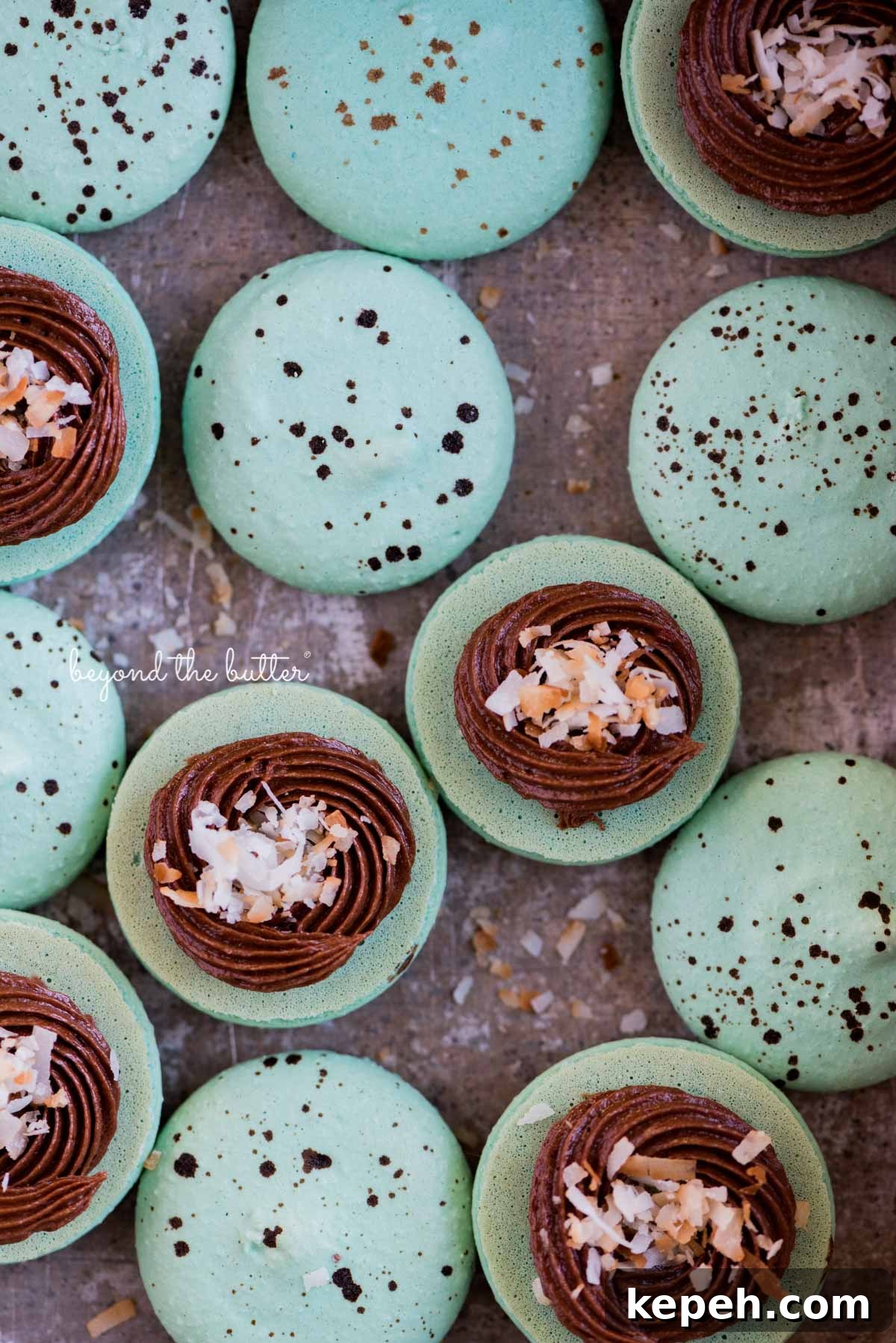
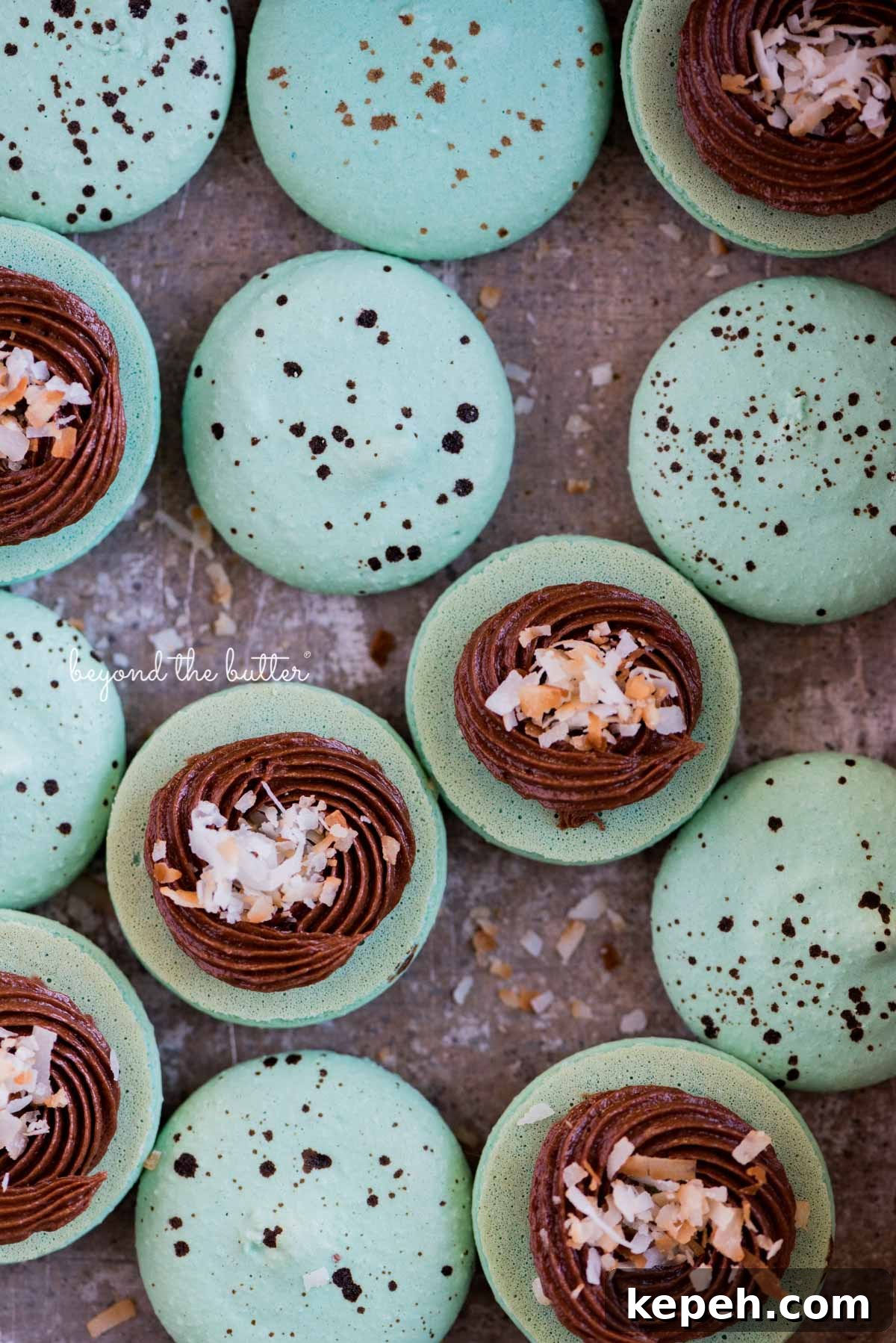
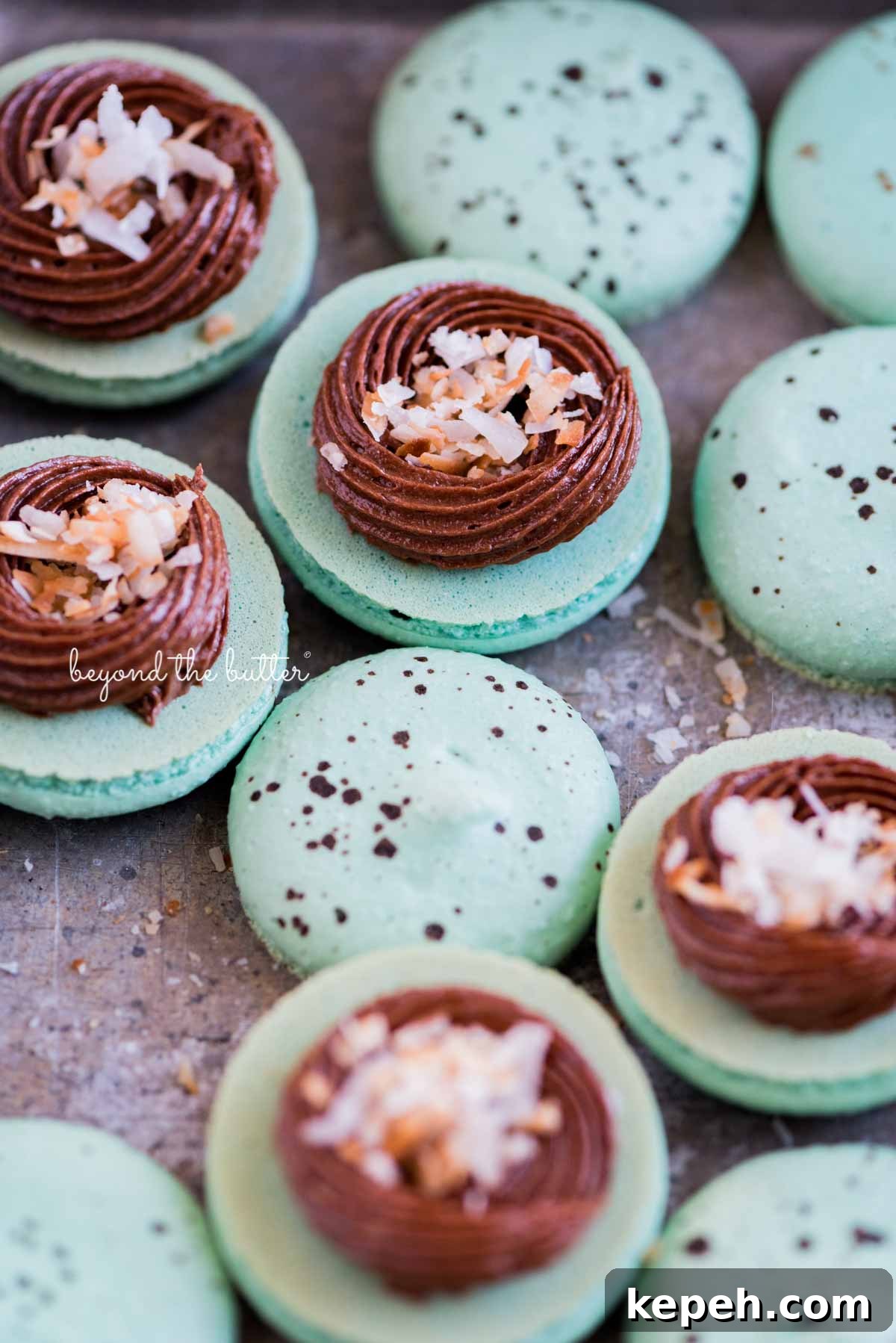
This Robin’s Egg Macarons recipe delivers crisp, vanilla-forward macaron shells tinted a pale robin’s-egg blue, filled with a silky milk chocolate fudge frosting and optional toasted coconut flakes. Light, elegant, and perfect for Easter or spring gatherings.
This post was created in partnership with Domino® Sugar. All opinions are my own. Thank you for supporting the brands that help make Beyond the Butter® possible.
Table of Contents
- Recipe Overview
- Ingredients Needed
- Toasting Coconut Flakes
- Essential Baking Tools
- Helpful Tips
- Storage
- Troubleshooting / FAQs
- More Macaron Recipes to Enjoy!
- Robin’s Egg Macarons Recipe
Recipe Overview
This recipe uses the Swiss meringue method, which is forgiving and a great place for beginners to start. I’ve tested Swiss, French, and Italian methods—Swiss consistently gives smooth, stable meringue and reliably beautiful shells.
The shells are flavored with pure vanilla and gently tinted robin’s-egg blue, with added speckles to mimic natural eggs. Alone they’re crisp on the outside and tender inside, but the milk chocolate fudge filling and toasted coconut make them truly memorable.
These macarons are a charming seasonal treat—great for Easter baskets, spring brunches, or special occasions.
Ingredients Needed
Macarons require relatively few ingredients, but accuracy matters. Weighing is recommended.
Macaron Shells
- Almond flour – sifted at least twice to remove lumps.
- Domino® powdered sugar – sifted at least twice; I also sift the almond flour and powdered sugar together once more.
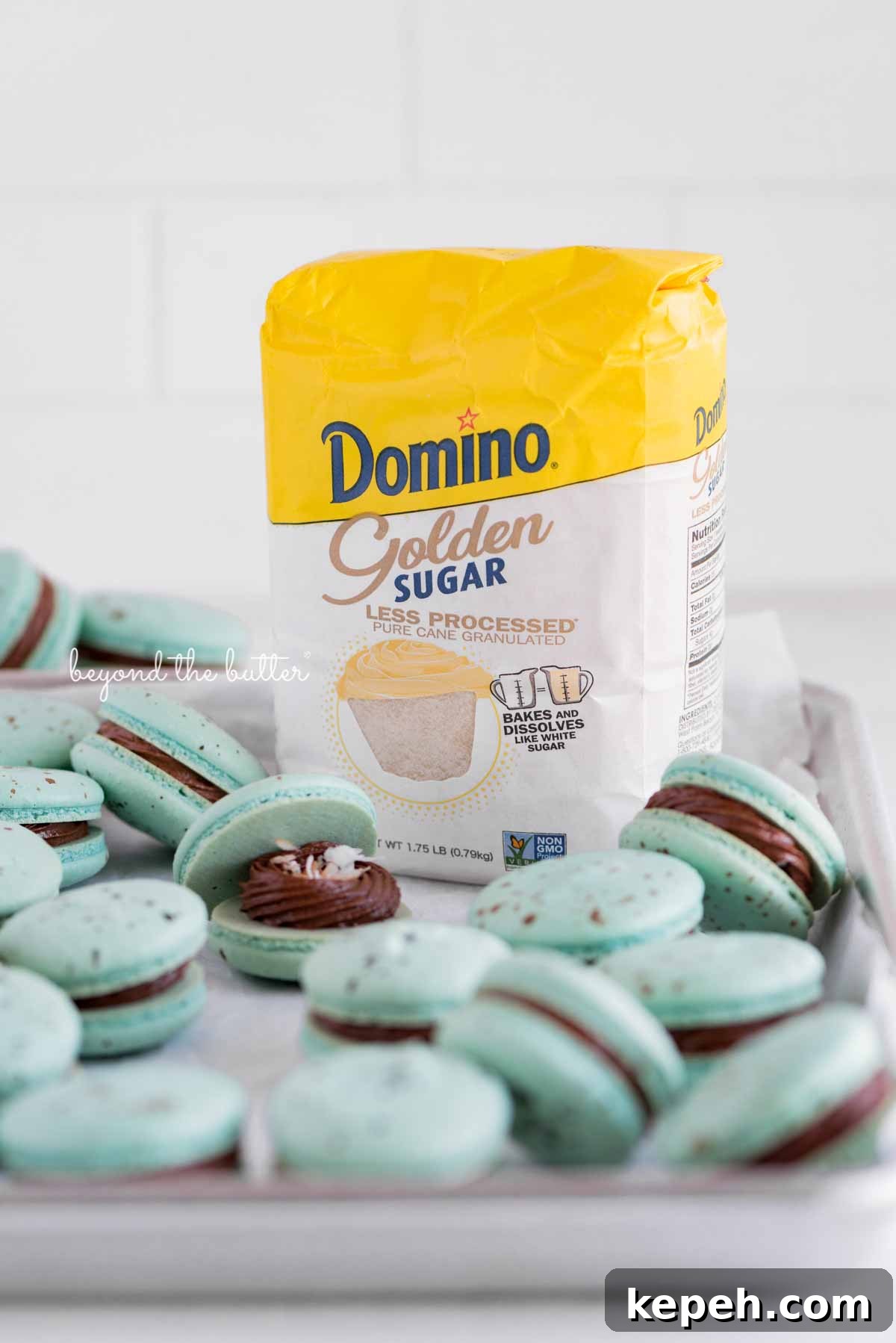
- Domino® Golden Sugar – used with the egg whites to form a smooth meringue; it has a subtle molasses note and can replace white sugar 1:1 in most recipes.
- Egg whites – room temperature (or aged). Leave them out for at least 1 hour before starting.
- Vanilla extract – pure vanilla gives the best flavor; you’ll use about 2 tsp in the meringue and a little more if thinning brown color for speckles.
- Blue gel food coloring – gel is more concentrated and vibrant; use 2–3 drops.
- Brown gel food coloring – 1 drop for speckles. If you want a lighter color, add 1/4 tsp vanilla extract to thin it.
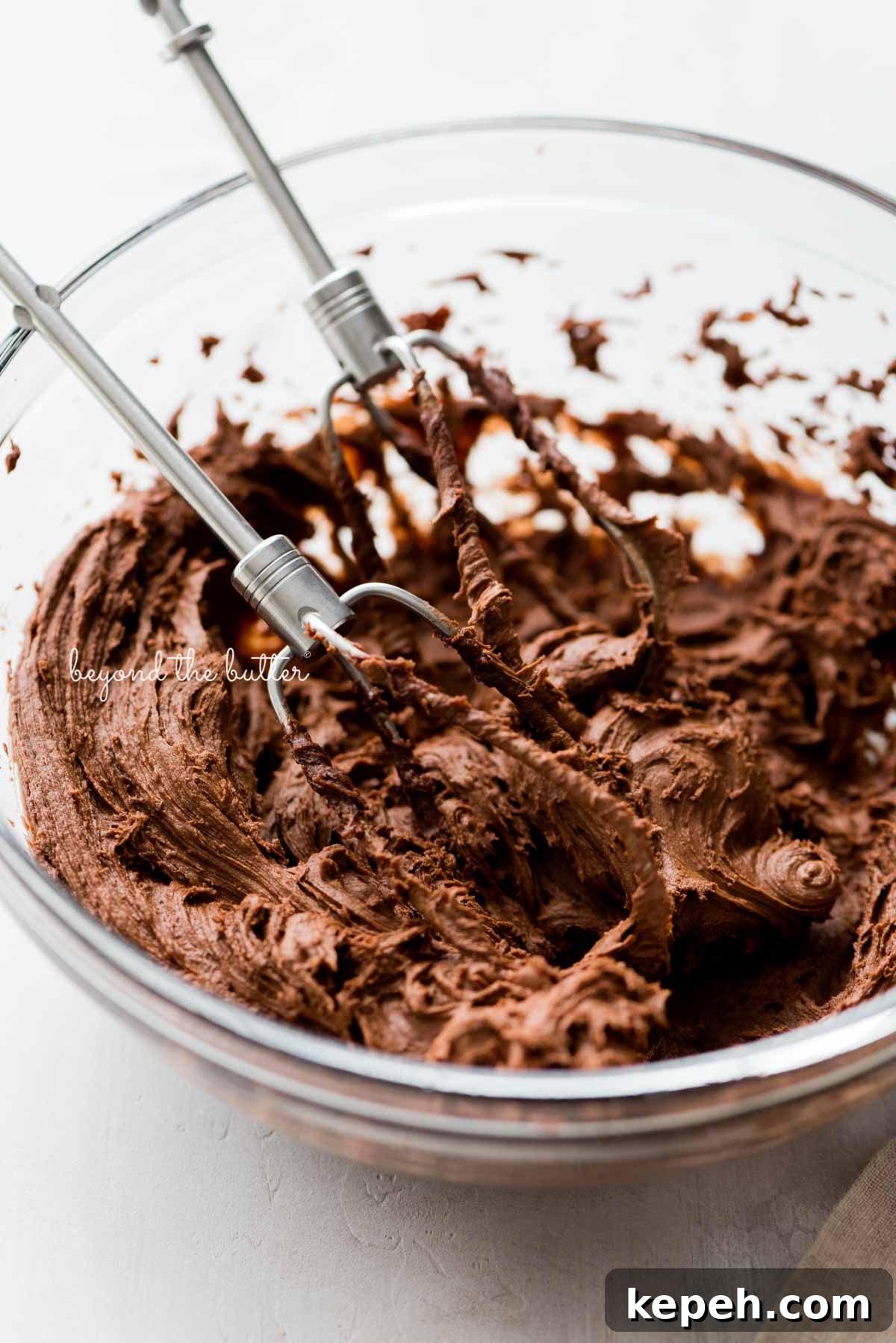
Frosting
- Unsalted butter – room temperature.
- Domino® powdered sugar – sifted for a smooth frosting.
- Unsweetened cocoa powder – sifted to avoid lumps.
- Salt – balances and brightens flavors.
- Light corn syrup – helps create a glossy, smooth texture.
- Vanilla extract – pure is best.
- Milk chocolate – 2 oz, melted and cooled; use a good-quality bar.
Coconut flakes (toasted) are optional but add a pleasing crunch and flavor in the center of each macaron. If you prefer, use them on only some of the macarons.
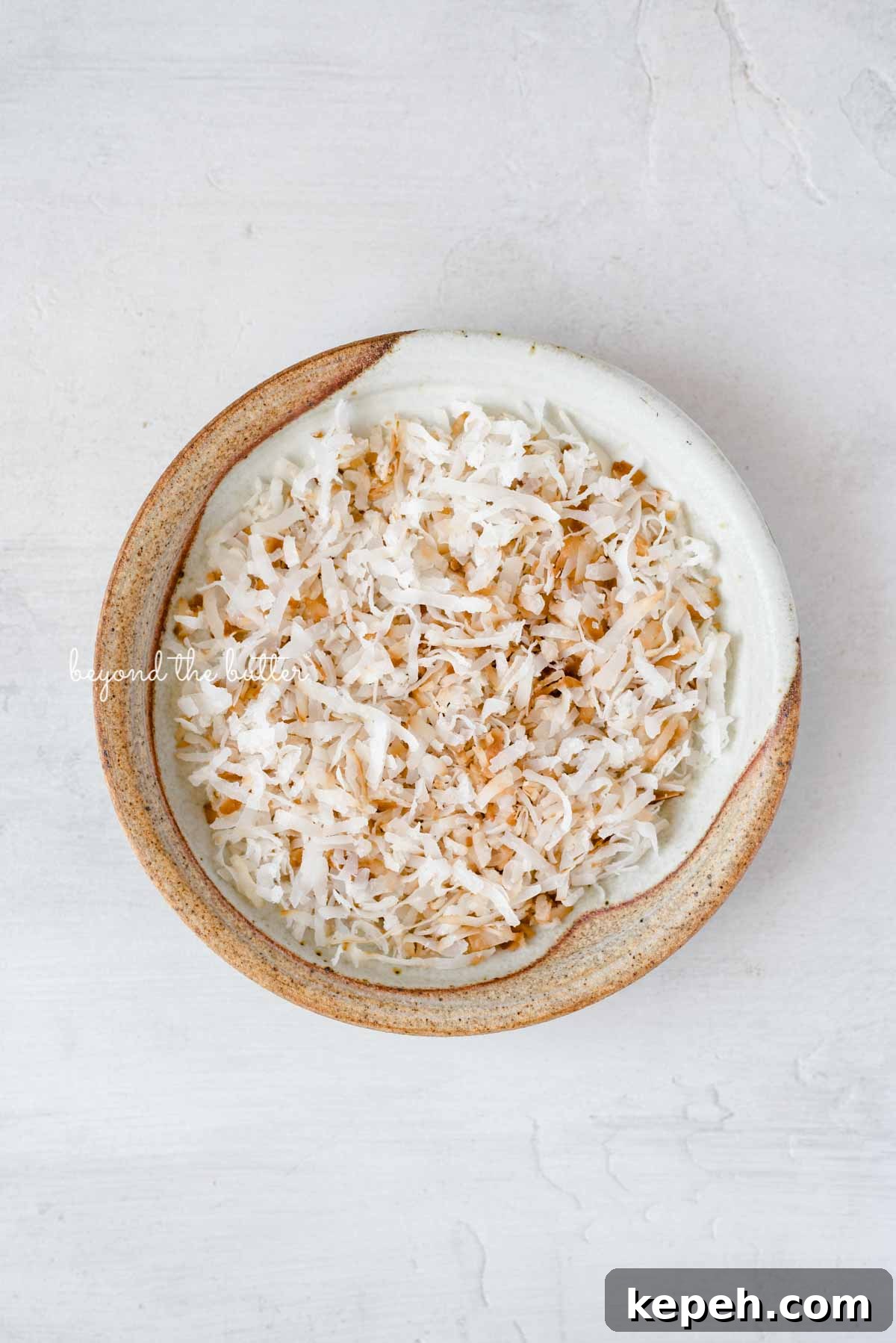
Toasting Coconut Flakes
You can toast coconut flakes on the stovetop or in the microwave:
Skillet: Heat a small skillet over low–medium heat, add the flakes, and stir constantly. After 2–4 minutes they will become fragrant and golden. Remove immediately and spread to cool.
Microwave: Place flakes on a microwave-safe plate and heat in 30-second intervals, stirring between each. Stop once they are golden. Do not run longer than 30 seconds at a time to avoid burning.
Essential Baking Tools
These tools make the process easier and more reliable:
- Food scale – the most important tool; weigh ingredients rather than using volume measures.
- Large, flat baking sheets – allow even airflow and baking.
- Double boiler – used to gently heat egg whites and sugar for the Swiss meringue step (a heatproof bowl over simmering water).
- Silicone baking mats or parchment – silicone mats are my preference for easy release.
- Sifter or hand-crank sifter – to ensure dry ingredients are lump-free.
- Oven thermometer – helpful if your oven temperature isn’t accurate.
- Piping bags and tips – a large bag with a round tip for shells and a smaller bag for the filling.



Helpful Tips
Small details matter when making macarons. A few simple practices improve success:
- Keep everything clean: Any grease on bowls or utensils can prevent egg whites from whipping properly. Wiping tools with a paper towel dampened with white vinegar helps remove residue.
- Sift thoroughly: Sift almond flour and powdered sugar at least twice, then combine and sift again if possible. The finer the dry mix, the smoother the shells.
- Room-temperature egg whites: They whip more easily and form a stronger meringue—leave them out 1–2 hours before starting.
- No yolk: Even a trace of yolk will inhibit the meringue. Separate carefully.
- Finger test: Rub a little of the heated sugar and egg-white mixture between thumb and finger—if you feel granules, continue whisking.
- Macaronage test: Fold until batter flows in ribbons or can form a loose figure-8 without breaking.
- Piping posture: Hold the bag perpendicular to the mat for even, round shells.
- Remove air bubbles: Tap the tray gently against the counter 3–4 times and pop any remaining bubbles with a toothpick.
- Rest before baking: Let piped shells dry until the surface is no longer sticky—about 40 minutes, although humidity affects this. A fan helps speed drying.
- Piping aid: Use a pint glass to hold the bag open while filling if that’s easier.
Storage
Store unfilled macaron shells in an airtight container in the refrigerator or freezer until you’re ready to assemble. Fully assembled macarons with the chocolate filling keep best refrigerated or frozen and reach optimal flavor and texture after 2–3 days in the refrigerator.
Troubleshooting / FAQs
This can result from residual grease on your bowl or whisk, or from egg whites that aren’t at room temperature. Clean tools thoroughly and ensure egg whites are warmed to room temp.
It can take up to 10 minutes on high speed. Be patient and watch for glossy peaks that hold their shape.
The batter should flow like lava and form ribbons or a figure-8 without breaking. If it spreads but keeps its edge, it’s ready.
Lumps usually come from insufficient sifting or not blending the dry ingredients thoroughly. Remove any big bits rather than forcing them through the sifter.
Causes include over- or under-mixing, piping at an angle, opening the oven during baking, or poor airflow under the baking sheet. Pipe carefully and bake one sheet at a time for best results.
Let them cool completely before removing. If they still cling, chill in the freezer for 15–20 minutes and they should release more easily. Imperfect bottoms can be covered with frosting when assembling.
Yes. The milk chocolate fudge frosting can be made 2–3 days ahead. Bring it to room temperature for about an hour and re-whip briefly before using.
I use 2 drops of gel food coloring; colors can fade slightly during baking.
Add 1/4 tsp vanilla extract to dilute the brown gel color and achieve a softer speckle tone.
More Macaron Recipes to Enjoy!
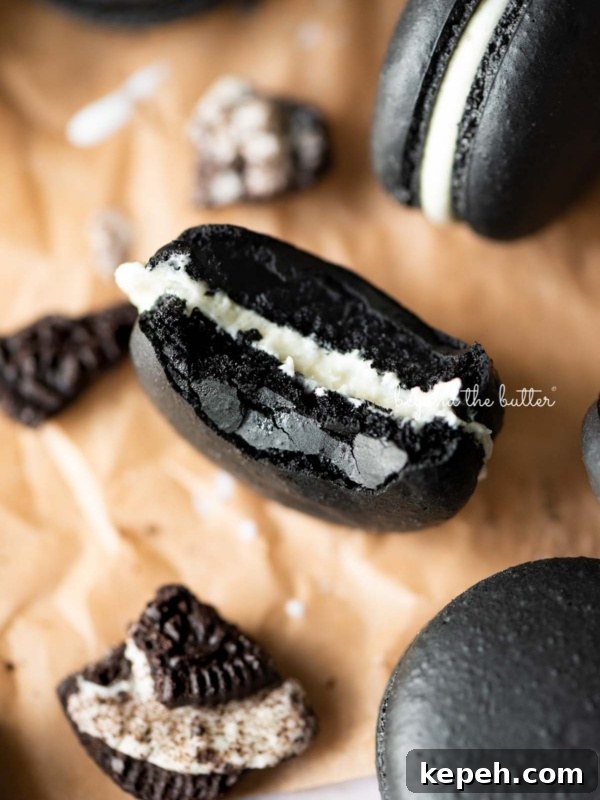
Oreo Macarons
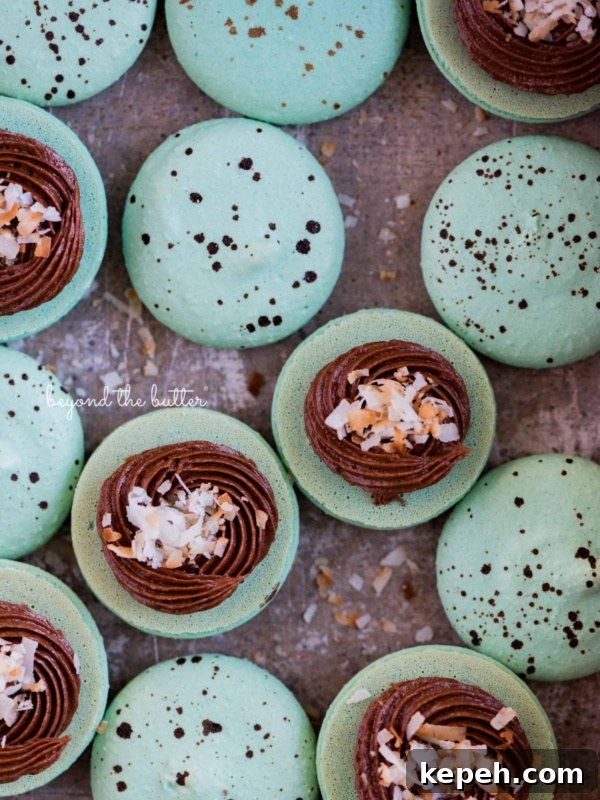
Robin’s Egg Macarons
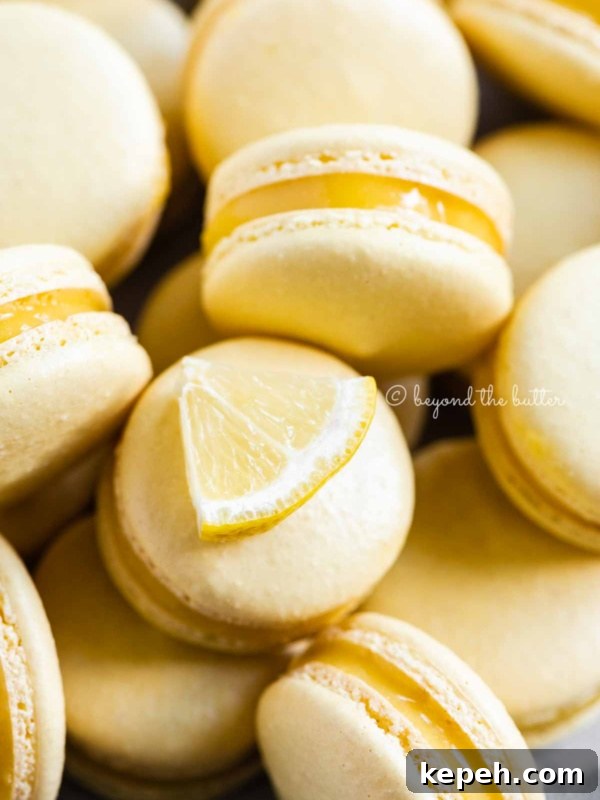
Lemon Bar Macarons
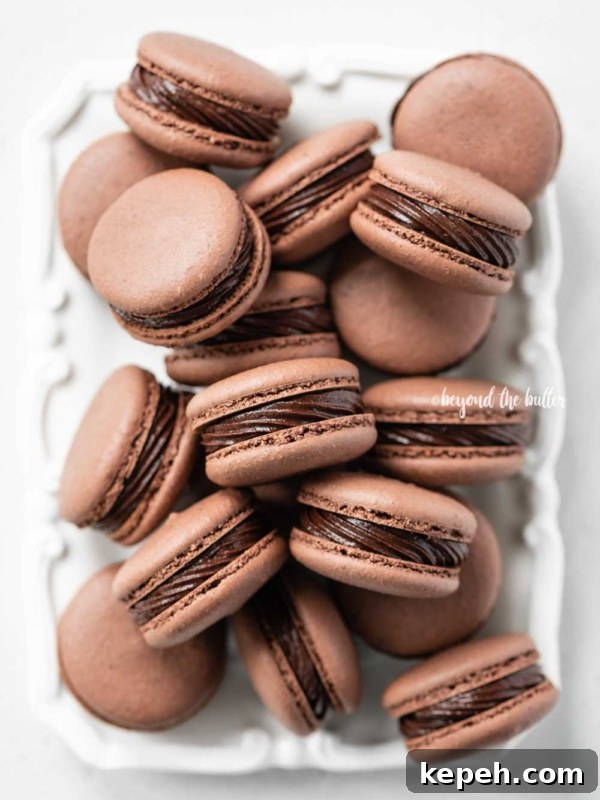
Dark Chocolate Macarons
Robin’s Egg Macarons

Ingredients
Robin’s egg macaron shells
- 1 cup almond flour, sifted
- ¾ cup Domino® powdered sugar, sifted
- 3 large egg whites, room temperature
- ½ cup Domino® Golden Sugar
- 2 tsp vanilla extract
- 2–3 drops blue gel food coloring
- 1 drop brown gel food coloring (plus ¼ tsp vanilla if thinning)
- 1/3 cup coconut flakes, toasted (optional)
Milk chocolate fudge frosting
- ⅓ cup unsalted butter, room temperature
- ⅔ cup Domino® powdered sugar, sifted
- ¼ cup unsweetened cocoa powder, sifted
- ⅛ tsp salt
- ¼ cup light corn syrup
- ½ tsp vanilla extract
- 2 oz milk chocolate, melted and cooled
Instructions
Robin’s egg macaron shells
- Line two baking sheets with parchment or silicone mats and fit a large piping bag with a round tip.
- Weigh all ingredients on a food scale for accuracy.
- Sift almond flour and powdered sugar together twice, discard any large bits, and whisk to combine.
- In a double boiler, heat the Domino® Golden Sugar and egg whites over simmering water, whisking constantly until the sugar dissolves and the mixture is frothy (about 5–6 minutes). Test by rubbing a bit between fingers; it should feel smooth.
- Transfer the hot mixture to a stand mixer with a whisk attachment and whip on high. When soft peaks form, add the vanilla, then continue to whip until stiff, glossy peaks form (about 10 minutes). Add blue gel color and mix until uniform.
- Prepare the brown speckle by mixing 1 drop brown gel color with a small amount of vanilla (optional) and set aside.
- Gently fold half the dry ingredients into the meringue with a spatula, then add the remainder. Fold until the batter flows like lava and forms ribbons or a figure-8 without breaking.
- Transfer batter to the prepared piping bag and pipe ~1.5-inch rounds onto the mats. Tap the baking sheets 3–4 times to release air bubbles and pop visible bubbles with a toothpick.
- Dip a small brush into the brown color mixture and, held 6–8 inches above the shells, flick to create speckles.
- Let piped shells rest in a cool, dry place until the surface is no longer sticky—about 40 minutes (humidity will affect drying time).
- Preheat the oven to 300°F with the rack set just above center. Bake one tray at a time for 14 minutes, rotating the sheet at 7 minutes. Avoid opening the oven except to rotate.
- Cool the shells on the sheet for 10–15 minutes. If still slightly sticky, let cool longer or freeze 15–20 minutes to set.
- If not filling immediately, store shells in an airtight container in the fridge or freezer.
Toasted coconut flakes (optional)
- In a small skillet over low–medium heat, toast coconut flakes, stirring constantly until golden (3–5 minutes). Spread to cool. Store in an airtight container at room temperature if made ahead.
Milk chocolate fudge frosting
- Using a hand mixer or stand mixer with the paddle attachment, beat butter, powdered sugar, cocoa, salt, corn syrup, vanilla, and melted milk chocolate on low until smooth and fully combined. Scrape down the bowl as needed.
Assembling the robin’s macarons
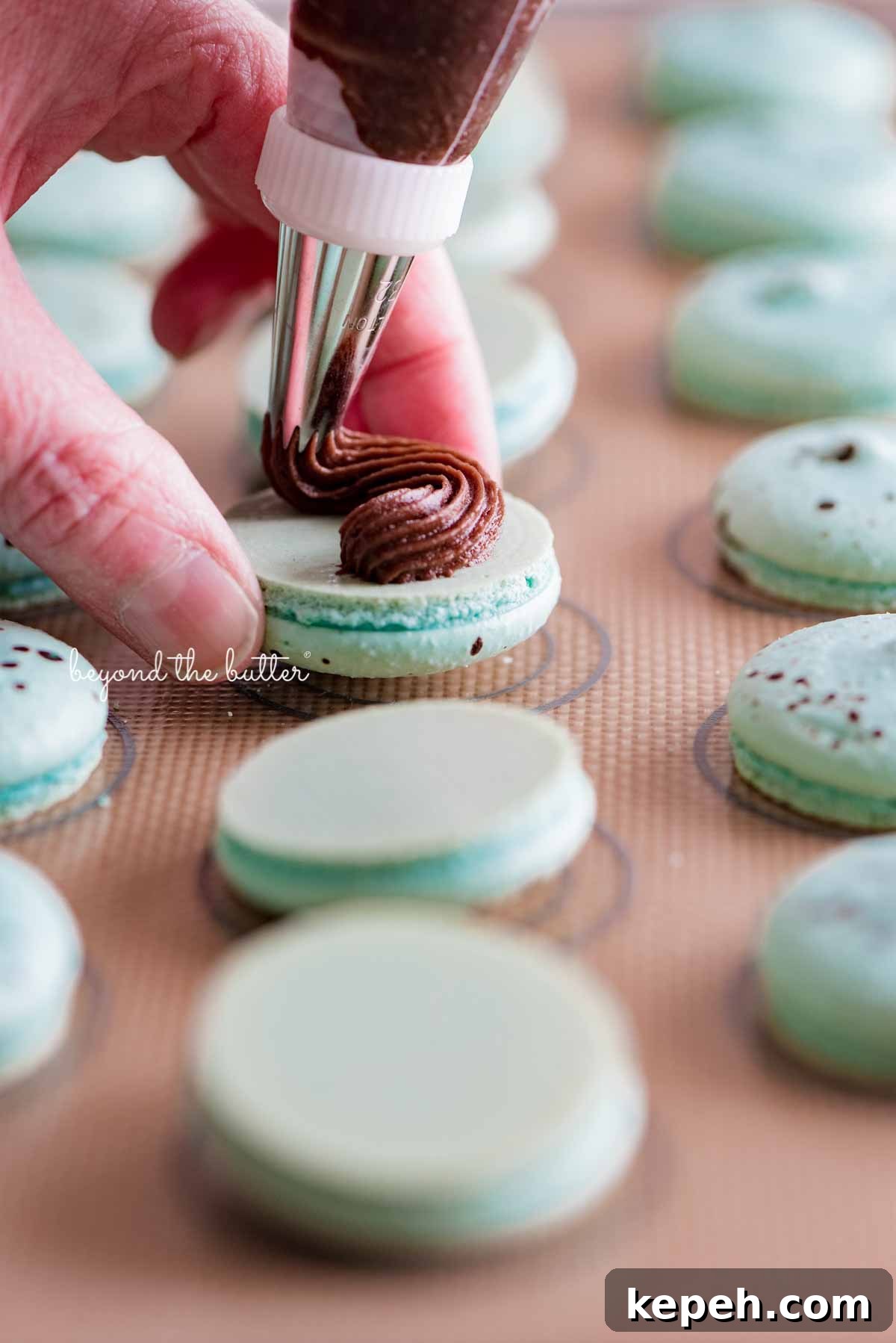
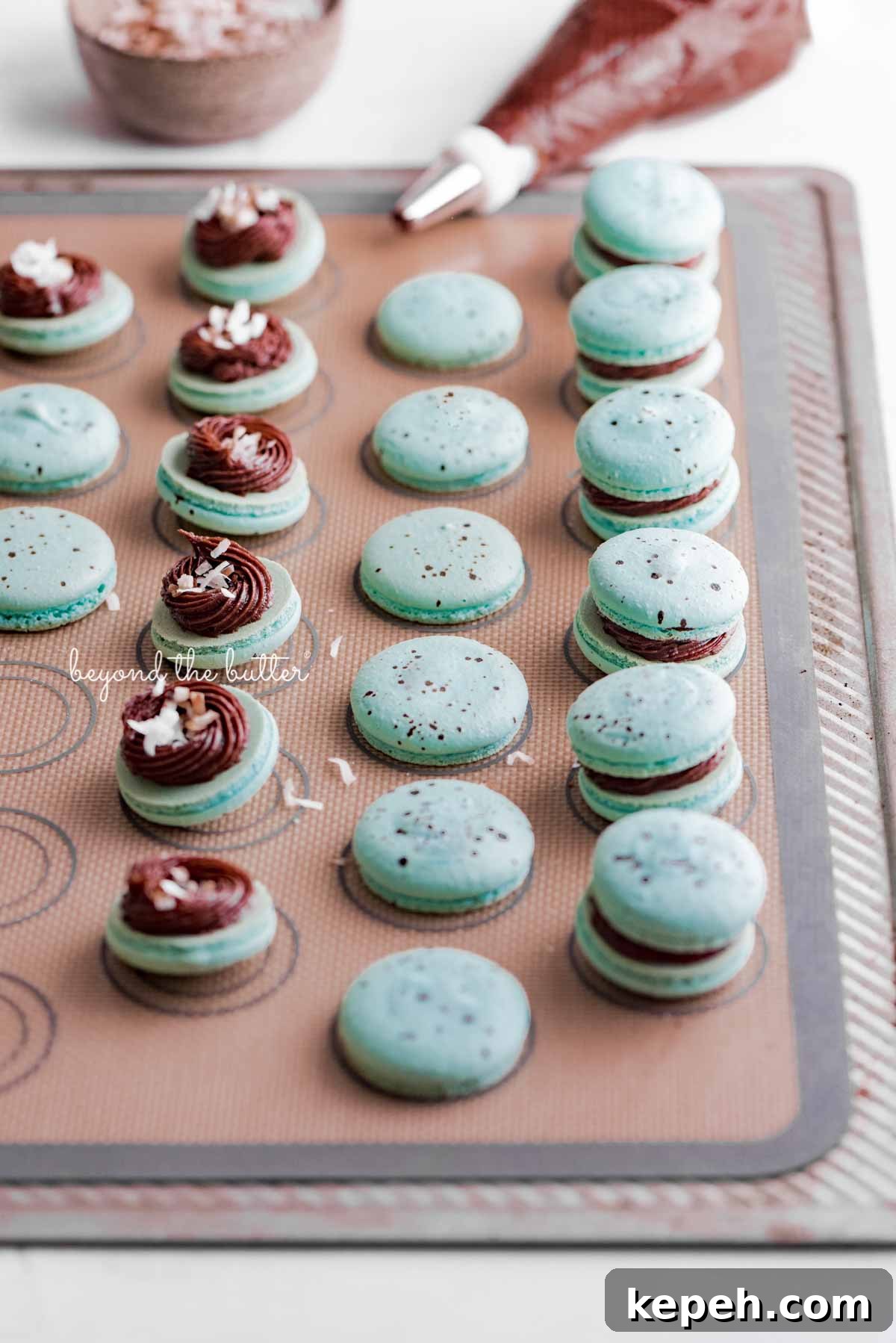
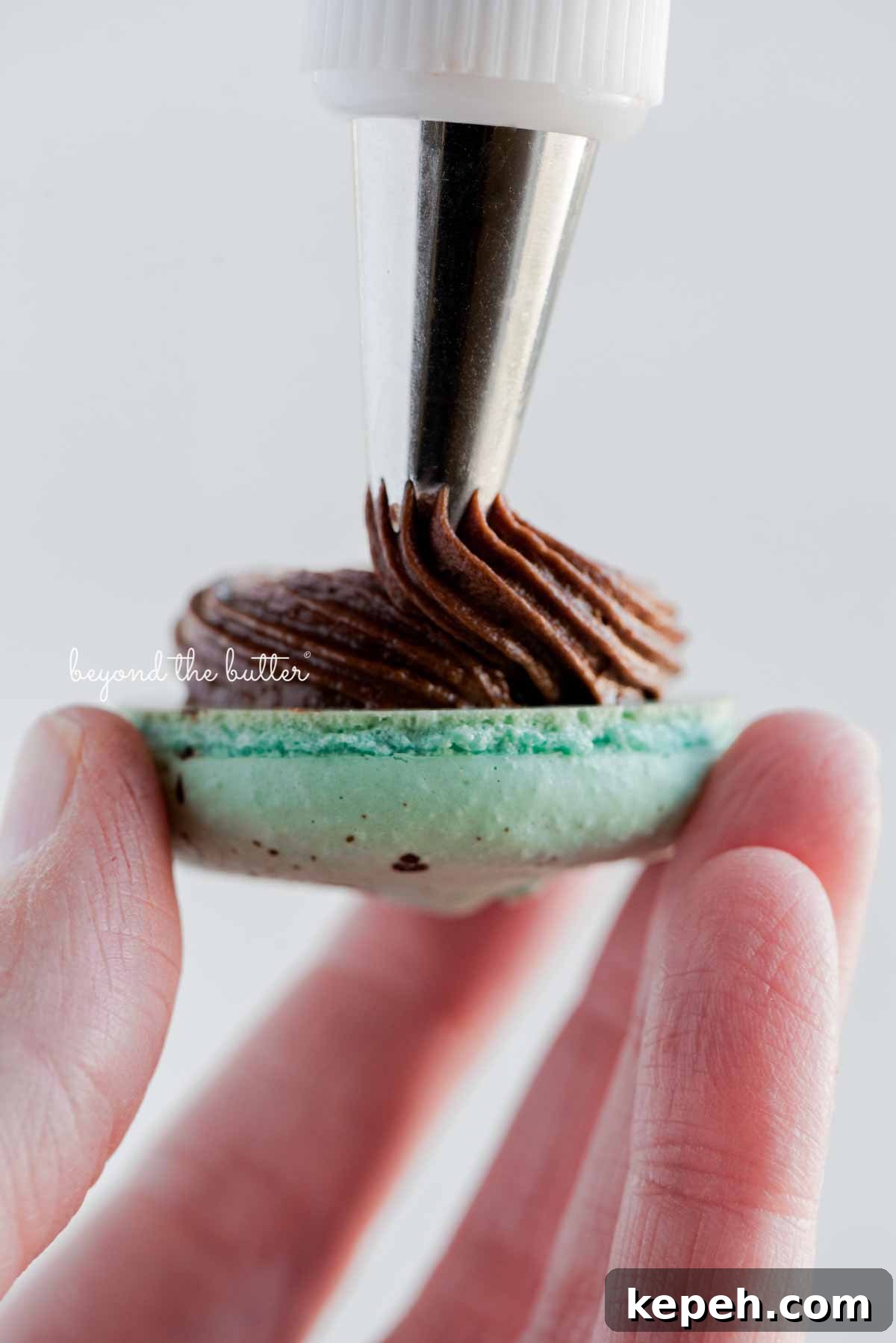
- Fit a small piping bag with a decorative tip and fill with about ¾ of the frosting.
- Pipe a ring or dot of frosting onto one shell, add a pinch of toasted coconut in the center (if using), and sandwich with a matching shell. Repeat with remaining shells. Store leftover frosting refrigerated up to one week.
- Store assembled macarons in an airtight container in the refrigerator. They are best after 2–3 days for optimal texture and flavor.
Video
Notes
- Clean all tools thoroughly to avoid any grease that could prevent egg whites from whipping.
- Do not skip sifting almond flour and powdered sugar—smooth dry ingredients are essential.
- Use room-temperature egg whites for best meringue volume.
- Ensure no yolk gets into the whites, or the meringue will fail.
- Rub a little of the heated sugar and egg white mixture between fingers to confirm sugar has dissolved; if you feel grit, continue whisking.
- Fold batter until it flows in ribbons and forms a figure-8 without breaking.
- Pipe with the bag held perpendicular to the mat for uniform shells.
- Tap the trays to release bubbles and pop any that rise with a toothpick.
- Allow adequate resting time—macarons are ready to bake when the tops are dry to the touch.
- Expect some splatter when applying brown speckles; it cleans easily with warm, soapy water.
Nutrition
Nutritional information is an estimate and will vary based on ingredients used.