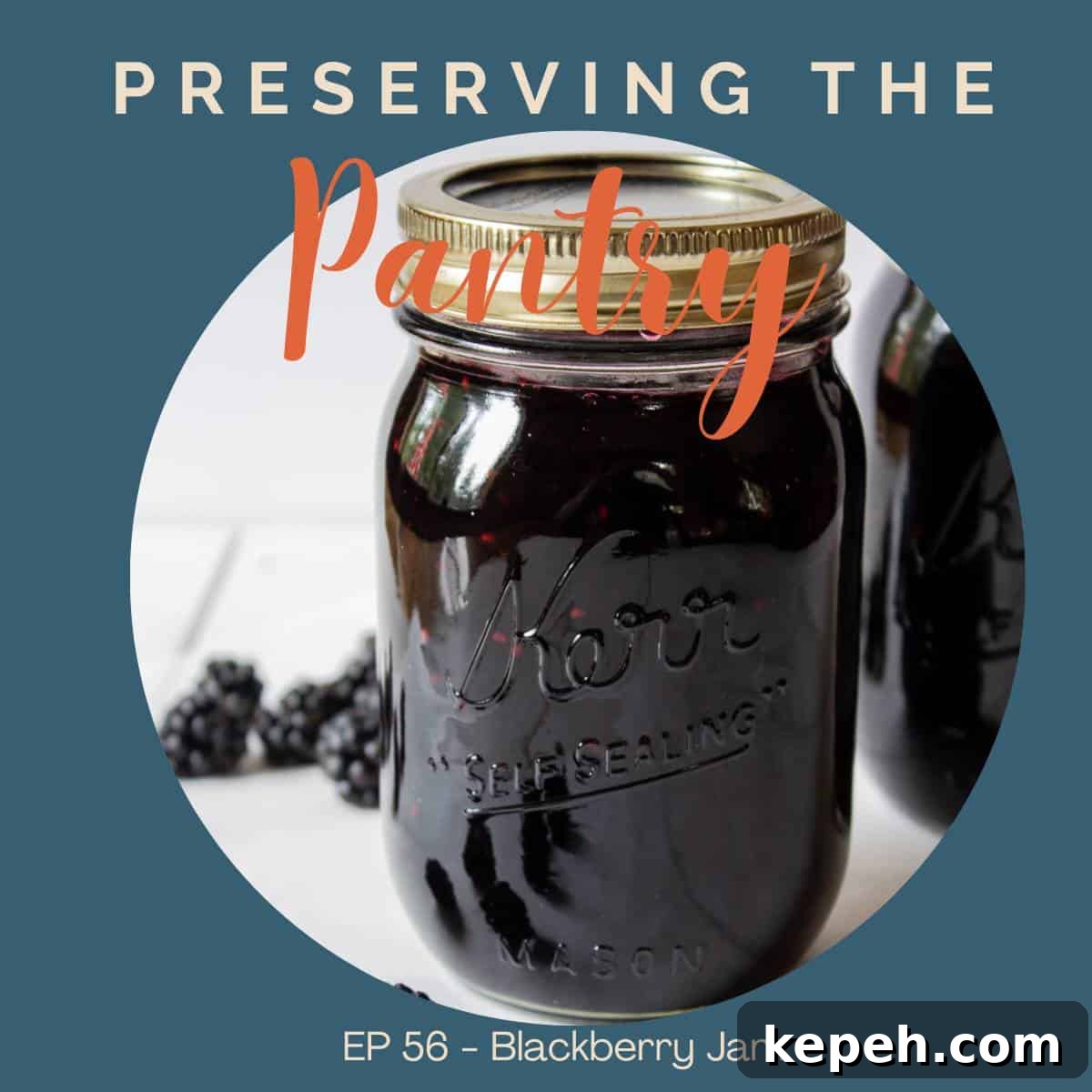
In this episode, you’ll learn how to make seedless blackberry jam without using commercial pectin.
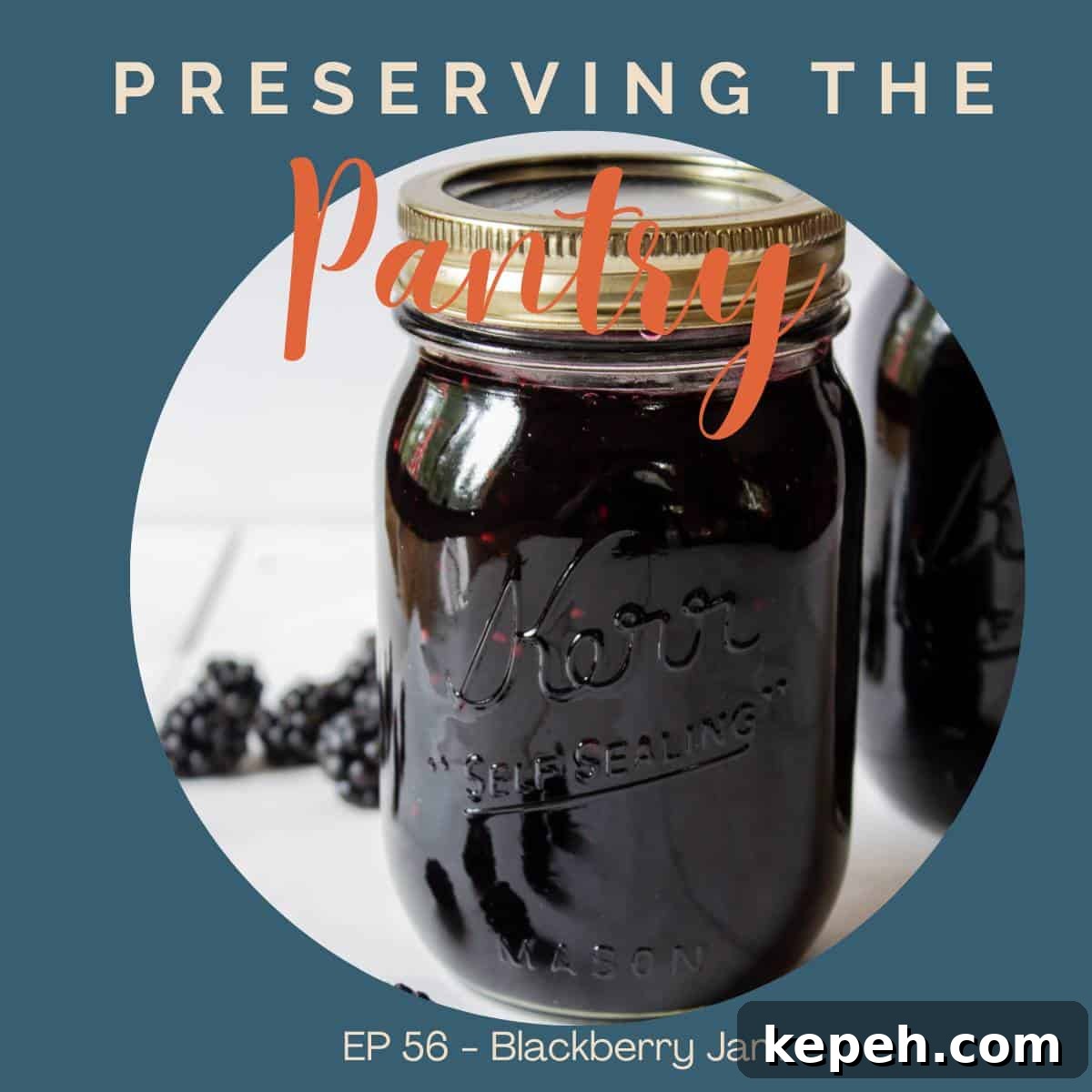
Play the episode
Recipe
Find the complete recipe for Blackberry Jam on the original recipe page.
Recipes mentioned in this podcast:
- How to use a water bath canner
In this episode you’ll learn:
- What type of blackberries work best
- How to mash berries and remove seeds for a seedless jam
- How to cook the jam without commercial pectin
- Three reliable tests to check for the gelling stage
- How to safely water-bath can the finished jam
Where to listen to the podcast
Listen to this episode on your favorite podcast player or follow the links provided on the original post. You can also read the full transcript below.
If you enjoy the podcast, please leave a comment below and share your results on Instagram @preservingthepantry!
Transcript
Hello and welcome back to the pantry. Today we’re talking about how to make seedless blackberry jam. I prefer removing the seeds because blackberry seeds are relatively large and can affect the texture. This recipe does not use commercial pectin, which makes the process a bit more hands-on, but completely doable.
Commercial pectin reduces variables and increases the chance of success, but you can make excellent jam without it if you pay attention to a few key details. I enjoy the challenge — it feels a bit like back-to-basics preserving.
Some readers have reported failures, usually when a step was missed or a detail overlooked. If you follow the guidance and watch the jam carefully, your chances of success are good. Even when a batch doesn’t set, the result can still be a lovely syrup for ice cream or pancakes, so it’s rarely wasted.
Before you start, go to the recipe page for the full ingredient list and step-by-step instructions. The post includes all the tips you need: different ways to test for doneness, what berries to use, and safe canning practices. This jam can be processed for shelf stability, stored in the refrigerator for a couple of months, or made as freezer jam.
Start with the berries. In late summer we often pick wild blackberries that are juicy and flavorful. Picking wild berries can be tricky because of thorns, so wear long sleeves and pants; a leather glove can help steady branches while you pick. You can also use thornless cultivated varieties or store-bought berries. You’ll need about 12 to 14 cups of whole blackberries to yield roughly 8 cups after mashing and straining.
To remove seeds, I use a chinois (a conical stainless-steel sieve) and a wooden pestle. Push the fruit through the mesh in a circular motion; the pulp and juice pass through while the seeds stay behind. It’s effective, though it takes some elbow grease. Alternative seed-removal methods exist, but a chinois yields a smooth result.
Use a heavy, wide pot at least twice the volume of the jam you expect to make. Fruit jams expand and foam as they boil; a large pot prevents boilovers and gives you room to stir. Stir frequently to prevent scorching.
Blackberries contain a moderate level of natural pectin. To help the jam set without commercial pectin, include some underripe (redder) berries in your batch because they have more pectin than fully ripe black berries. You only need a few red berries mixed in — not half the batch. Adding lemon juice helps too: its acidity aids pectin’s gelling action and brightens flavor.
After mashing and straining, measure 8 cups of the strained blackberry pulp and juice. Combine 8 cups strained fruit, 4 cups sugar, and 2 tablespoons lemon juice in a heavy stockpot over medium heat. You can adjust the sugar to taste — without commercial pectin you have more flexibility with sweetness — but the texture and preservation rely on sufficient sugar and proper cooking.
Bring the mixture to a boil, stirring regularly. The trickiest part is recognizing when the jam reaches the gelling stage. I use at least two of these three tests to confirm doneness:
- Spoon test: Scoop jam onto a spoon and let it flow off. At the gelling stage it will begin to sheet off rather than drip freely.
- Plate test: Chill small plates in the refrigerator. Put a teaspoon of jam on a cold plate, wait 30–60 seconds, then run a spoon through it. If the jam holds its shape with minimal spreading, it’s ready.
- Temperature test: Jam sets at about 220°F (104°C) at sea level. Subtract 2°F for every 1,000 feet of elevation. For example, at 2,000 feet, check for 216–218°F. A candy thermometer gives the most consistent results.
When the jam is ready, remove it from heat. You can skim off foam if desired — it doesn’t affect flavor, but some prefer a clearer surface. If canning, ladle hot jam into prepared sterilized jars, leaving 1/4 inch headspace. Wipe rims, apply lids and rings, and process in a boiling water bath for 10 minutes, adjusting processing time for your elevation. Refer to the recipe post for exact canning details and safety notes.
Read the entire recipe and tips before you begin, gather all tools and ingredients, and then proceed confidently. I’d love to hear how your seedless blackberry jam turns out — share successes and questions so I can help troubleshoot. Happy preserving; see you next week in the pantry. Bye.
Thanks for listening. Be sure to tune in next week for more episodes of Preserving the Pantry.