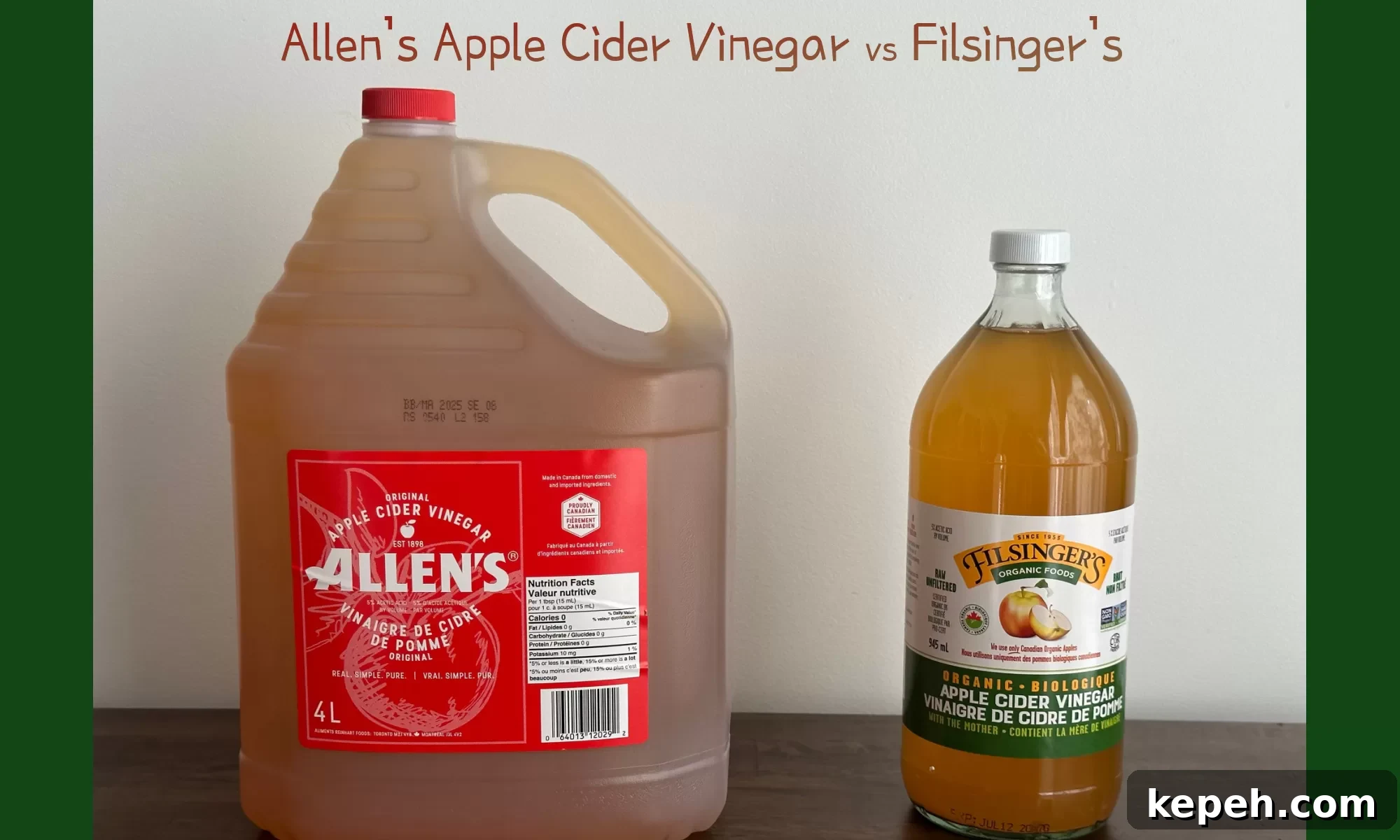
Allen’s and Filsinger’s apple cider vinegar (ACV) both originate from pressed apples, but they differ in processing, appearance, flavor, packaging, and potential benefits. If you’re deciding which to buy, this comparison highlights the key differences to help you choose.
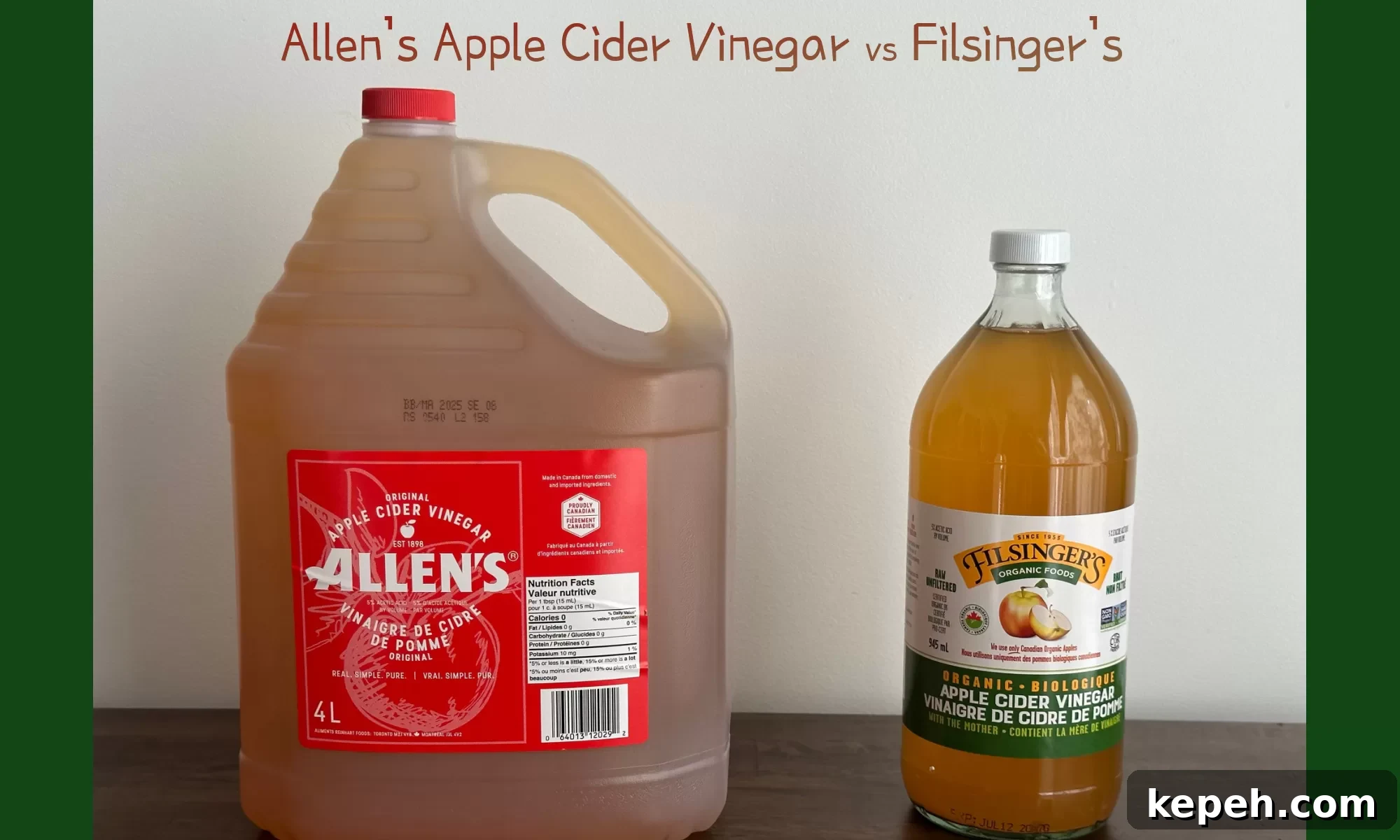
Comparing Allen’s and Filsinger’s apple cider vinegar
Allen’s original apple cider vinegar is a filtered, refined product that is pasteurized and widely available in large, economical bottles. It tends to be less expensive per volume and has a clear, light appearance with a mild, vinegary taste and little apple character.
Filsinger’s organic apple cider vinegar is raw and unfiltered, containing the “mother” — a cloudy, cobweb-like collection of beneficial compounds. It is typically sold in smaller glass bottles, with a stronger, tart, and more apple-forward flavor. Below are the main attributes side-by-side.
| Allen’s | Filsinger’s | |
| Ingredients | Apple cider vinegar | Organic apples |
| Organic? | No | Yes |
| Non-GMO? | No | Yes |
| Raw/unpasteurized? | No | Yes |
| Unfiltered (contains the mother)? | No | Yes |
| Acidity (% acetic acid by volume) | 5% | 5% |
| Color/appearance | Clear, light amber, no sediment | Cloudy, medium amber, visible mother |
| Taste | Mild, vinegary, little apple flavor | Strong, tart, distinctly appley |
| Price (USD) | $4.59 | $4.37 |
| Serving size / Servings per container | 1 tbsp / 266 | 1 tbsp / 63 |
| Packaging | Plastic | Glass |
Differences between Allen’s and Filsinger’s apple cider vinegar
Processing
Allen’s is filtered and pasteurized, which removes sediment and the mother and extends shelf stability. Filsinger’s is unfiltered and unpasteurized, preserving the naturally occurring enzymes, proteins, and beneficial bacteria associated with raw ACV.
Appearance
Filsinger’s shows the characteristic cloudiness of unfiltered ACV and may display the mother before shaking. Allen’s is clear and pale, with no visible sediment. The visual difference reflects their distinct processing methods.
Flavor profile
Allen’s delivers a milder, straightforward vinegar taste with limited apple notes. Filsinger’s has a pronounced, tart apple flavor and a drier finish. Preference will depend on whether you want a neutral vinegar or a more robust apple-forward profile.
Packaging
Allen’s is commonly sold in large plastic containers, which are convenient but can be more reactive with acidic liquids over long-term storage. Filsinger’s uses glass bottles that are inert and preserve flavor without risk of leaching.
Price
Allen’s is generally marketed as the budget option and offers much more volume per container. Filsinger’s price per bottle can be similar but with far less volume. Many people choose based on whether they prioritize cost and quantity or organic, raw quality.
Ways to use Allen’s and Filsinger’s apple cider vinegar
Both vinegars are versatile and can be used interchangeably in many applications, though the unfiltered flavor of Filsinger’s may be more noticeable in recipes. Common uses include:
- Salad dressings: Whisk with olive oil, herbs, and a touch of sweetener for vinaigrettes.
- Beverages: Dilute a tablespoon in water or other drinks for a morning tonic or a tart addition to beverages.
- Marinades: Use to tenderize and flavor meats and vegetables.
- Hair rinse: A diluted ACV rinse can help remove residue and add shine to hair.
- Skin toner: Lightly diluted ACV can be applied as a natural toner—patch test first.
- Digestive aid: Some people take a small diluted amount before meals to support digestion.
- Pickling: ACV brings acidity and flavor to quick pickles and preserving brines.
Nutrition: Allen’s vs Filsinger’s apple cider vinegar
Both brands are very low in calories and macronutrients. Filsinger’s provides slightly more potassium per tablespoon and, being unfiltered, contains the mother with trace enzymes and beneficial bacteria that some people value for potential health benefits.
| Per 1 tbsp (15 mL) | Allen’s | Filsinger’s |
| Calories | 0 | 0 |
| Fat (g) | 0 | 0 |
| Carbs (g) | 0 | 0 |
| Protein (g) | 0 | 0 |
| Sodium (mg) | 0 | 0 |
| Potassium (mg) | 10 | 20 |
How to store Allen’s and Filsinger’s apple cider vinegar
Store both types in a cool, dark place away from direct sunlight with the cap tightly sealed. Refrigeration is not necessary; room temperature storage is fine. For long-term storage, glass is preferable to prevent any interaction between the vinegar and container materials.
Allen’s vs Filsinger’s apple cider vinegar: The ultimate verdict
Choosing between the two depends on your priorities. If you want the most natural option with organic ingredients, the mother, and a robust apple flavor, Filsinger’s is the better choice. If you prefer a neutral-tasting, economical vinegar in larger quantities, Allen’s offers good value.
Winner for quality and flavor: Filsinger’s. Its organic, unfiltered, and unpasteurized profile, along with the presence of the mother, gives it an edge for those seeking raw ACV benefits. For budget-driven bulk use, Allen’s remains a solid, milder option.
FAQs
Tablet brands vary and personal needs differ. Look for reputable manufacturers, clear labeling of ingredients and dosage, and independent quality checks when selecting a supplement.
Yes—processing, filtration, and ingredient sourcing influence flavor and potential benefits. Choose filtered and pasteurized products for a milder, shelf-stable option, or unfiltered, organic ACV if you value the mother and raw components.
No. Brands differ in processing (filtered vs. unfiltered), pasteurization, acidity levels, packaging, and whether they include the mother. Read labels to find the product that matches your preferences.
Gummy options vary by taste and ingredient needs. When choosing gummies, review ingredient lists, sugar content, and manufacturer reputation to find a suitable product.