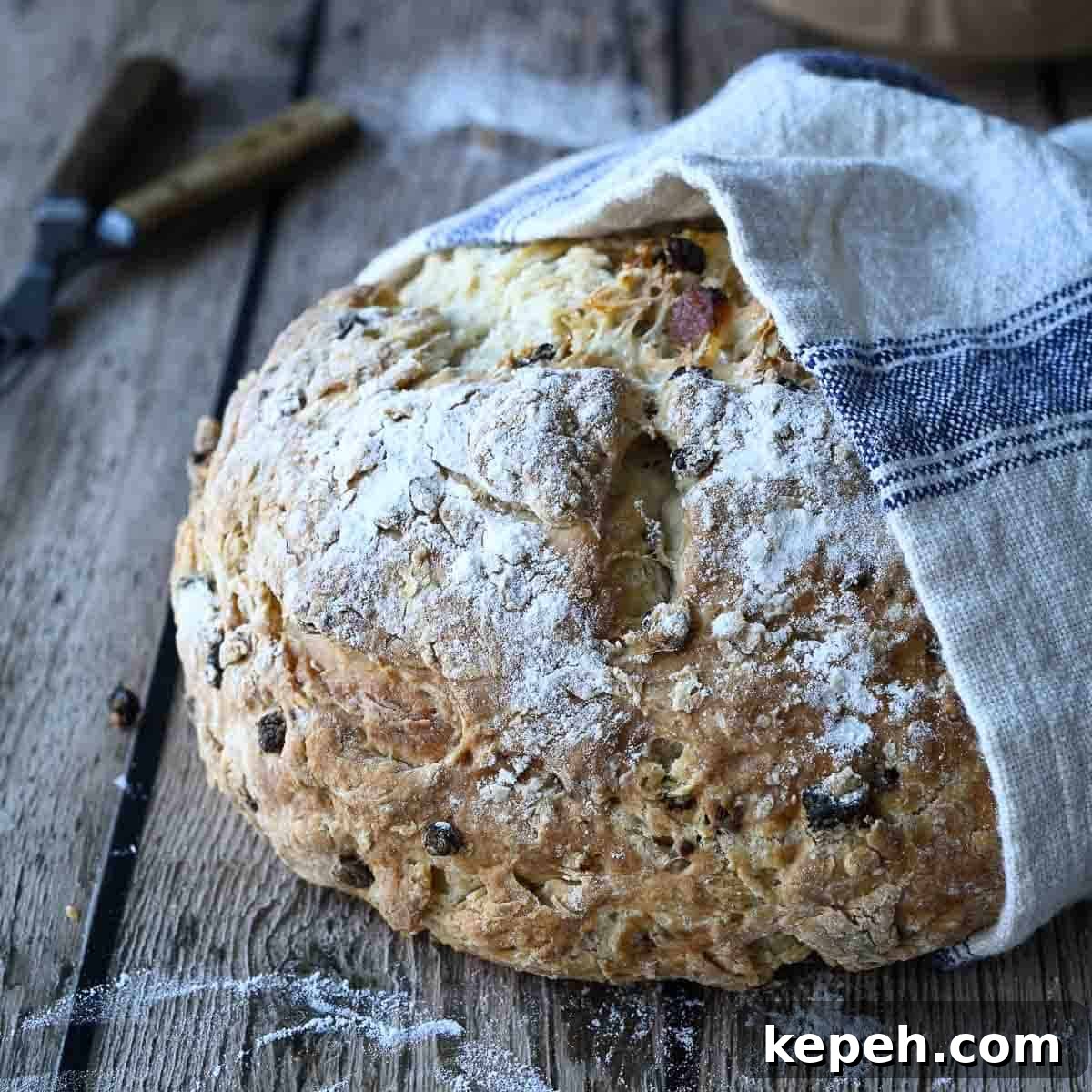
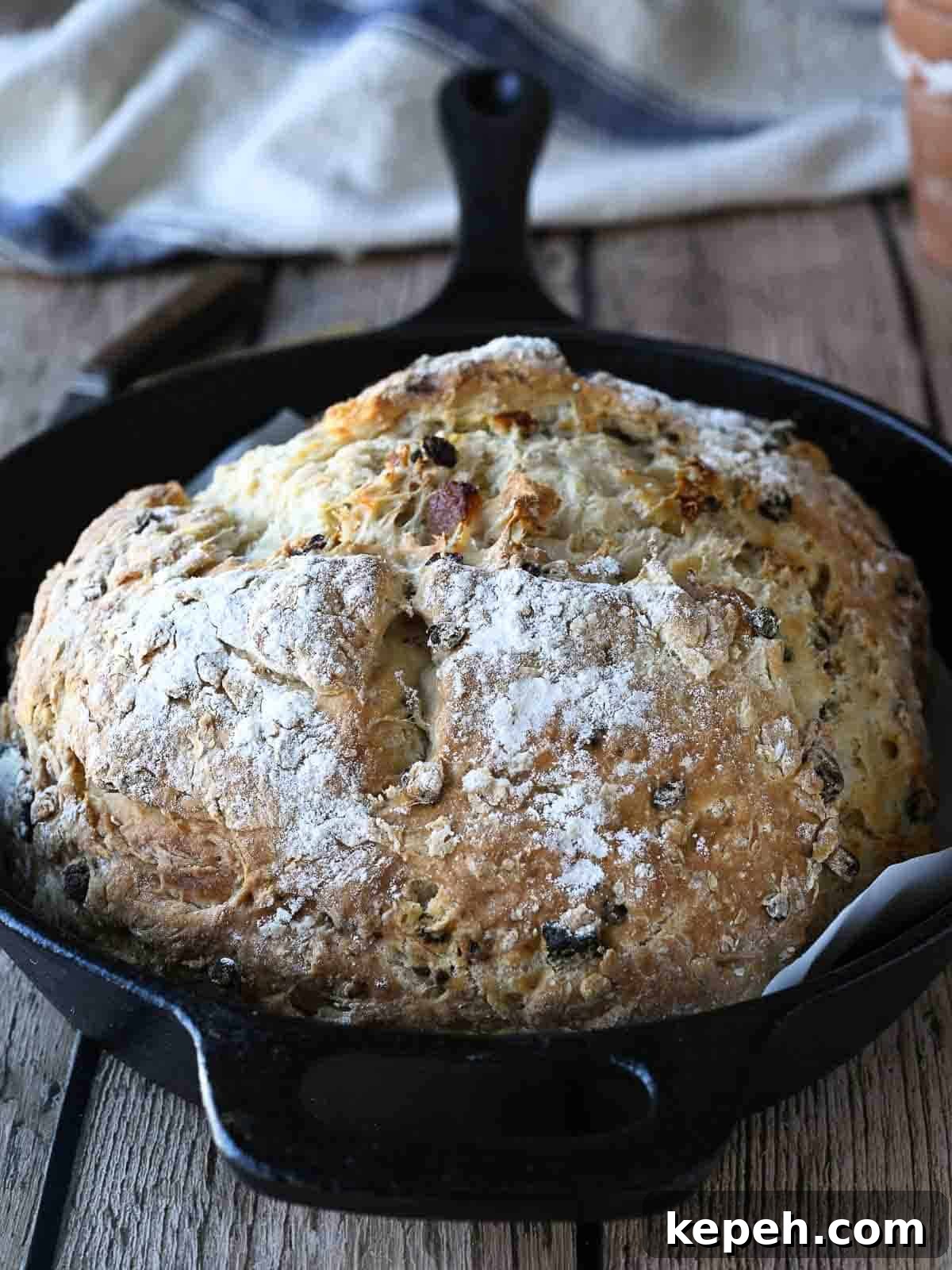
This American-style Irish Soda Bread with Currants and Apricots is a sweeter, fruit-forward take on the classic. Brown sugar brings a hint of molasses, while currants and chopped dried apricots add bursts of tangy, chewy texture. Serve warm with butter or your favorite jam for a comforting treat that’s perfect for St. Patrick’s Day or any cozy breakfast or snack.
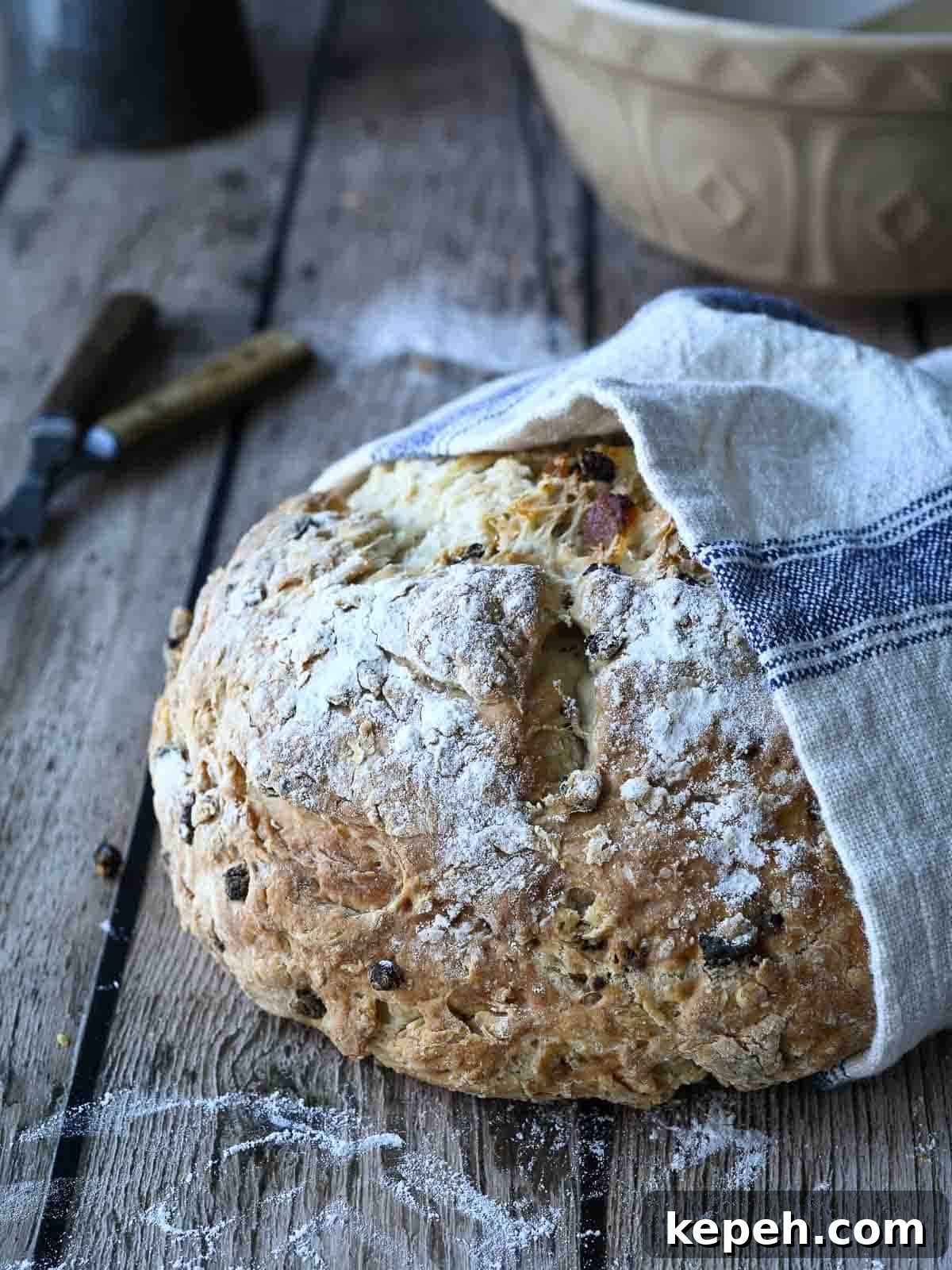
This recipe is inspired by Irish traditions but adapted to an American palate. I borrowed a few classic techniques—using cold butter, buttermilk for the leavening reaction, and baking in a heavy skillet for a deeply browned crust—and paired them with a generous amount of dried fruit and brown sugar for added sweetness and depth.
The fruit can be soaked briefly in orange juice to plump and flavor it before folding it into the dough. The result is soda bread with a tender crumb, a crisp, slightly crackly crust, and lively pockets of fruit in every slice.
Ingredients
Gather these ingredients before you begin. Quantities are provided in the recipe card below.
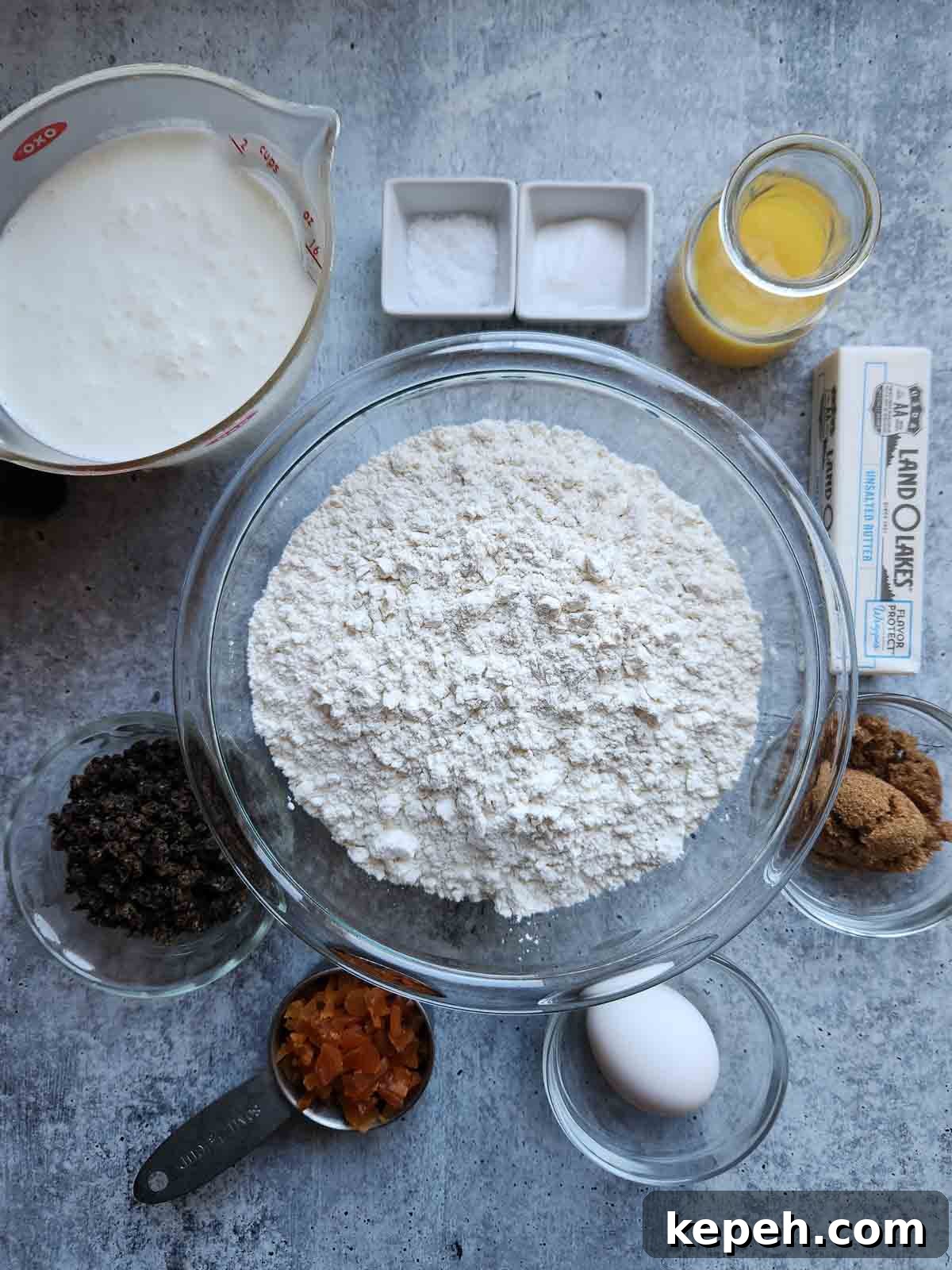
- All-purpose flour
- Baking soda – the chemical leavener that gives soda bread its lift
- Salt – kosher or fine sea salt
- Dark brown sugar – adds sweetness and a mild molasses note
- Egg – for richness and structure
- Buttermilk – cold; reacts with baking soda to leaven the loaf
- Unsalted cold butter – cut into small cubes
- Orange juice – to soak and plump the dried fruit
- Currants or raisins – small dried berries that add sweetness and chew
- Dried apricots – finely chopped; swap with golden raisins or dried peaches if preferred
- Butter or jam for serving
See the recipe section below for precise measurements and timing.
Step-by-step directions
Follow these steps for a reliable, flavorful loaf. Read through the entire method before you start so everything proceeds smoothly.
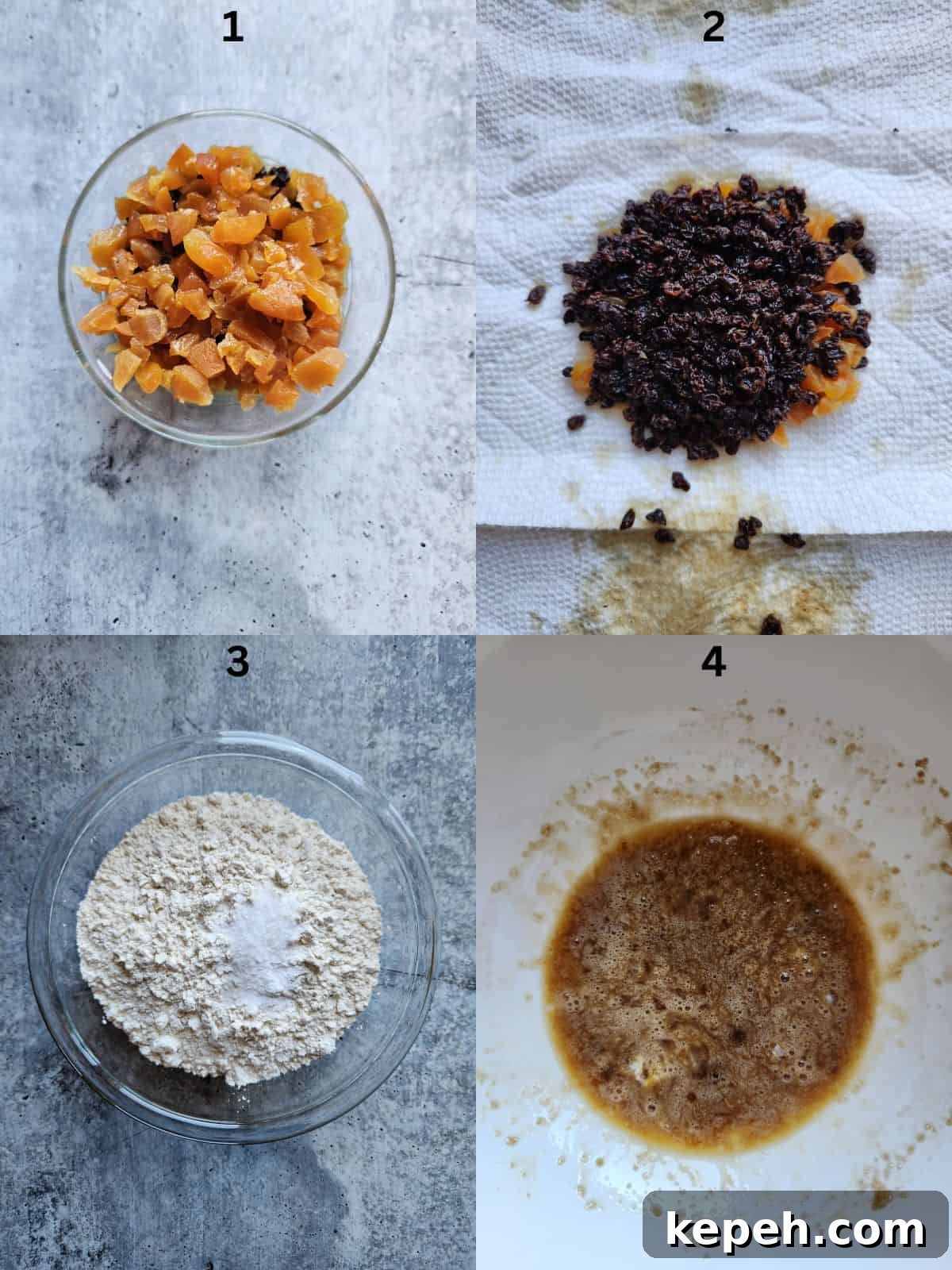
Steps 1–4: Soak the currants and chopped apricots in orange juice for about 10 minutes. Drain and press out excess juice, then set the fruit aside. In a medium bowl, whisk the flour, baking soda, and salt. In another bowl, whisk the brown sugar with the egg, then add the cold buttermilk and mix until combined.
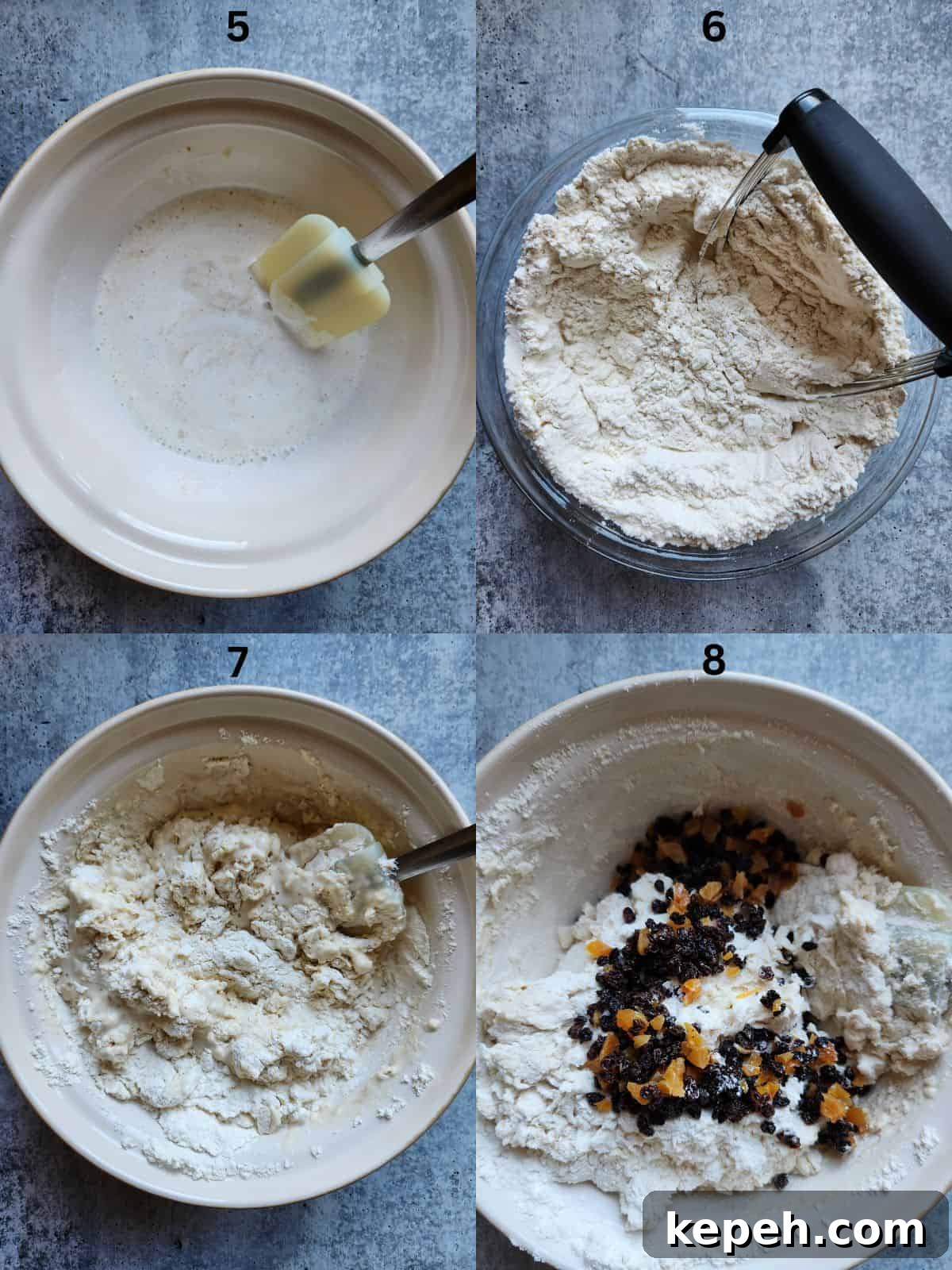
Steps 5–8: Cut the cold butter into the dry ingredients with a pastry cutter or fork until pieces are pea-sized. Stir in the buttermilk mixture until the dough is moistened. Gently fold in the drained fruit until evenly distributed; the dough will be shaggy and sticky.
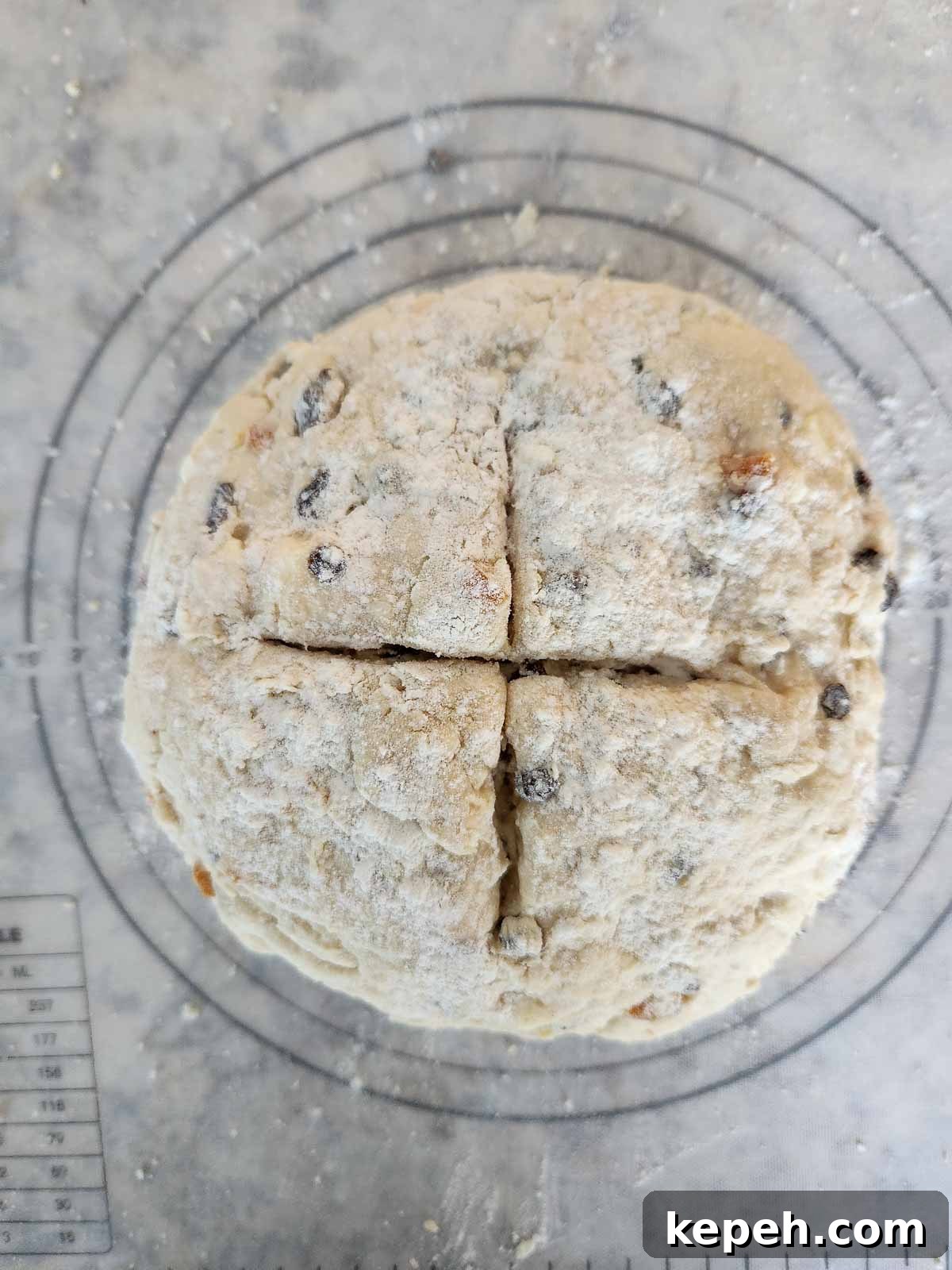
Step 9: Turn the dough onto a lightly floured surface. Knead just a few times to bring it together—do not overwork. Shape into a round about 7 inches across.
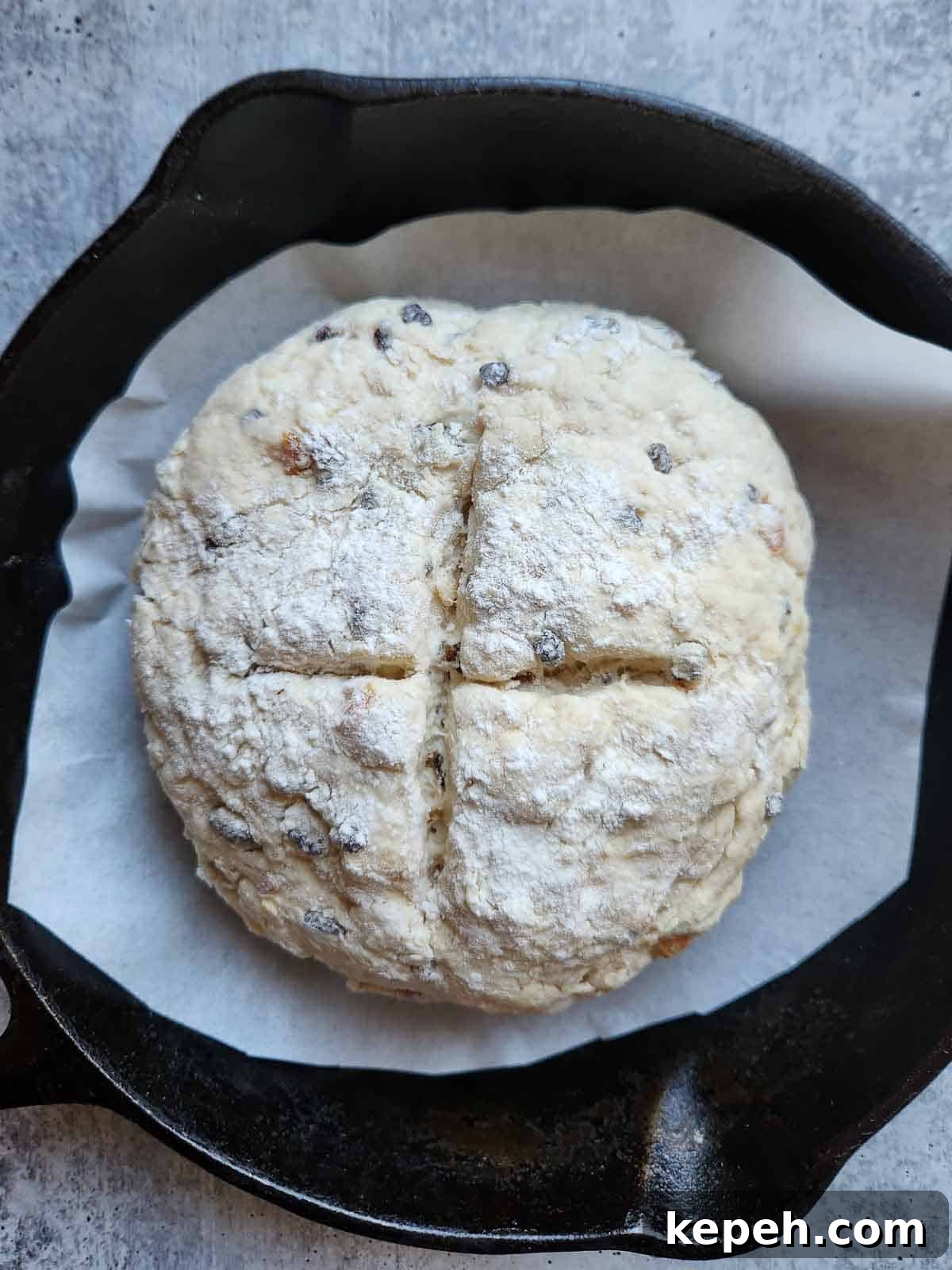
Step 10: Transfer the round to a parchment-lined skillet or baking sheet. Score a deep “X” about 1/2 inch into the top. Bake at 375°F (190°C) for 45–65 minutes until golden and a tester inserted in the center comes out clean. The bottom should sound hollow when tapped.
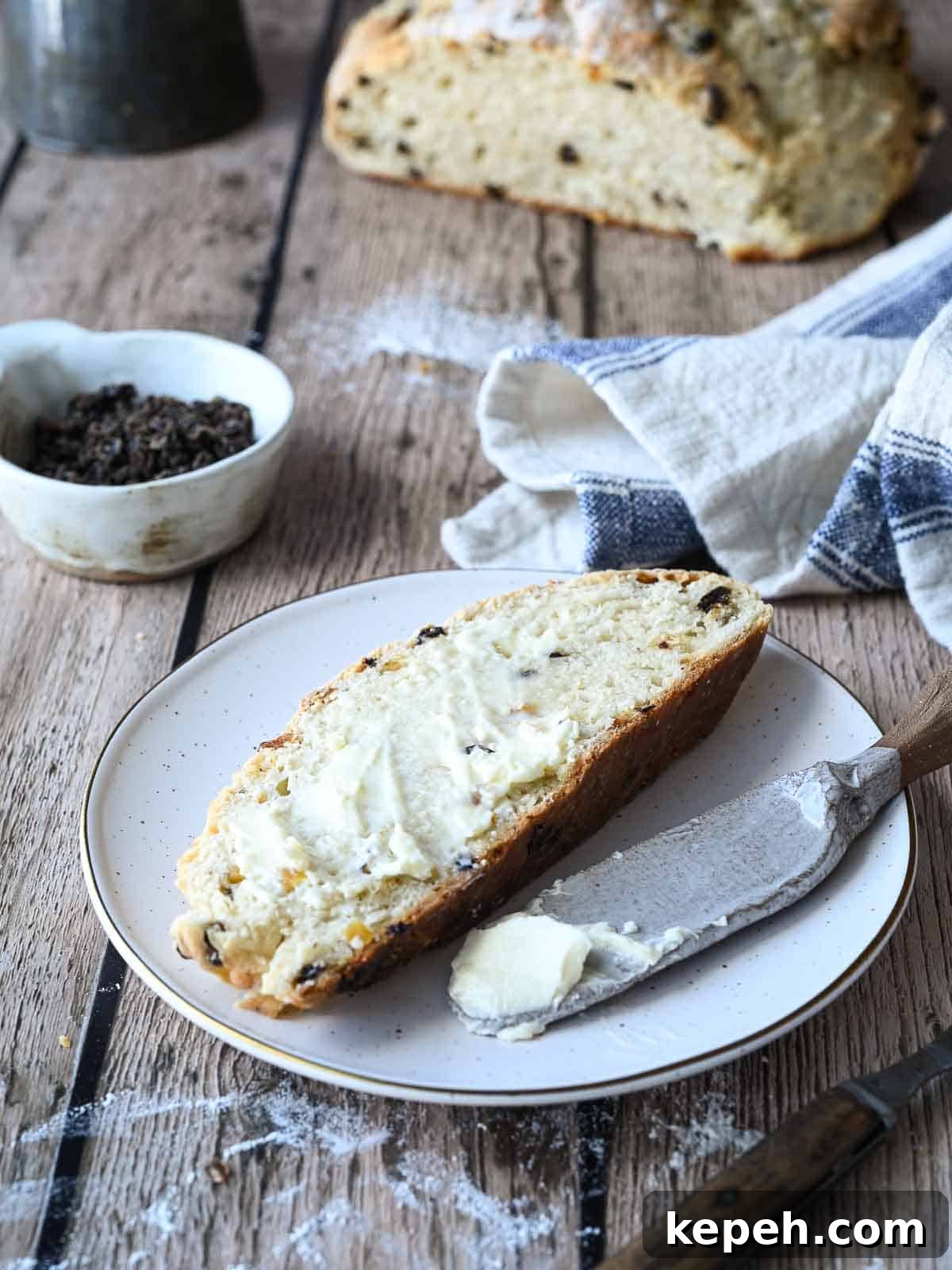
Cool on a wire rack for about 15 minutes before slicing. Serve warm with salted butter or your favorite jam.
Expert tips
- Keep ingredients cold: Cold butter and cold buttermilk help create flaky pockets and a crunchy crust.
- Test baking soda: Fresh baking soda reacts vigorously with acid; if it doesn’t bubble with a little vinegar, replace it.
- Work the dough minimally: Overworking develops gluten and makes a tougher loaf; handle just until it comes together.
- Use parchment: Lining the pan prevents sticking and makes cleanup easier.
- Check doneness: A golden top, hollow sound when tapped on the bottom, and a clean tester are the best indicators.
Serving suggestions
Warm slices with salted butter are classic. Other ideas:
- Spread with jam—apricot or berry preserves pair well with the dried fruit.
- Use slices for a rustic cheese board in place of crackers.
- Serve alongside a hearty soup for dunking.
- Toast slices for breakfast topped with smashed eggs, cheese, or honey.
- Make French toast from leftover slices for a sweet, textured variation.
Storage and make ahead
Allow the bread to cool completely, then wrap tightly in plastic wrap. Store at room temperature for 3–4 days. For longer storage, freeze wrapped loaves for up to 3 months. Reheat or toast slices to refresh texture and flavor.
FAQ
Should my Irish soda bread be hard on the outside? A good soda bread has a firm, crunchy crust and a soft, tender interior. Use a serrated knife to slice so you preserve the crust.
Recipe
Irish Soda Bread with Currants and Apricots
This American-style Irish soda bread is studded with currants and apricots and lightly sweetened with brown sugar. Yield: 1 loaf (about 12 slices).
Ingredients
- 4 cups all-purpose flour
- 1 teaspoon baking soda
- 1 teaspoon kosher or fine sea salt
- 3 tablespoons dark brown sugar
- 1 large egg
- 1 3/4 cups cold buttermilk
- 4 tablespoons cold unsalted butter, cut into cubes
- 1/2 cup dried currants or raisins
- 1/2 cup dried apricots, finely chopped
- 1/4 cup orange juice (for soaking fruit)
Instructions
- Preheat the oven to 375°F (190°C). Line a cast-iron skillet or baking sheet with parchment paper.
- Soak currants and apricots in orange juice for 10 minutes. Drain and press out excess juice.
- In a bowl, whisk flour, baking soda, and salt. Cut in cold butter until pea-sized pieces remain.
- Whisk egg with brown sugar, then stir in cold buttermilk until combined.
- Add the buttermilk mixture to the dry ingredients and stir until moistened. Fold in drained fruit.
- Turn dough onto a floured surface and knead a few times. Shape into a 7-inch round. Score an “X” about 1/2 inch deep on top.
- Bake 45–65 minutes until golden and a tester comes out clean. The bottom should sound hollow when tapped.
- Cool on a rack 15 minutes. Slice and serve warm with butter or jam.
Notes
- Keep butter and buttermilk cold for best texture.
- Replace baking soda if it fails the vinegar test (no fizz = replace).
- Don’t overwork the dough; a gentle touch preserves tenderness.
*Nutrition values are estimates and will vary by ingredients and serving size.