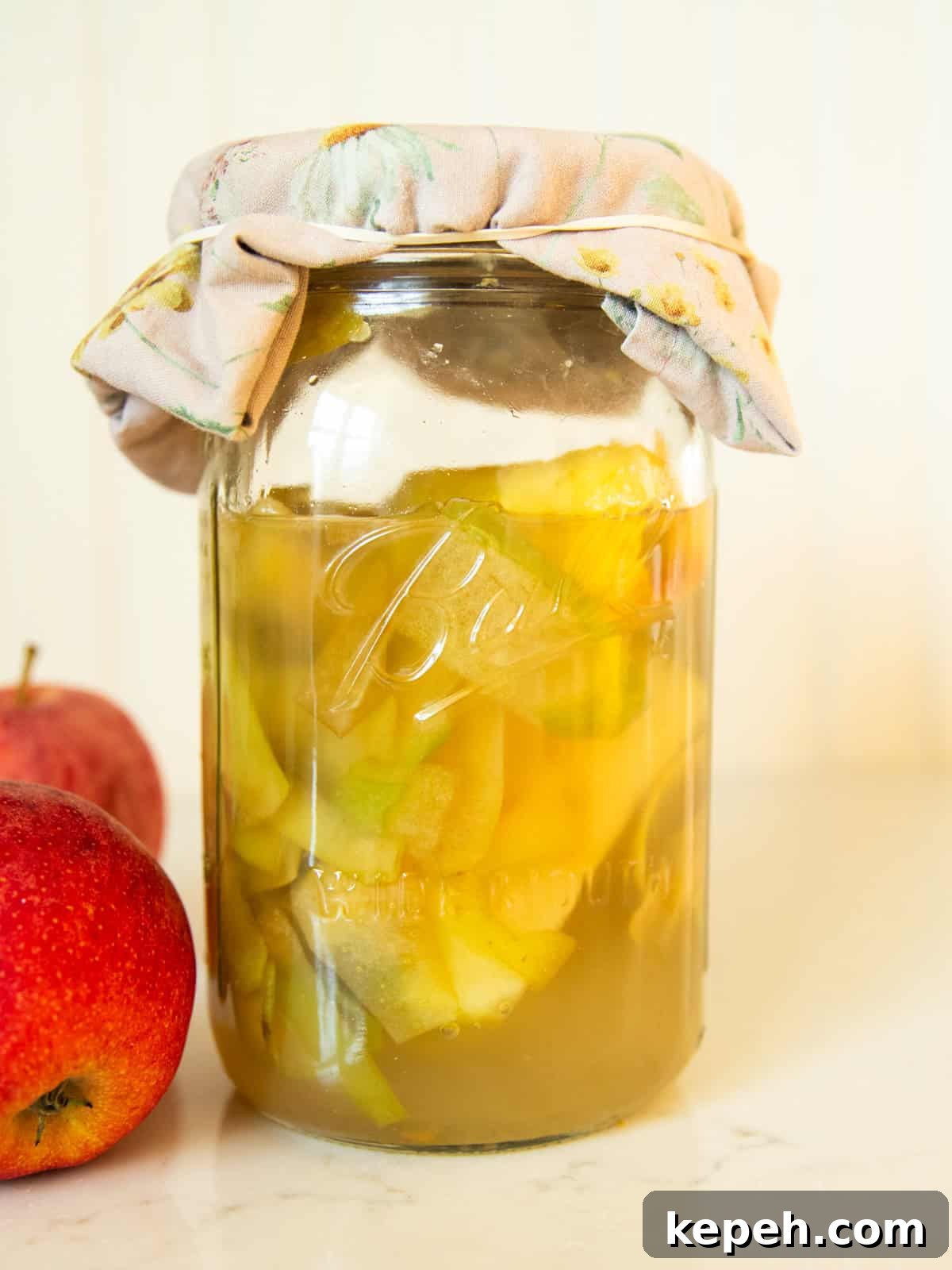
Skip the store and make your own homemade apple cider vinegar from kitchen scraps. It’s surprisingly simple to produce vinegar you can use for cleaning, hair care, skincare, cooking, and more. You only need three basic ingredients and a little patience.
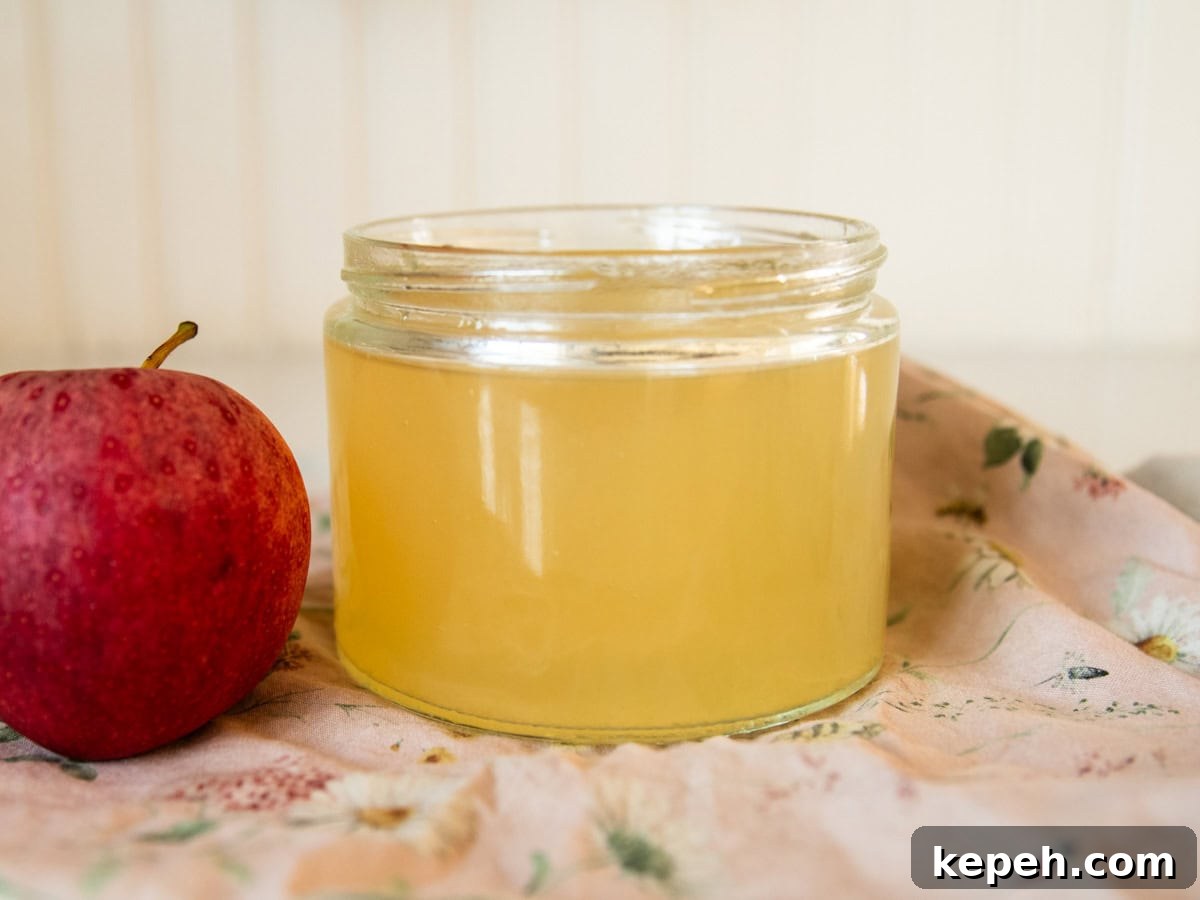
I use apple cider vinegar constantly in a sustainable, low-waste lifestyle. From recipes in the kitchen to DIY bath and body products, I always keep a supply on hand. Making your own is rewarding and helps you avoid packaging waste while using apple parts that might otherwise be discarded.
Why You’ll Love It
- Easy DIY: Fermenting vinegar is straightforward and requires only a few minutes of active time. The rest is hands-off.
- Save money: Homemade apple cider vinegar costs very little to make compared with store-bought varieties.
- Eco-friendly: This method repurposes apple peels and cores and reduces packaging waste.
- Versatile ingredient: Use your vinegar for cooking, cleaning, hair rinses, facial toners, and many DIY recipes.
What You’ll Need
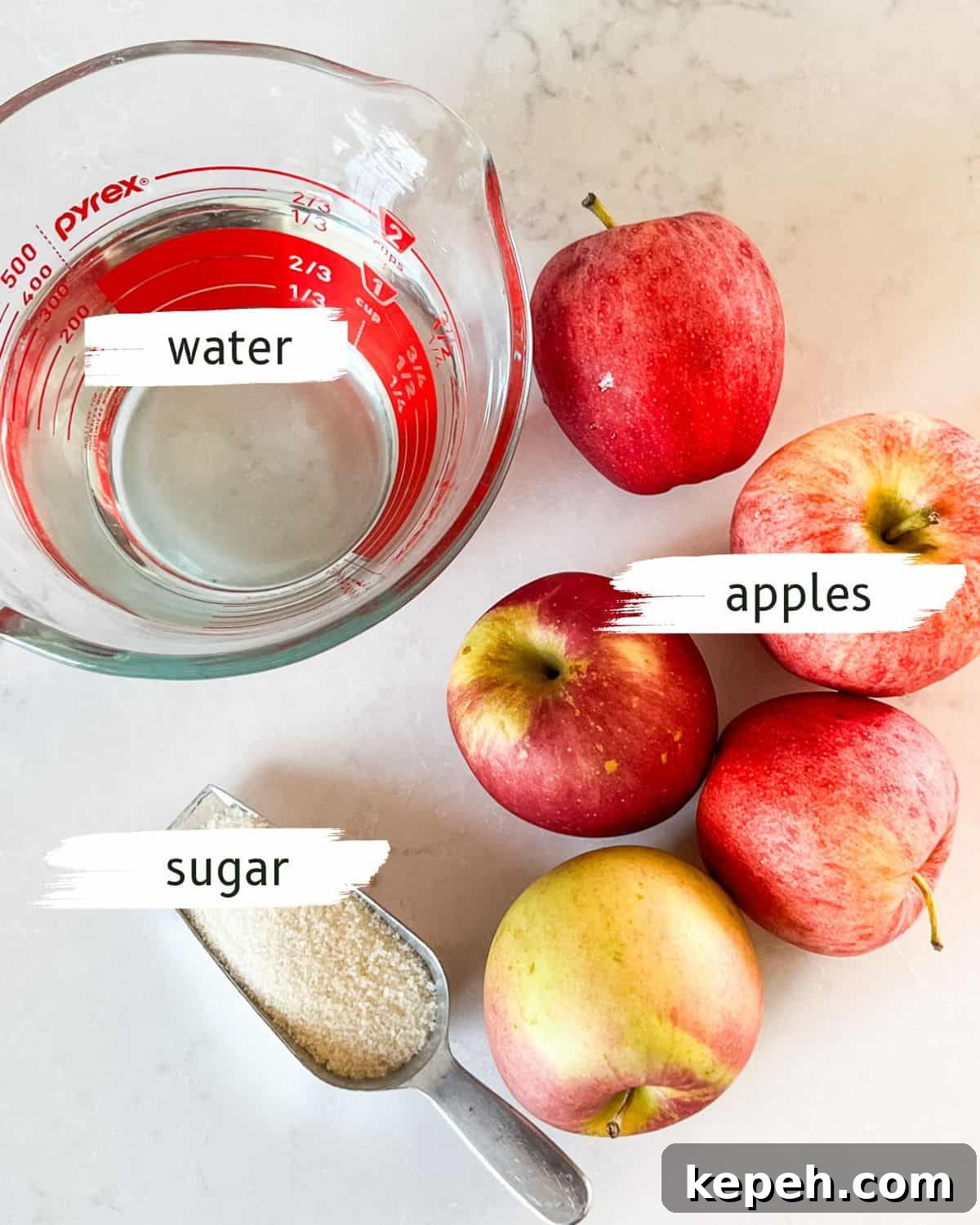
- Apples: Use peels, cores, or chopped fruit. This is ideal for using up scraps from baking or lunches.
- Sugar: A small amount feeds the yeast and bacteria that start fermentation. It won’t make the final vinegar sweet.
- Water: Filtered or bottled water is best to avoid chlorine or other additives that can affect fermentation.
- Quart jar: A clean glass jar for fermenting; you can transfer the finished vinegar to a smaller bottle for storage.
- Cheesecloth: A breathable cover keeps debris out while allowing airflow. A coffee filter or thin cloth will also work.
How to Make Apple Cider Vinegar
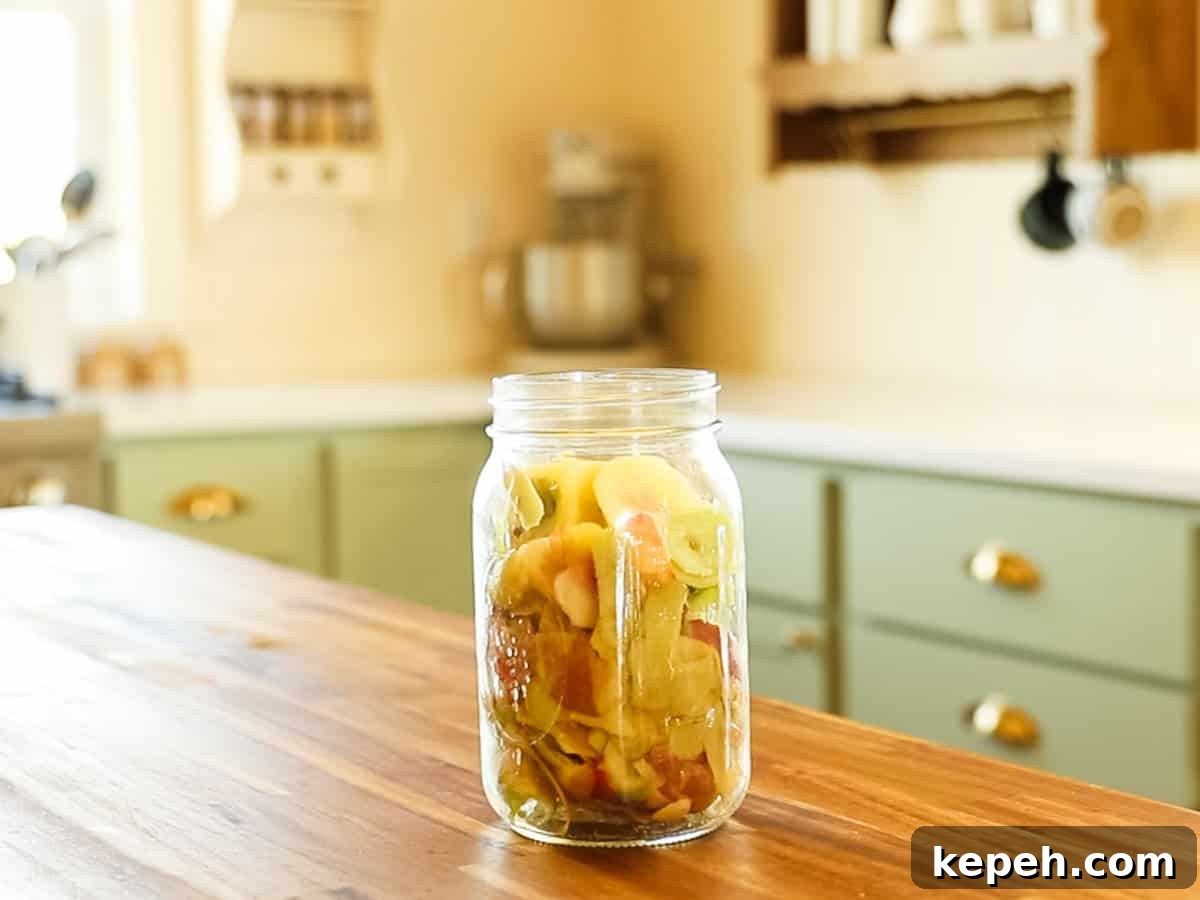
Step 1. Place apple scraps into a clean jar, filling it about ½–¾ full.
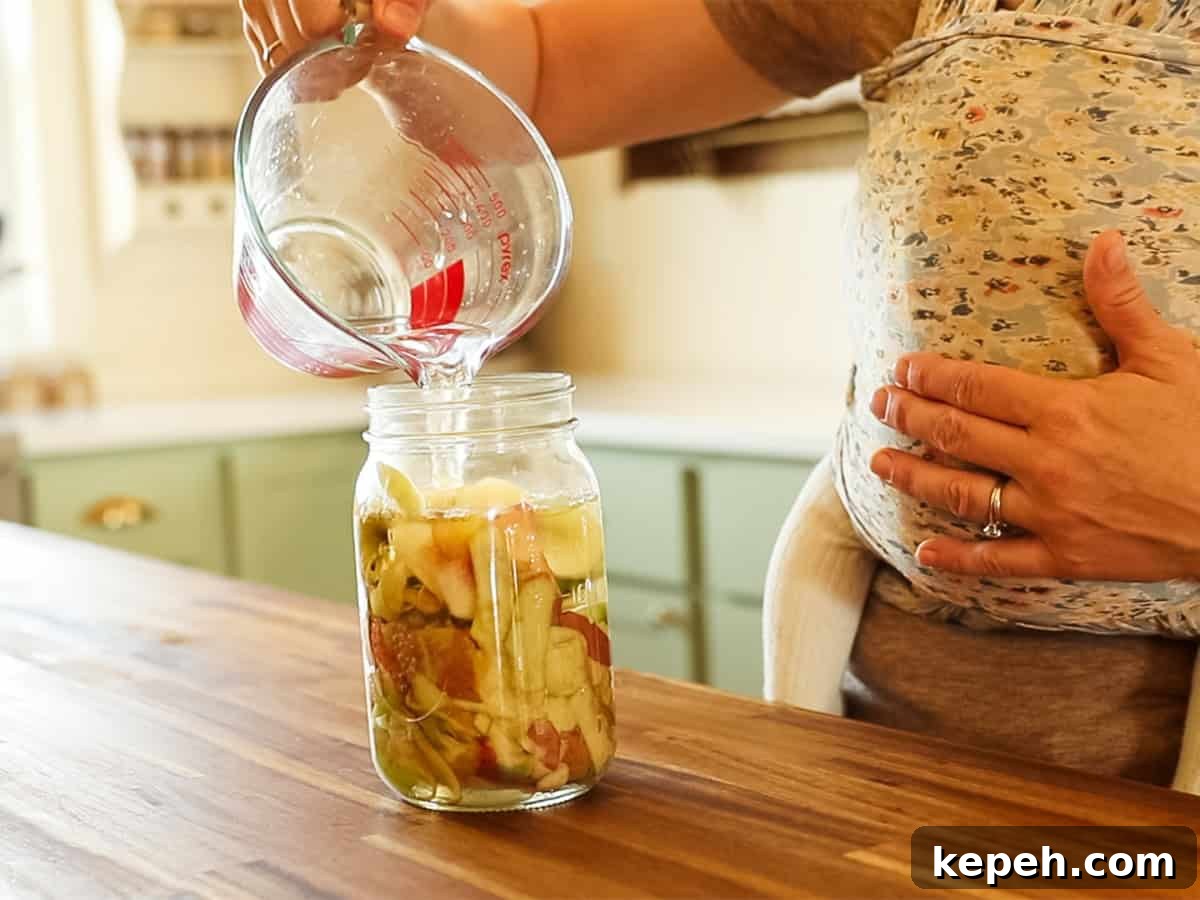
Step 2. Add filtered water, one cup at a time, leaving roughly ¾” of headspace at the top.
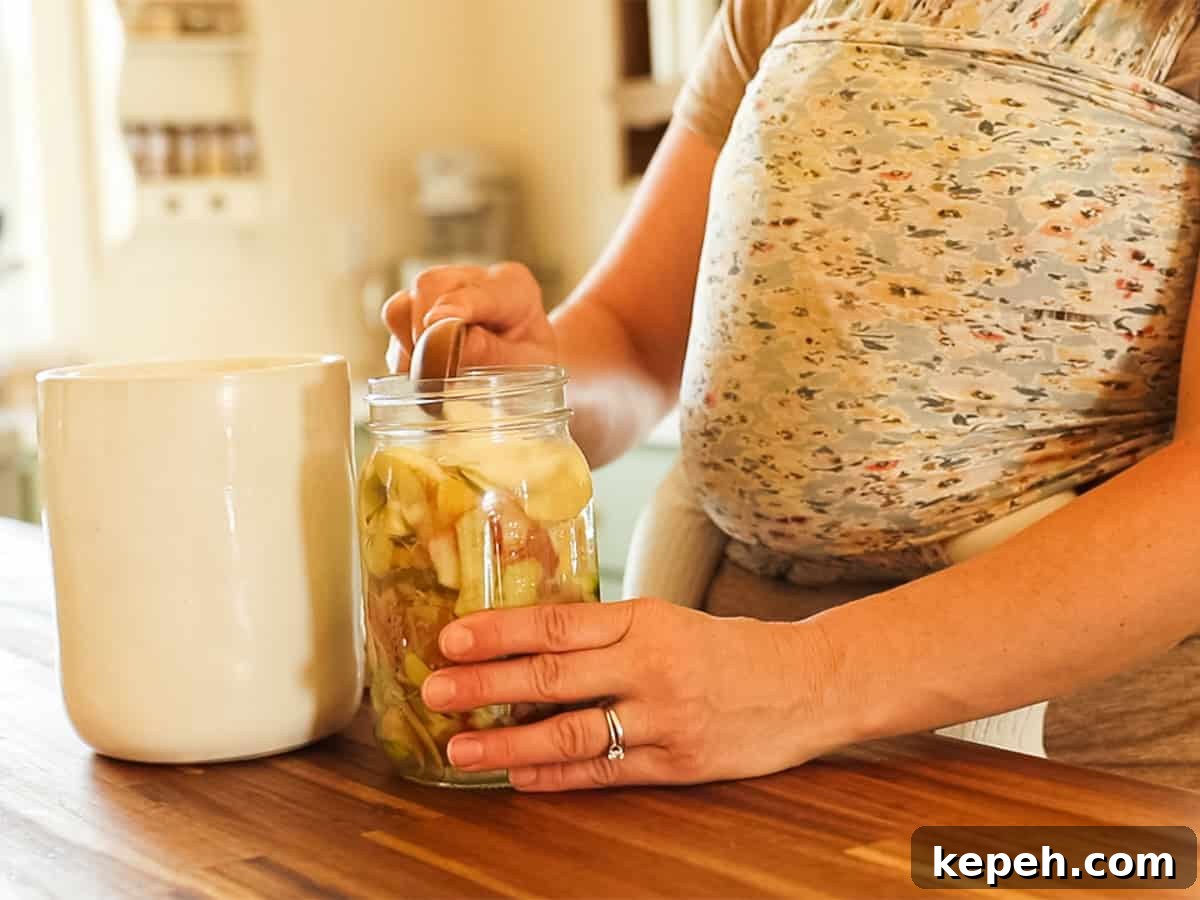
Step 3. Stir in the sugar until dissolved.
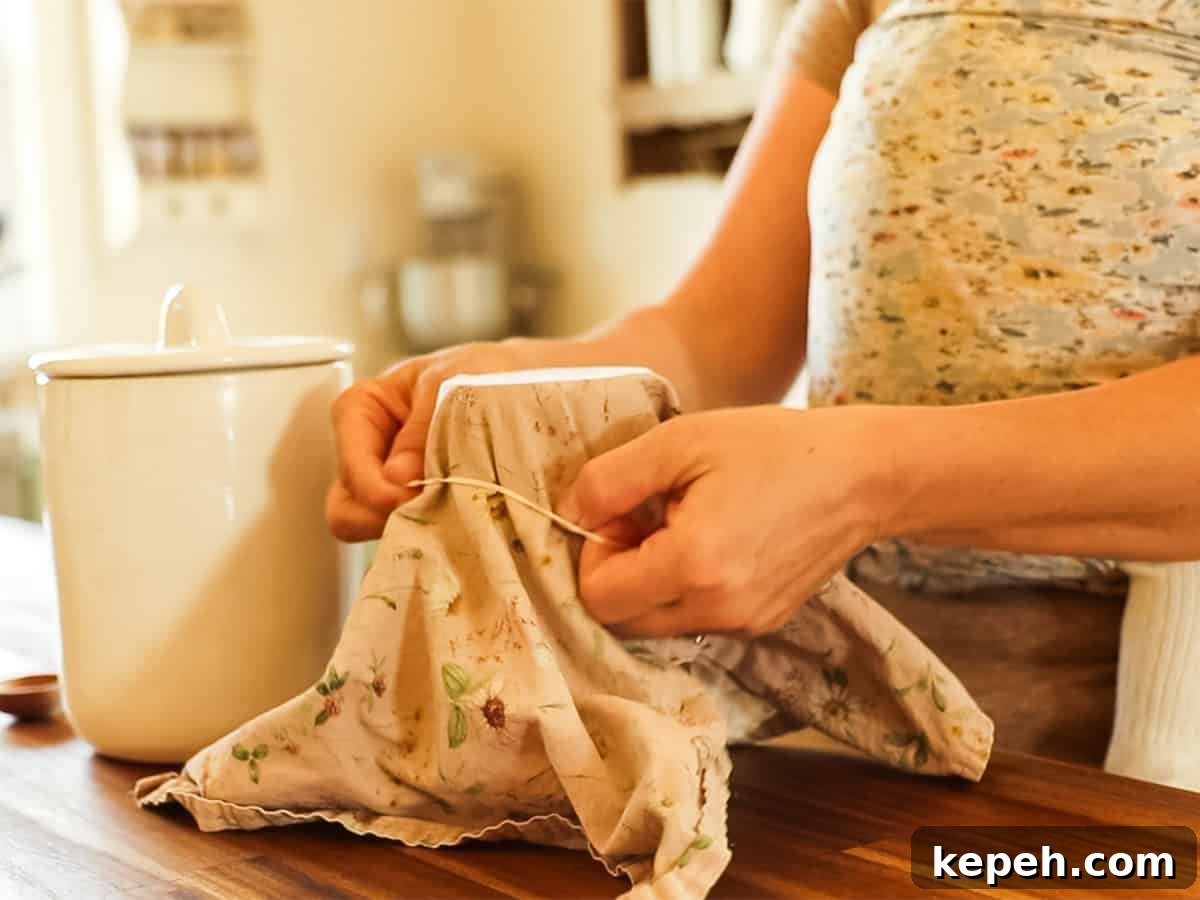
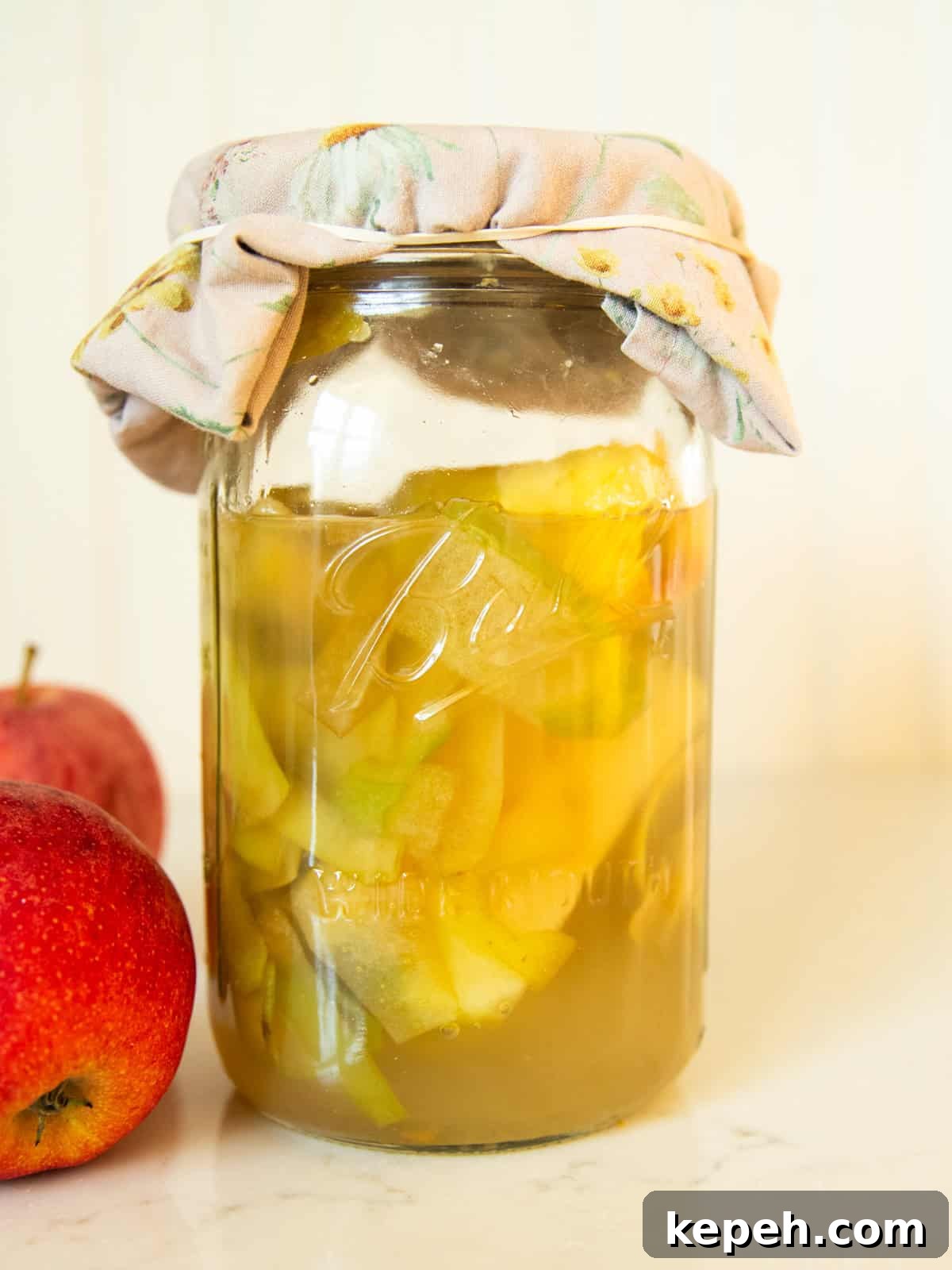
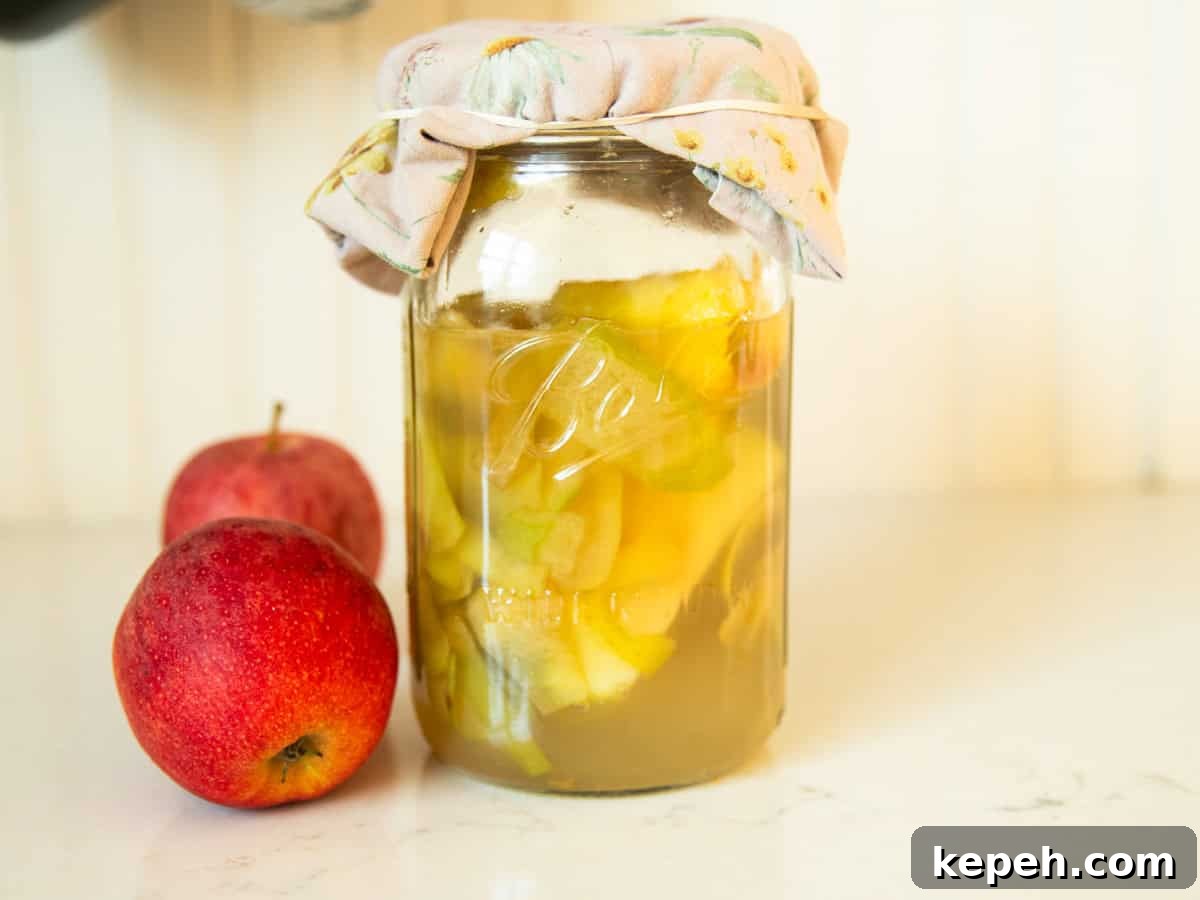
Step 4. Cover the jar with cheesecloth (or another breathable cloth) and secure it. Store the jar in a cool, dark place away from direct sunlight for 30 days.
Step 5. Check the jar every few days to ensure the apples remain submerged and no mold appears. Stirring occasionally helps keep everything mixed.
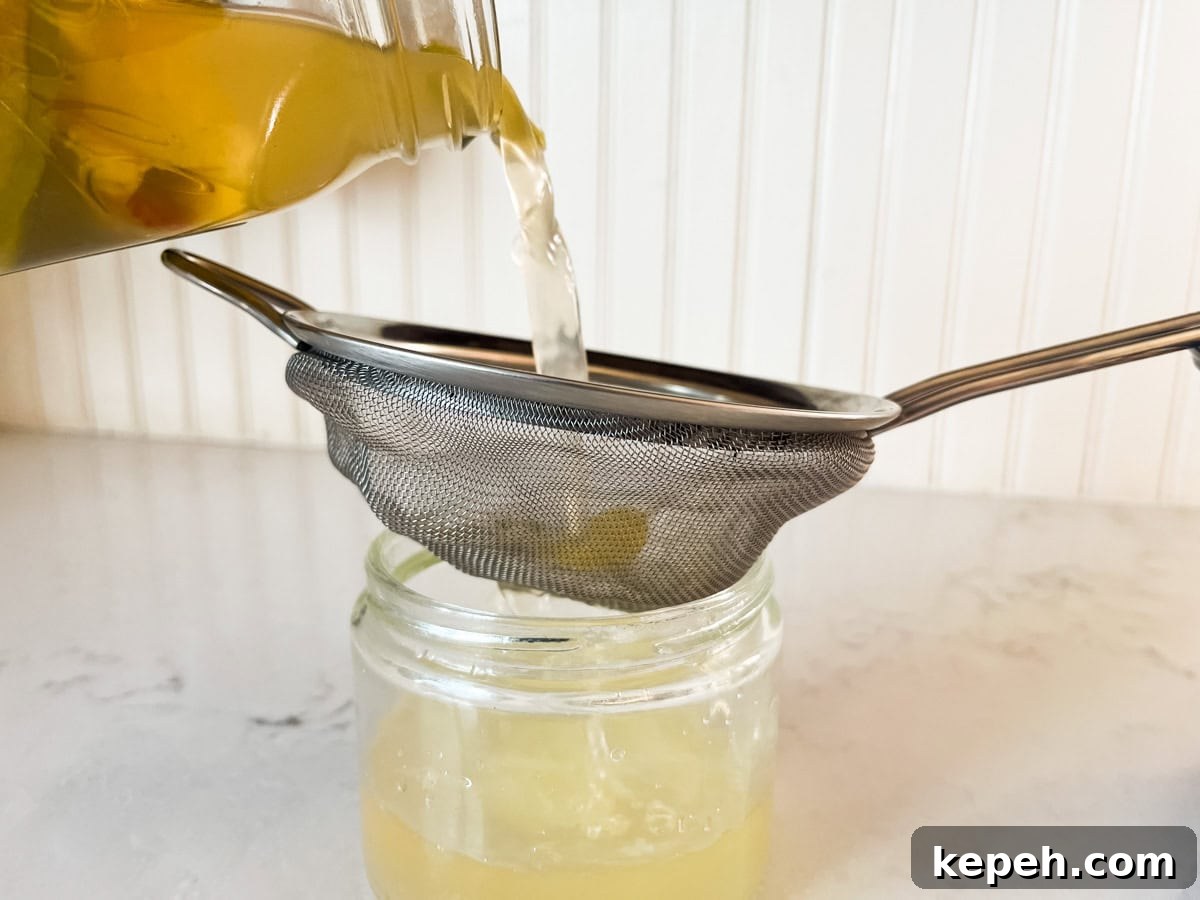
Step 6. After about two weeks you should notice a mildly sweet, fermenting aroma. Strain out the solids and discard them.
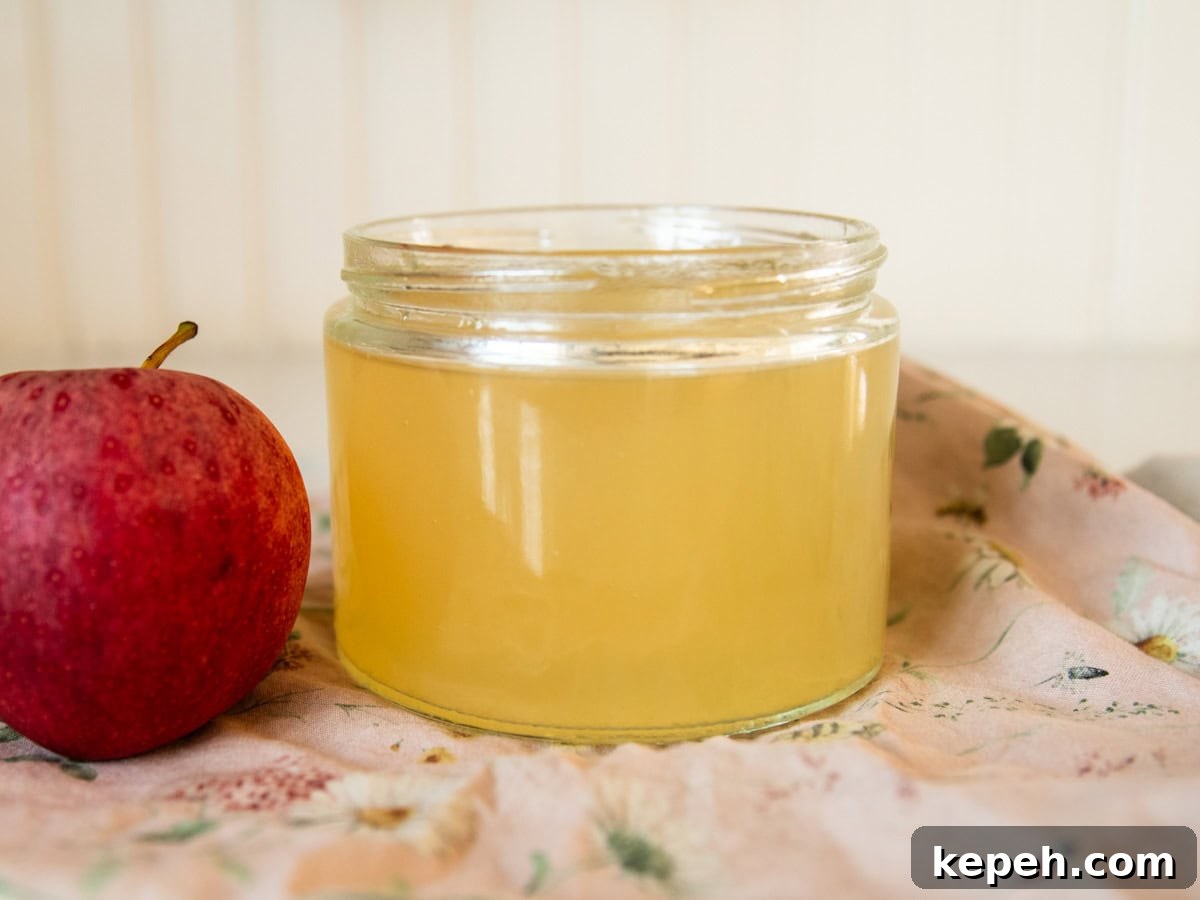
Step 7. Pour the liquid back into the jar, cover it again, and let it ferment for another two weeks. Swirl or stir it every few days. When it reaches the acidity you prefer, transfer the vinegar to a sealed container and store it in the refrigerator.
Expert Tips
- Use any apple varieties or a mix to achieve balanced flavor. A combination including a tart apple like Granny Smith works well.
- Fresh or frozen scraps are fine — just avoid any pieces with mold or rot.
- Keep all apple pieces submerged to reduce the risk of mold. If you see mold (fuzzy or colored growth), discard the batch and start over.
- A cloudy film or “mother” forming on the surface is normal and indicates active fermentation.
- If you don’t have cheesecloth, a coffee filter, thin fabric, or a clean cloth napkin will work as a breathable cover.
- Consider checking pH before bottling; vinegar with a pH above 4.5 likely did not ferment properly and should be discarded.
Uses for Homemade Apple Cider Vinegar
Homemade apple cider vinegar can be used in all the same ways as store-bought ACV. It’s great for dressings and marinades, hair rinses, facial toners, cleaning solutions, and DIY body care recipes. A few ideas:
Hair Care
- Use as a hair rinse to remove buildup and add shine.
- Add to clarifying shampoos or masks to help manage frizz and clarify the scalp.
Bath & Body
- Use in detoxifying foot soaks, facial toners, or gentle skin rinses.
- Include in masks and other homemade skincare formulations.
Around the House
- Make salad dressings, marinades, or pickling brines.
- Use diluted ACV for natural cleaning solutions and household uses.
Recipe FAQs
Vinegar is highly acidic and, when properly fermented and stored, can keep indefinitely. For best quality, many people use it within two years. Discard if you notice an off smell or visible mold.
If the vinegar is too strong for tasting purposes, dilute it with filtered water to reach the acidity and flavor you prefer. Strong vinegar still works well for cleaning and many DIY uses.
Yes. Remove stems and chop whole apples into pieces so they fit in the jar. Avoid any fruit with mold or soft rot.
Freeze peels and cores until you have enough to make a batch, or supplement with a chopped whole apple.
Hands-on time is about 10 minutes. Fermentation takes roughly 30 days total, which includes an initial period and a second maturation period.
More Recipes to Use Your ACV
- Baking soda foot soak
- Homemade dandruff shampoo
- DIY bentonite clay face mask
- DIY face wash recipes
If you try this Apple Cider Vinegar recipe, please leave a star rating and share your experience in the comments. Thanks for reading!
Apple Cider Vinegar Recipe
Equipment
- 1 quart jar
- Cheesecloth (or breathable cloth)
Ingredients
- 1 lb. apple scraps (peels, cores, or chopped apples)
- 2 tablespoons sugar
- 2 cups filtered water, divided (16 oz)
Instructions
- Add your apple scraps to a clean jar, filling it about ½–¾ full.
- Add filtered water, one cup at a time, leaving about ¾” of space at the top.
- Stir in the sugar until dissolved.
- Cover the jar with cheesecloth and secure it in place.
- Place the jar in a cool, dark room away from sunlight for 30 days.
- Check every few days to ensure the apples remain submerged and no mold forms; stir if desired.
- After about two weeks, when the mixture smells slightly sweet, strain out the solids and discard them.
- Return the liquid to the jar, cover again, and let it ferment two more weeks, stirring occasionally. When it reaches your preferred acidity, transfer to a sealed container and refrigerate.
Notes
- Use a variety of apples for more complex flavor. A mix with tart and sweet apples works well.
- Frozen scraps are usable; avoid any moldy or rotten pieces.
- Discard the batch if you see mold. A cloudy “mother” is normal and harmless.
- Substitute any breathable cover if you don’t have cheesecloth.
- Check pH before bottling; vinegar should be acidic. If pH is above 4.5, do not use.
Tried this recipe?
Share your result and tag the author or mention your experience.
This recipe is for informational purposes and not intended as medical advice. Test any DIY product on a small area and use common sense when applying it to skin or hair.