
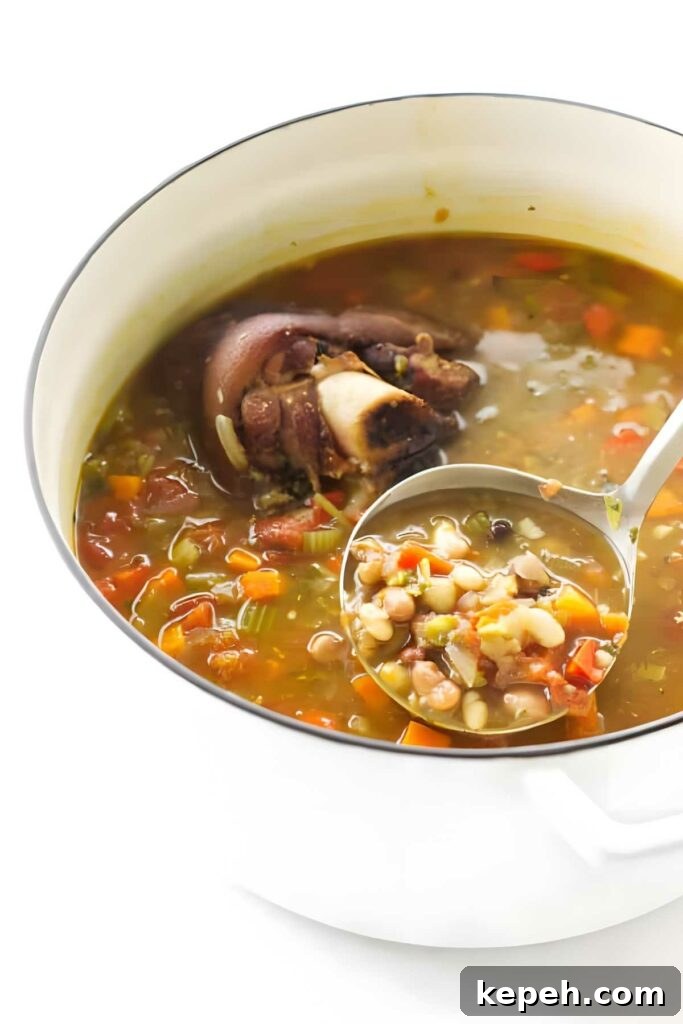
This hearty 15-bean soup, slowly simmered with a smoky ham hock, delivers deep, comforting flavor. A variety of beans cooks down with vegetables and fresh herbs into a rich, rustic broth. Finished with a squeeze of lemon and tender diced smoked ham, this one-pot meal is perfect for a cozy dinner and tastes even better the next day.

The long, gentle simmer allows the beans to become creamy while the vegetables soften into the broth and the ham hock releases smoky depth and body. This soup rewards patience: as it rests, the flavors meld and the broth develops richer texture.
Why This Mixed Bean Soup Works
Ham hock builds the base: Simmered early, it creates a deep, smoky foundation that defines the soup.
Layered cooking for texture: Adding beans and vegetables at different stages preserves the firmness of some beans while allowing others to break down and thicken the broth.
Great for leftovers: Use diced ham from holiday leftovers or swap in smoked turkey — the method adapts well.
Natural thickening: Puréeing a portion of the soup yields a velvety finish without added thickeners.

For a quicker option, try an Instant Pot version of 15-bean soup to speed up the cooking time while preserving the same flavor profile.
Recipe Tips
Sort the beans: Spread the mix on a tray and remove any small stones before rinsing.
Keep a gentle simmer: A rolling boil can split the beans and make the broth cloudy.
Add lemon at the end: Fresh lemon brightens and balances the savory broth.
Let it rest: Flavors deepen after sitting overnight; reheating the next day improves the soup.
Simmer the ham hock fully: The collagen needs time to break down to give the broth body — don’t rush this step.
Dice vegetables evenly: Uniform pieces cook at the same rate for a consistent texture.
Skim occasionally: Removing foam during the long simmer helps keep the broth clear and focused.
Use an herb bundle: Tie thyme and bay leaves so they infuse flavor without leaving stray stems.
Season after simmering: The ham and broth add salt as they cook, so adjust salt at the end to avoid oversalting.
Allow natural breaking: A few beans breaking during the last 20 minutes will help thicken the soup without blending.
If you don’t already have a package of 15-bean mix in your pantry, most grocery stores sell them in the beans and rice aisle. A shelf-stable bean mix can be a great staple to keep on hand for quick, nutritious meals.
Ingredient Notes
15-bean mix: This blend includes beans of various sizes and textures. Smaller beans soften sooner while larger beans take longer. The variety creates a naturally thick, hearty broth without added thickeners.
Ham hock: The hock is the flavor engine of this soup. As it simmers it releases smoky notes, salt, and collagen that produce a rich, savory broth you won’t get from just diced ham.
Smoked ham: Added near the end, diced smoked ham provides tender, meaty bites that complement the depth of the hock.
Fresh herbs: Whole thyme sprigs and bay leaves infuse steady, aromatic flavor over the long cook. Keeping them bundled makes removal easy and prevents loose herbs from floating in the pot.
Celery leaves: Don’t discard them — they add a bright, herbaceous edge that enhances the broth more than you might expect.

15 Bean Soup
A long simmer, a smoky ham hock, and a blend of hearty beans turn this pot into a soup that’s deeply satisfying and ideal for cold-weather meals. When lemon and fresh herbs are added at the end, the flavors balance into a bright, savory bowl that earns a spot in your regular rotation.
For another slow-simmered option, try a black bean soup that leans on warm spices for a smoother, creamier finish.

15 Bean Soup
If you make this recipe, please leave a star rating and comment.
Ingredients
- 20 ounces 15-bean soup mix (about 1 package)
- 1 Ham hock or ham shank
- 2 quarts water
- 10 cups chicken broth
- 1 large onion, diced
- 2 16-ounce cans diced tomatoes
- 1 red (or yellow) bell pepper, diced
- 4 garlic cloves, finely chopped
- 3 stalks celery, diced
- 1 cup celery leaves, chopped
- ½ cup fresh parsley, chopped
- 4 large carrots, diced
- 2 bay leaves
- 6 sprigs fresh thyme, tied together
- 1 teaspoon salt (see notes)
- ½ teaspoon ground black pepper
- 1 tablespoon ground coriander
- 2 tablespoons fresh lemon juice
- 8 ounces smoked ham, diced
Instructions
The Beans:
- Spread the bean mix on a tray and pick out any small stones. Rinse the beans under cold water.
- Place the beans in a large bowl, cover with cold water by about 4 inches, and soak uncovered for 2 hours.
While the beans are soaking
- In a large heavy-bottomed soup pot, add the ham hock and 2 quarts of water. Bring to a boil over medium-high, then reduce heat and simmer uncovered for 2 hours to extract flavor and collagen.
- Drain the soaked beans and add them to the pot with the ham hock. Add the chicken broth and bring to a boil, then reduce to a simmer and cook about 1 hour.
- Add the diced vegetables, bay leaves, thyme bundle, coriander, salt, and black pepper. Stir, bring to a boil, then reduce to a simmer and cook another 45 minutes or until the largest beans are tender.
- Remove and discard the bay leaves and thyme bundle.
- Transfer the ham hock to a board, let it cool slightly, and remove as much meat as possible; reserve the meat.
- Ladle out about 4 cups of beans and vegetables and pulse briefly in a blender or food processor until smooth. Work in small batches and be careful with hot liquid.
- Return the puréed portion to the pot, stir to combine, stir in the lemon juice and reserved diced ham, adjust seasoning if needed, and serve.
Notes
Bean mix varies: Different brands include different beans, so cooking times will vary. Simmer until the largest beans are tender.
Ham hock vs. ham shank: Both work. The hock yields more collagen and a fuller broth; the shank is meatier.
Broth consistency: If the soup becomes too thick, thin it with a splash of extra broth or water.
Blending tip: Blend only a portion to achieve creaminess while keeping plenty of whole beans for texture.
Salt carefully: The ham and broth contribute salt, so taste and season at the end.
Make-ahead & freezing: The soup improves after a night in the fridge. It also freezes well for up to three months; thaw overnight and reheat gently, adding liquid if needed.
Nutrition
Nutrition information is an approximation and should be used only as a guide.
 Like this recipe? Rate & comment below!
This recipe was first published on November 12, 2014, and the post was updated with new photos. One of the original photos is shown below.