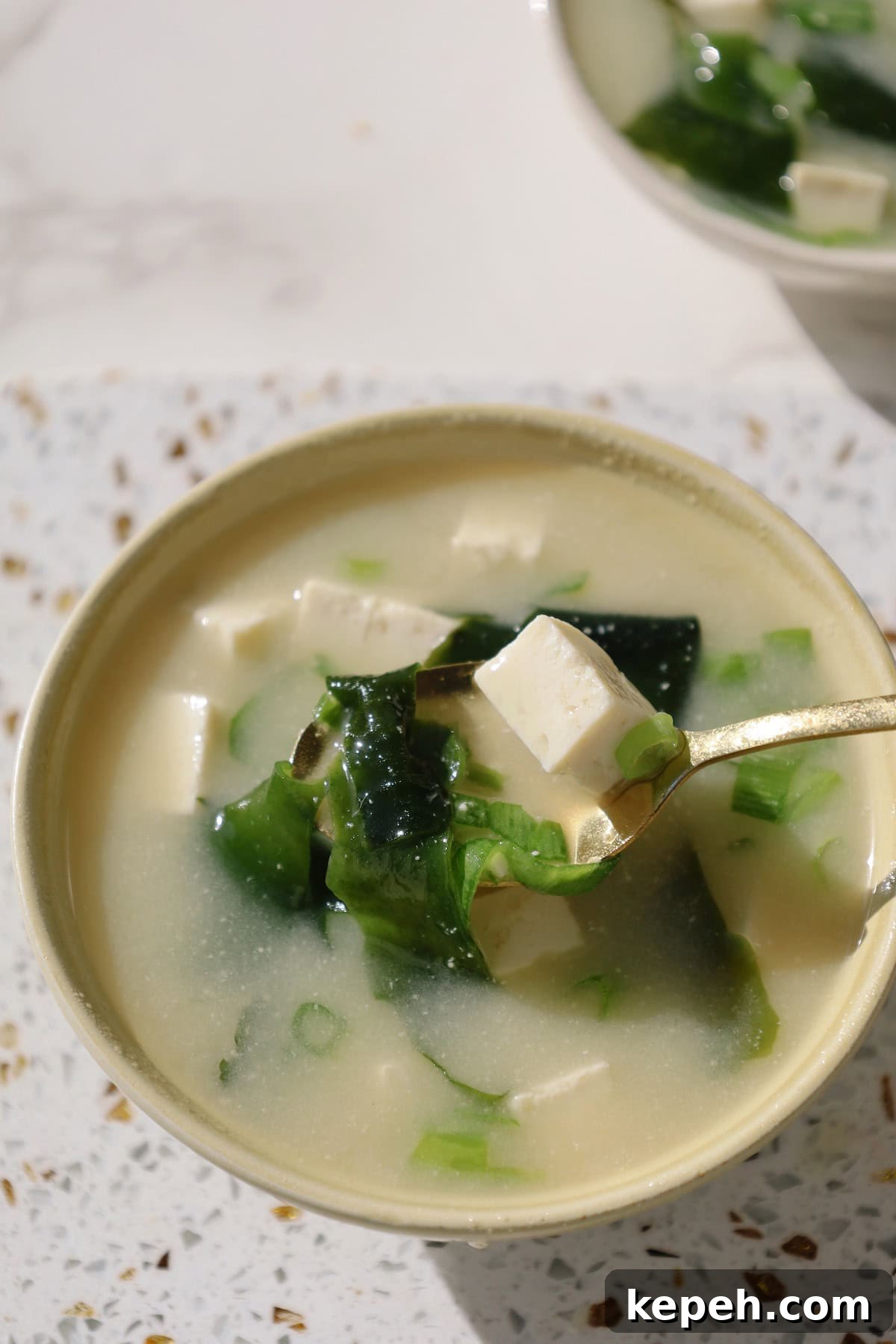
There’s nothing cozier than a bowl of warm, savory miso soup when the days grow cooler. This miso soup recipe is a fall favorite—simple, soothing, and full of umami. I make it on repeat because it’s light yet deeply flavorful, the kind of bowl that feels like an instant hug.
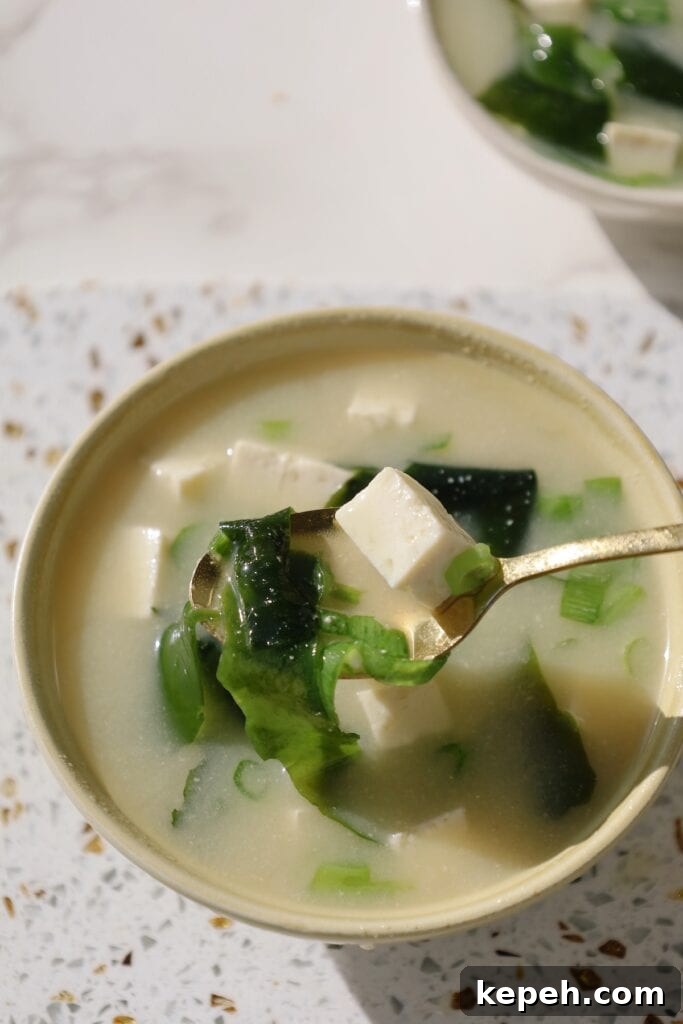
Traditional Japanese miso soup often uses bonito flakes (dried fish) in the stock, but this recipe skips them. It’s entirely vegetarian and vegan-friendly thanks to a kombu-and-shiitake dashi that delivers rich savory depth without seafood. Whether you’re meal-prepping or craving something warm, this miso soup is reliable, comforting, and easy to make. If you enjoy soups, try other recipes on the site such as creamy tomato soup, hearty black bean soup, or protein-rich lentil soup. For more ways to use silken tofu, try the cold tofu recipe with gochujang sauce.
Table of contents
- What Are the Benefits of Miso Soup?
- Key Ingredients for my Miso Soup Recipe
- Wakame vs. Kombu
- How to Make Your Own Vegan Dashi
- Recipe Tips + Common Mistakes to Avoid
- What Can You Eat With my Miso Soup Recipe? My Serving Suggestions:
- FAQ
What Are the Benefits of Miso Soup?
Miso soup (味噌汁, miso shiru) is a cornerstone of Japanese cuisine. It’s made by dissolving miso paste into dashi stock and adding simple ingredients like tofu, seaweed, and scallions. It became a daily staple in many Japanese households and is often served as part of the traditional “one soup, three dishes” meal.
This miso soup is comforting and nourishing without being heavy. Miso paste—made from fermented soybeans—can support gut balance, and the soup’s low-calorie ingredients like tofu, seaweed, and scallions provide gentle nourishment. Warm, mildly salty, and hydrating, it’s especially restorative on chilly days.
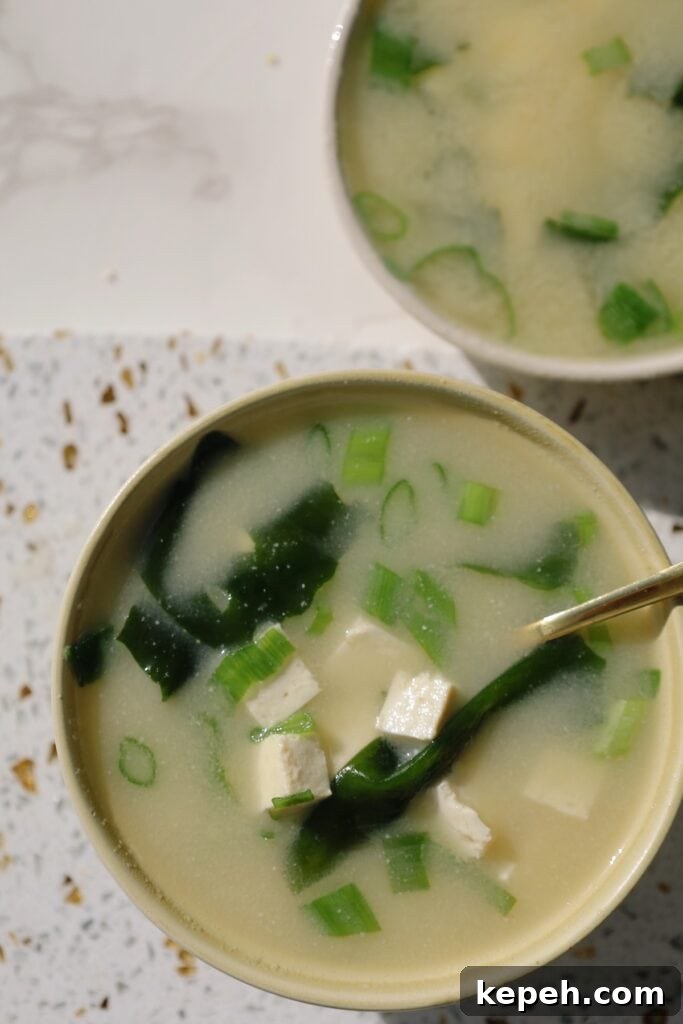
Key Ingredients for my Miso Soup Recipe
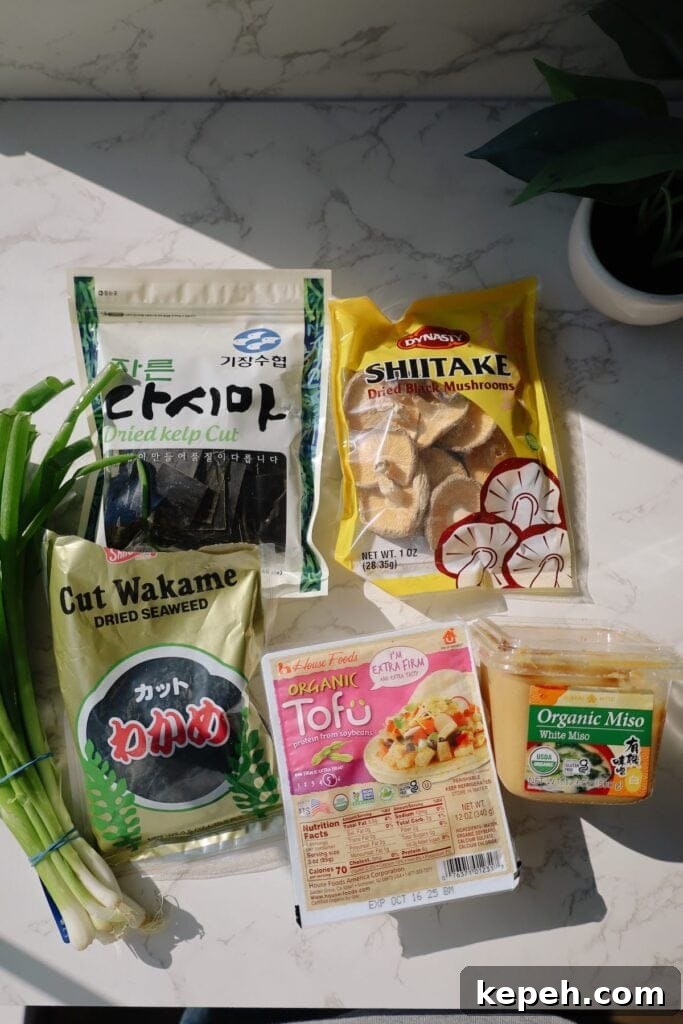
Kombu (dried kelp): The backbone of vegan dashi, rich in natural glutamates that create savory depth.
Dried shiitake mushroom: Brings deep, earthy umami to balance the miso.
Water: Letting kombu and shiitake steep builds a flavorful base.
White miso paste: Shiro miso is mild and slightly sweet, keeping the broth light and balanced.
Wakame (dried seaweed): Adds a silky texture and oceanic notes—use sparingly because it expands a lot.
Tofu: Extra-firm holds shape well; silken or soft tofu works if you prefer a gentler texture.
Scallions: Provide color and a fresh, subtle bite that complements the broth.
Together these ingredients deliver a clean, savory, satisfying miso soup without any animal products.
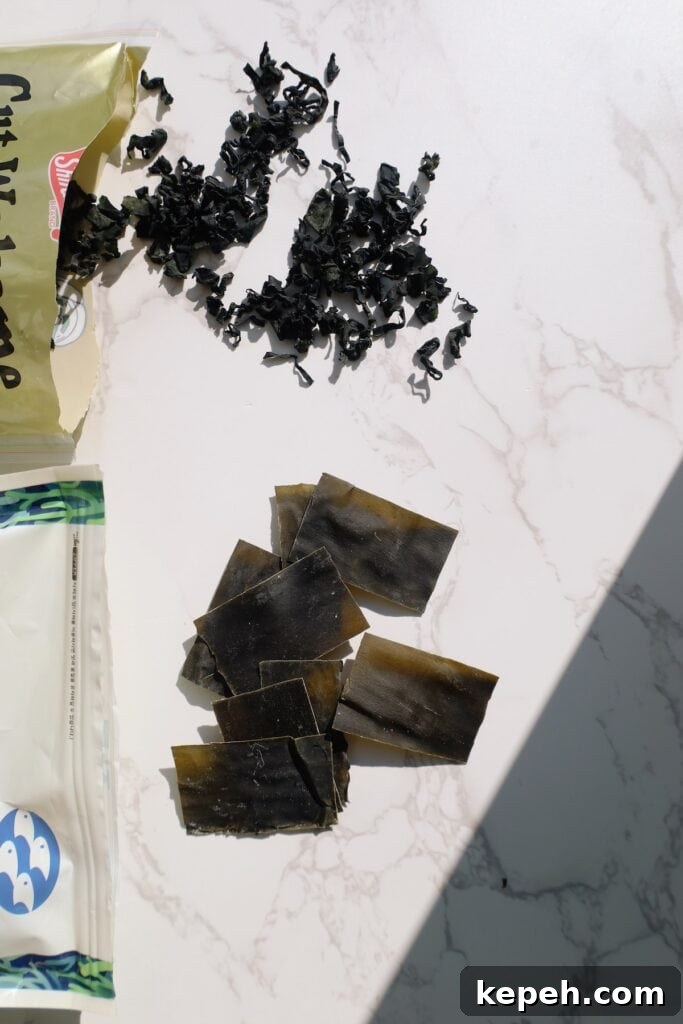
Wakame vs. Kombu
Both are seaweeds, but they serve different purposes in miso soup.
- Kombu is used to make the dashi. It’s simmered to extract umami and removed before serving—like a tea bag for flavor.
- Wakame is the edible seaweed you eat in the soup. It rehydrates in the broth and gives a silky texture.
Tip: wakame expands significantly when soaked. A small teaspoon can triple in size—measure it carefully.
How to Make Your Own Vegan Dashi
A great miso soup starts with a good dashi. Make a vegan version like this:
- Soak: Combine cold water, kombu, and a dried shiitake mushroom in a bowl or pot. Let it soak at least 30 minutes, or refrigerate overnight for a richer broth.
- Simmer: Slowly bring the mixture to a gentle simmer. Remove the kombu just before boiling to avoid bitterness or a slimy texture. Simmer the shiitake for another 5 minutes, then remove from heat.
This method yields a dashi with the same savory depth as traditional bonito-based stocks, without fish.

Recipe Tips + Common Mistakes to Avoid
- Use wakame sparingly. It expands and can dominate the soup.
- Never boil the miso. Boiling dulls the flavor and reduces beneficial probiotics.
- Dissolve miso before adding. Press it through a sieve or whisk in a small bowl to avoid clumps and uneven saltiness.
- Choose quality miso paste. A good brand makes a noticeable difference in flavor.
- Serve right away. Miso can settle; stir gently before serving.
These details help turn a good miso soup into a great one.
What Can You Eat With my Miso Soup Recipe? My Serving Suggestions:
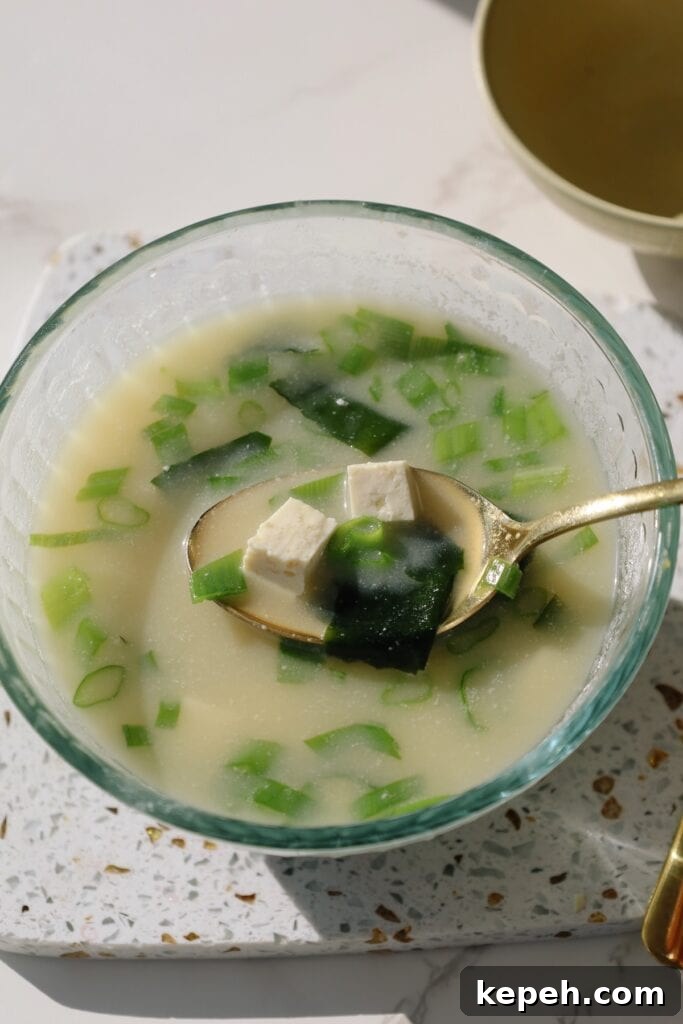
Miso soup is versatile—it works as a side, starter, or light lunch. Try pairing it with:
- Steamed rice and pickles for a simple Japanese-inspired meal.
- Sushi, tempura, or veggie dumplings.
- Udon or soba noodles on the side.
- A bowl of edamame or stir-fried greens.
It’s also satisfying on its own when you want something quick, warm, and nourishing.
FAQ
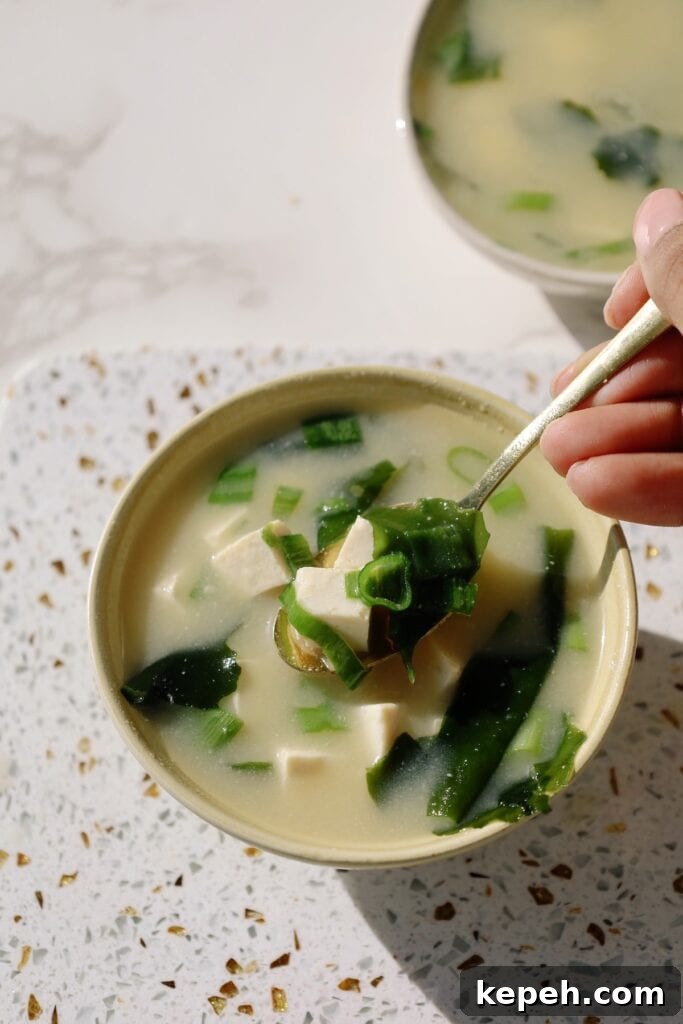
Miso soup—miso shiru (味噌汁)—is a classic Japanese comfort food made from miso paste mixed into dashi broth with additions like tofu, scallions, and seaweed. Variations exist across regions, but the basic combination of miso + dashi + simple ingredients remains constant.
Miso is a fermented soybean paste created by fermenting soybeans with salt and koji, a culture also used for sake and soy sauce. Fermentation gives miso its savory, slightly sweet taste and contributes probiotics and enzymes that support digestion.
Extra-firm or firm tofu holds its shape best. If you prefer a softer texture, use silken tofu and add it at the end.
White miso (shiro) is recommended for a mild, slightly sweet flavor. Red or mixed miso can be used for a stronger taste—just reduce the amount to avoid excess saltiness.
Separation is normal—miso can settle if the soup sits. Give it a gentle stir before serving.
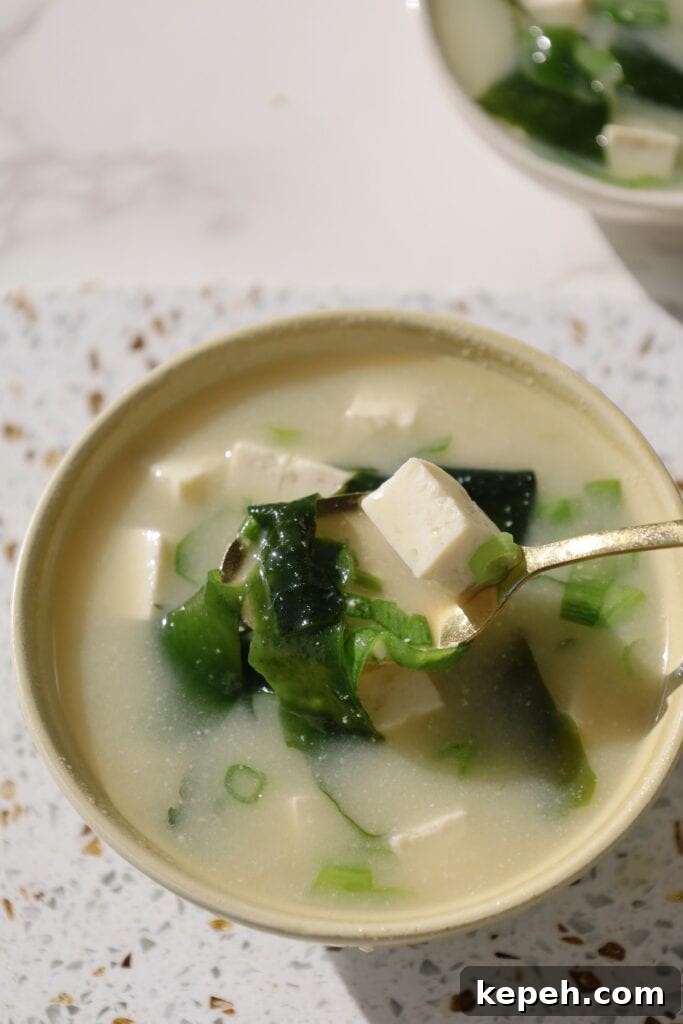
Miso Soup Recipe
Pin
Comment
Equipment
-
1 small sieve
Ingredients
Vegan Dashi
- 2 cups water
- 3 small pieces of kombu (about 2 x 3 inches each)
- 1 dried shiitake mushroom
Other
- 4 tbsp scallions
- 3 ounces extra firm tofu
- 1.5 tsp wakame
- 2 tbsp + 1 tsp white miso paste
Instructions
-
Make the dashi: In a medium bowl, combine cold water, kombu, and the dried shiitake. Let them soak for at least 30 minutes, or refrigerate overnight for a richer broth.
-
Simmer: Bring the mixture to a gentle simmer. Remove the kombu just before the water boils to avoid bitterness. Simmer the shiitake for another 5 minutes, then remove from heat.
-
Add wakame: With the heat off, stir in the wakame and let it rehydrate in the warm dashi.
-
Mix the miso: Place the miso in a fine-mesh sieve or small bowl and dissolve it into warm dashi, pressing through with a spoon or whisk until smooth. This prevents clumps and ensures even seasoning.
-
Add tofu and garnish: Gently stir in cubed tofu and top with sliced scallions. Serve immediately.
Notes
Reheating: Warm gently—do not boil—to preserve flavor and probiotics.
Freezing: Remove tofu before freezing to avoid texture changes.
Substitutions: Red or mixed miso can be used—adjust the amount to taste.
Ingredient Tip: Measure wakame carefully; it expands more than you expect.
Nutrition
Nutrition information is automatically calculated and should be used as an approximation.