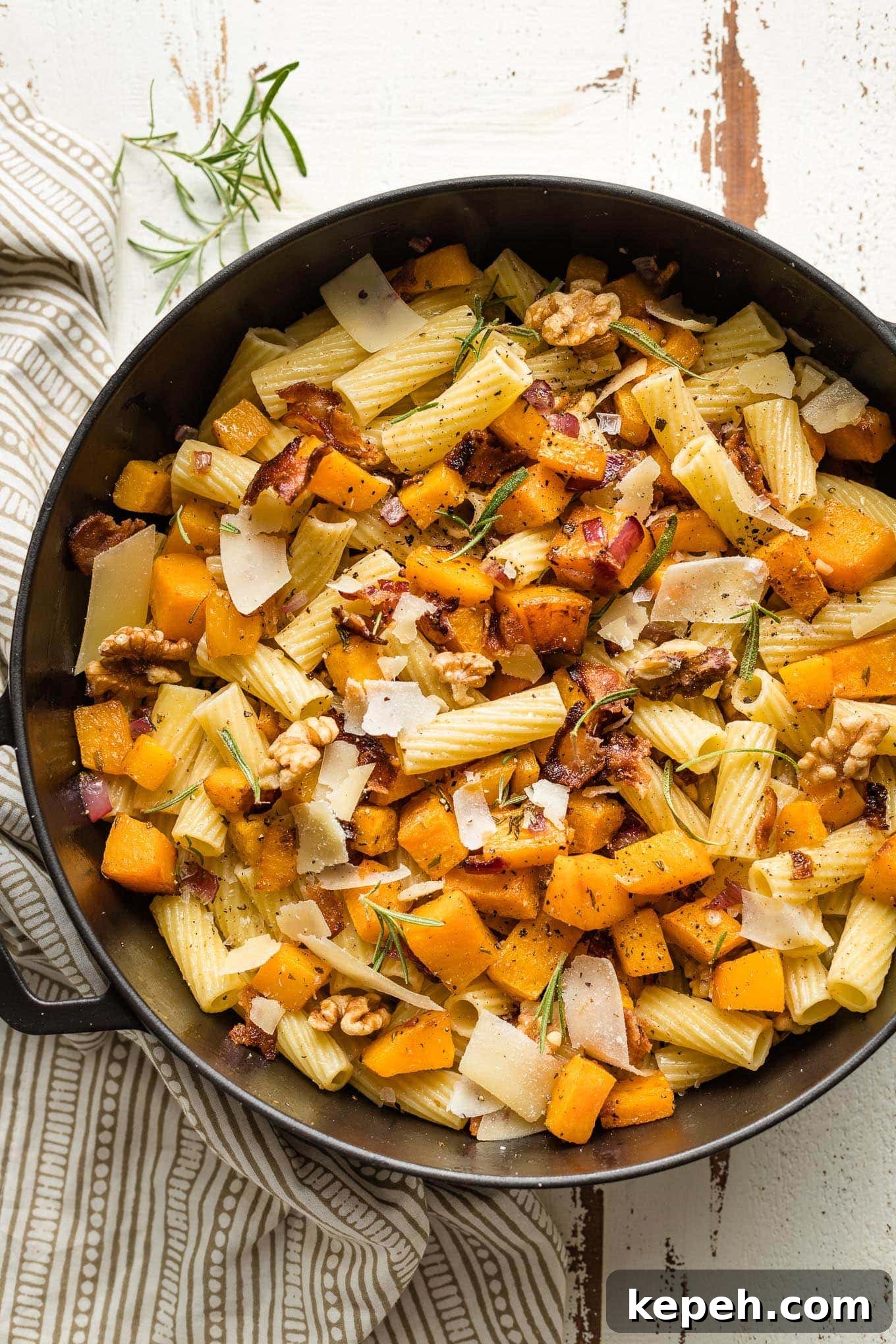
It’s a true autumn comfort: Roasted Butternut Squash Pasta with bacon, rosemary, toasted walnuts, and Parmesan. This dish tastes sophisticated but is simple to prepare, making it perfect for busy weeknights or cozy weekend dinners.
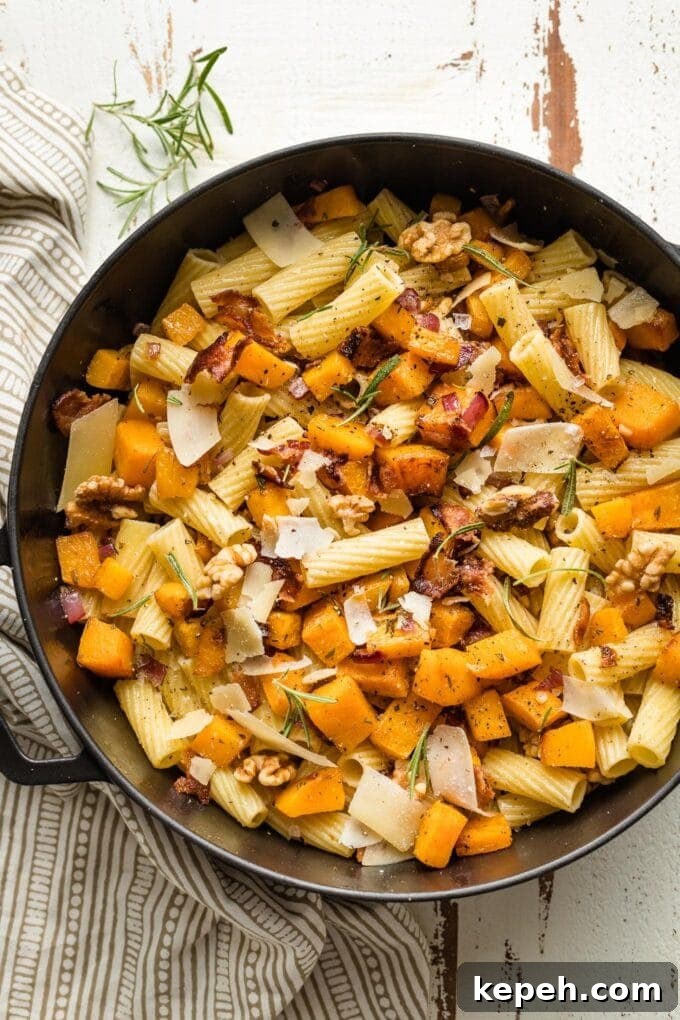
Butternut squash is practically synonymous with fall. Its sweet, creamy flesh pairs beautifully with savory ingredients, and roasting concentrates its natural sugars for a rich, caramelized bite. In this recipe, roasted cubes of squash combine with salty bacon, fragrant rosemary, crunchy walnuts, and sharp Parmesan to create a balanced, satisfying pasta.
Preparation is straightforward and mostly hands-off; roasting the squash takes about 20–25 minutes, and the whole meal comes together in roughly 40 minutes from start to finish. The result feels special without demanding a lot of time or effort.
Ingredients & Substitutions
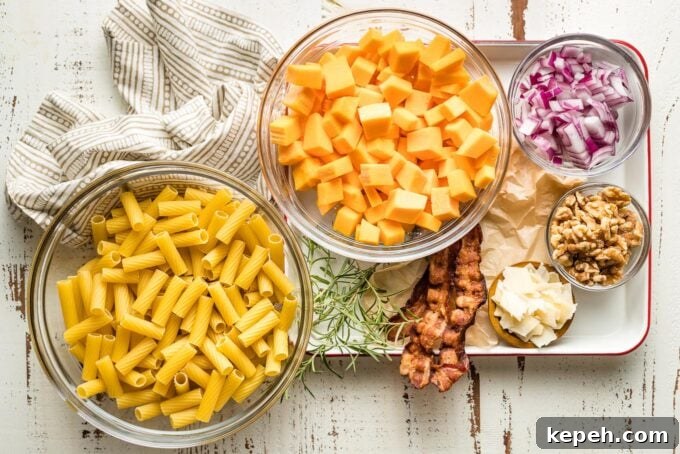
Below are notes on key ingredients and suggested swaps. Exact amounts are listed in the recipe card further down.
- Cubed butternut squash: One medium-large squash yields enough, or buy pre-peeled and cubed squash (aim for about 3–4 cups).
- Red onion: Shallot or sweet onion are good substitutes; any onion will work in a pinch.
- Pasta: Choose a sturdy shape like rigatoni, penne, ziti, farfalle, or fusilli. Whole wheat, chickpea, or other specialty pastas are fine, too.
- Rosemary: Fresh rosemary is ideal. If using dried, add some to the squash while roasting and save fresh sprigs for garnish if available.
- Walnuts: Provide a crunchy contrast; toast them for extra flavor.
- Bacon: Adds salty richness. For a vegetarian version, omit and add extra walnuts or crisped prosciutto as an alternative for meat-eaters.
- Parmesan: Shredded or shaved Parmesan finishes the dish with savory tang.
- Butter & olive oil: Used for toasting the walnuts and coating the pasta.
- Salt & pepper: Season to taste.
How to peel butternut squash
Although the skin is edible, this recipe uses the tender interior. To peel safely:
- Trim both ends of the squash to create flat surfaces.
- Stand it upright and peel downward with a vegetable peeler until all skin is removed.
- Proceed to seed and chop.
How to seed and cut butternut squash
- Stand the peeled squash upright and slice it lengthwise through the center.
- Spoon out seeds and the surrounding membrane (seeds can be cleaned and toasted separately).
- Lay the halves cut-side down and slice into short rectangles, then cut into roughly 1-inch cubes for even roasting.
If you prefer, buy pre-peeled, pre-cubed squash to save time and avoid handling irritation—some people develop a contact rash when cutting squash.
Good substitutes for butternut squash
Other winter squashes or sweet potato work well if you’d like a different flavor or texture.
How To Make Pasta with Cubed Butternut Squash
This overview covers the main steps; full details and precise measurements are available in the recipe card below.
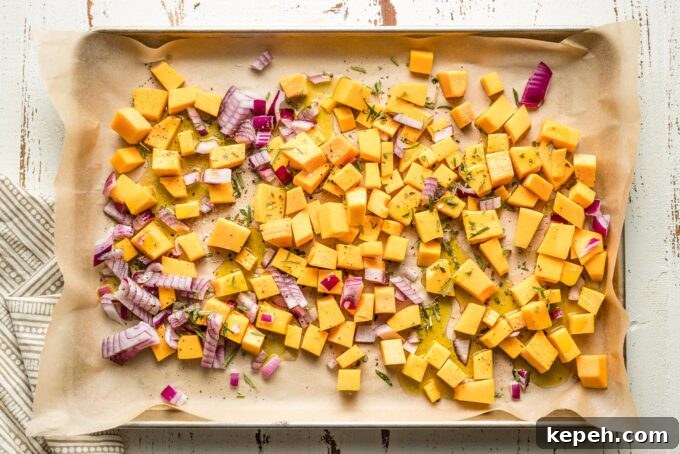
Roasting at high heat concentrates the squash’s sweetness. Toss cubed squash and chopped onion with olive oil, rosemary, salt, and pepper on a rimmed baking sheet, then roast at 425°F (220°C) for 20–25 minutes, tossing once, until edges are lightly browned and pieces are fork-tender.
While the squash roasts, bring a large pot of well-salted water to a boil and cook the pasta to al dente according to package directions. Drain and set aside, reserving a little pasta water if you want a looser finish.
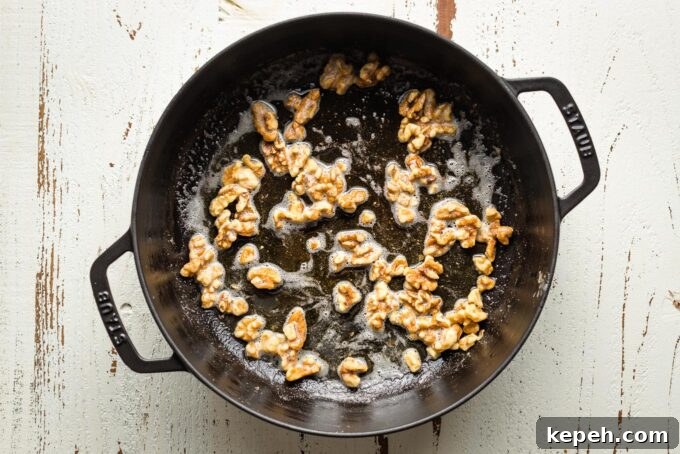
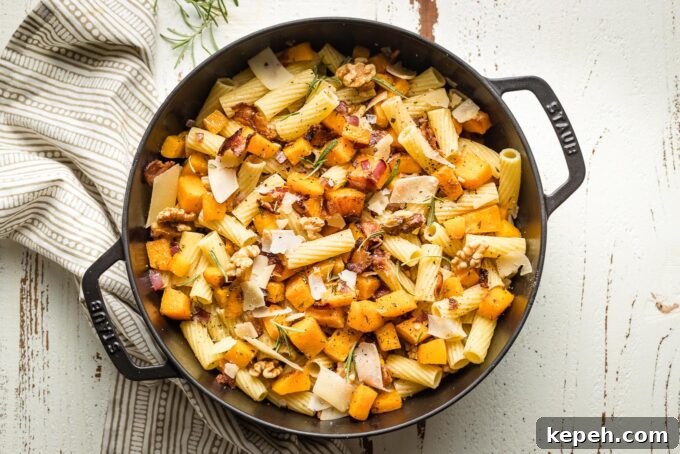
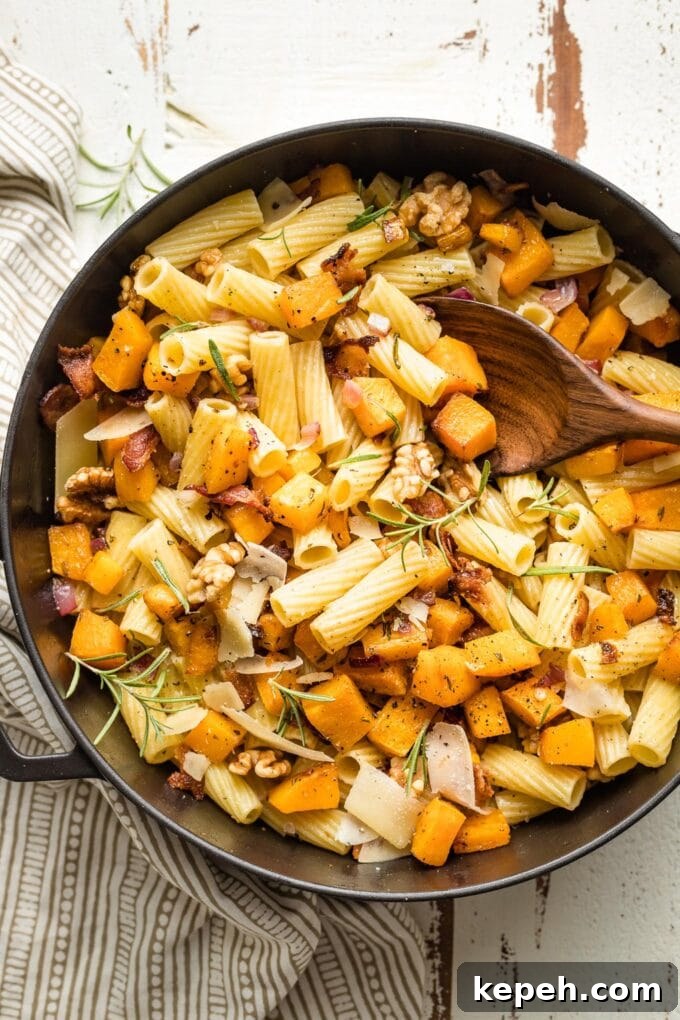
Cook the bacon and crumble it, then toast the walnuts in a large dry skillet over medium heat for 2–3 minutes until fragrant. Add butter and the remaining olive oil to the pan, then stir in the drained pasta, roasted squash, crumbled bacon, and Parmesan. Toss gently to combine, garnish with extra rosemary, and season with additional salt and pepper if needed.
Sauce and texture
This preparation produces a lightly coated pasta rather than a thick, blended sauce. If you prefer more sauce, reserve some pasta cooking water and add a few tablespoons back to the skillet after combining the pasta and squash until you reach the desired consistency.
Pro Tip
To create a silkier, saucier finish, stir in reserved pasta water a few tablespoons at a time until the sauce clings to the pasta.
Recipe FAQs & Tips
Can you overcook butternut squash?
Yes. Roasted cubes become mushy if left too long. Roast only until fork-tender and slightly browned at the edges—about 20–25 minutes at 425°F is typically ideal.
Can you eat the skin and seeds?
Both the skin and seeds of squash are edible, though this recipe uses peeled squash and reserved seeds can be cleaned and toasted separately for snacks or toppings.
Serving Suggestions
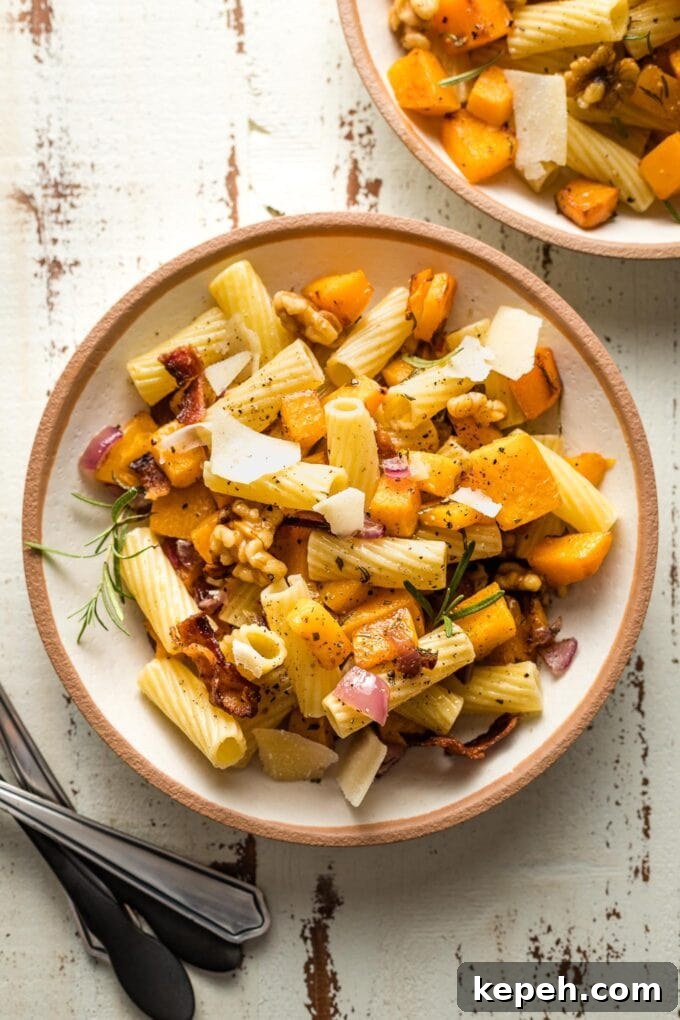
Serve in deep pasta bowls and top with extra walnuts, Parmesan, and rosemary. This pasta pairs nicely with simple salads like kale and blueberry or arugula with Parmesan, or with roasted green beans that can roast alongside the squash for convenience.
Variations
- Vegetarian: Omit bacon and use vegetarian Parmesan (or add extra walnuts).
- Vegan: Omit bacon and cheese, use olive oil instead of butter, and sprinkle nutritional yeast if desired.
- Gluten-free: Use your preferred gluten-free pasta.
Storage & Reheating
This pasta stores well for lunches or leftovers.
- Storage: Refrigerate in an airtight container for up to 5 days. Store walnuts at room temperature and consider keeping bacon separate to preserve texture.
- Reheating: Reheat gently in a saucepan over medium heat with a splash of broth or water, or warm in the microwave.
Related Recipes
If you enjoy this dish, similar seasonal recipes include roasted butternut squash soup, pumpkin ravioli with sage and brown butter, and a sage-scented butternut squash frittata.

Roasted Butternut Squash Pasta
Ingredients
- 3-4 cups cubed butternut squash from 1 medium-large squash
- 1/2 red onion chopped
- 2 Tablespoons olive oil divided
- 1 Tablespoon chopped fresh rosemary or 2 teaspoons dried
- kosher salt and black pepper
- 8 ounces pasta
- 1/4 cup chopped walnuts
- 3 Tablespoons butter
- 2 pieces cooked bacon crumbled
- 1/2 cup shredded or shaved Parmesan
Instructions
-
Preheat oven to 425°F and line a large rimmed baking sheet with parchment or a silicone mat.
-
Combine squash and onion on the baking sheet. Drizzle with 1 tablespoon olive oil, add rosemary, 1/2 teaspoon salt, and several grinds of black pepper. Toss to coat and roast 20–25 minutes, tossing once, until tender and starting to brown at the edges.
-
When the squash is halfway through roasting, bring a large pot of well-salted water to a boil and cook the pasta to al dente. Drain, reserving some pasta water if desired.
-
Cook and crumble the bacon.
-
In a large skillet over medium heat, toast the walnuts 2–3 minutes, stirring frequently. Add butter and the remaining 1 tablespoon olive oil and melt.
-
Stir in the drained pasta, roasted squash, crumbled bacon, and Parmesan. Toss gently to combine, adding reserved pasta water a few tablespoons at a time if you prefer a looser sauce. Garnish with extra rosemary and season to taste.
Notes
- Squash: Cut into roughly 1″ cubes so pieces roast evenly.
- Onion: Swap shallots or white/yellow onion for a different flavor profile.
- Sauce: This version is lightly sauced; reserve pasta water to loosen the dish if desired.
Nutrition Estimate
This post was originally published in October 2020 and has been updated with additional tips, FAQs, and variations.