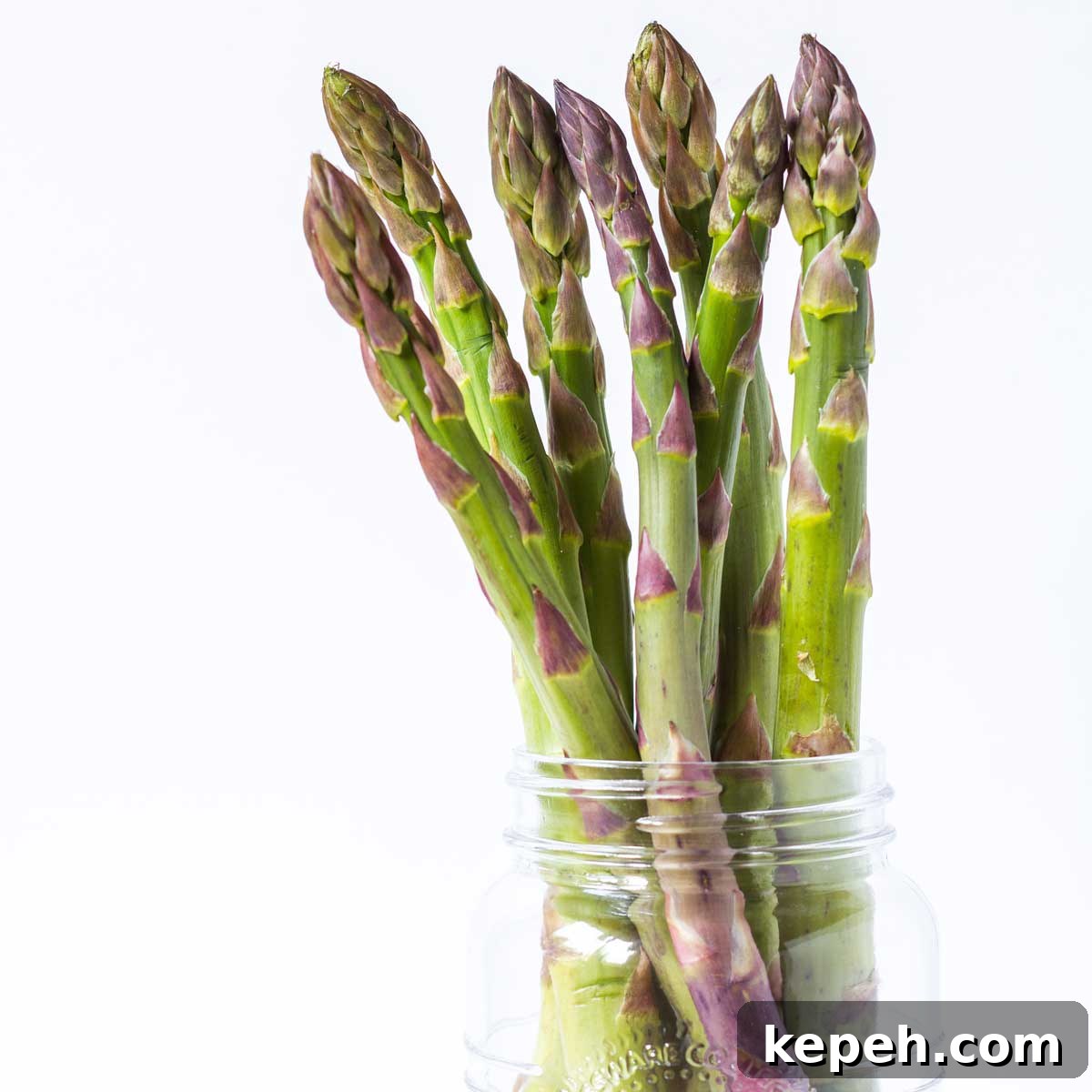
Learn how to store asparagus so it stays fresh longer and doesn’t dry out. Whether you find asparagus at the peak of season or buy it in winter, these simple storage methods will help preserve flavor and texture. You’ll also find straightforward tips for storing cooked asparagus and freezing it the right way.
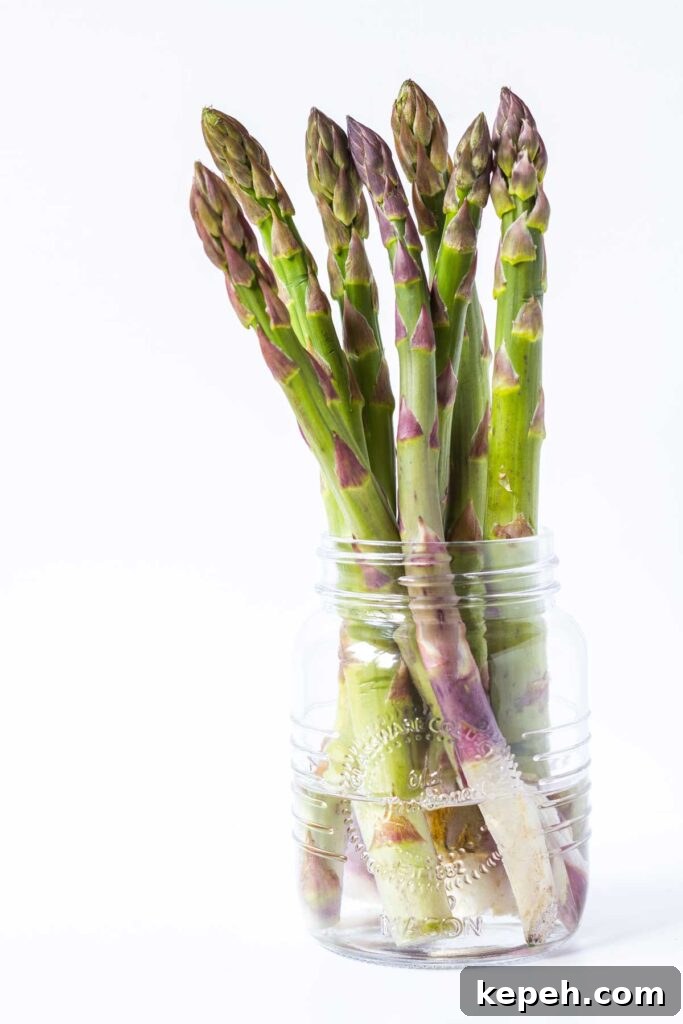
✔️ The Best Way To Store Asparagus
Asparagus season is relatively short (typically February to June), but fresh asparagus is widely available year-round at many grocery stores. You can find thick or thin spears in green, white, and even purple varieties any time of year.
Proper storage preserves flavor and texture. Follow the methods below to extend freshness and avoid limp or dried-out stalks, plus tips to help you choose the best bunch when shopping.
🔎 How To Shop For Fresh Asparagus
At the store, asparagus is often bundled and displayed with the cut ends resting in a shallow bin of cold water. When selecting a bunch, look for:
-
Straight, firm, crisp spears.
-
Smooth, vibrant green stems without brown or black spots.
-
Tightly closed tips that are bright green or slightly violet.
-
No mushy tips or unpleasant, acrid odors.
-
Bottoms that aren’t overly dry or split.
-
Thickness doesn’t determine flavor or quality—thin and thick spears can be equally fresh and tasty.
🔎 How Long Do Asparagus Last?
Fresh asparagus typically lasts 3–5 days, but with proper storage it can keep up to a week. Below are two reliable methods—one for short-term storage and one for longer storage.
🔎 How To Store Fresh Asparagus
Use one of these two simple methods depending on when you plan to use the asparagus.
✔️ Short Term Storage: 1 – 2 Days
If you’ll use the asparagus within 48 hours, store it this way:
-
Remove the rubber band holding the bunch together.
-
Wrap the stalks loosely in damp paper towels so they can breathe.
-
Place them in a breathable plastic bag (leave the bag slightly open) and store in the refrigerator crisper drawer.
✔️ Long Term Storage: 5 – up to 7 Days
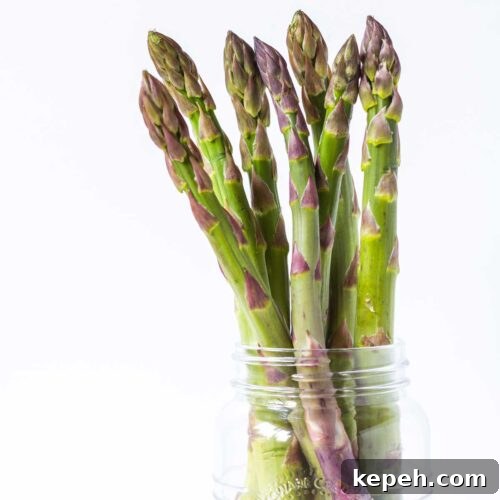
To keep asparagus fresh for up to a week, treat it like a bouquet of flowers:
-
Rinse under cold water and trim about 1 inch from the woody ends. Pat dry with a clean cloth or paper towel. Fill a glass jar or mason jar with about 1 inch of cold water.
-
Stand the asparagus upright in the jar with the cut ends submerged.
-
Loosely cover the tops with plastic wrap or a clean plastic bag to slow evaporation.
-
Refrigerate and change the water whenever it becomes cloudy.
🔎 How To Store Cooked Asparagus?
Keep cooked asparagus in a shallow airtight container or a resealable plastic bag in the refrigerator for 3–4 days.
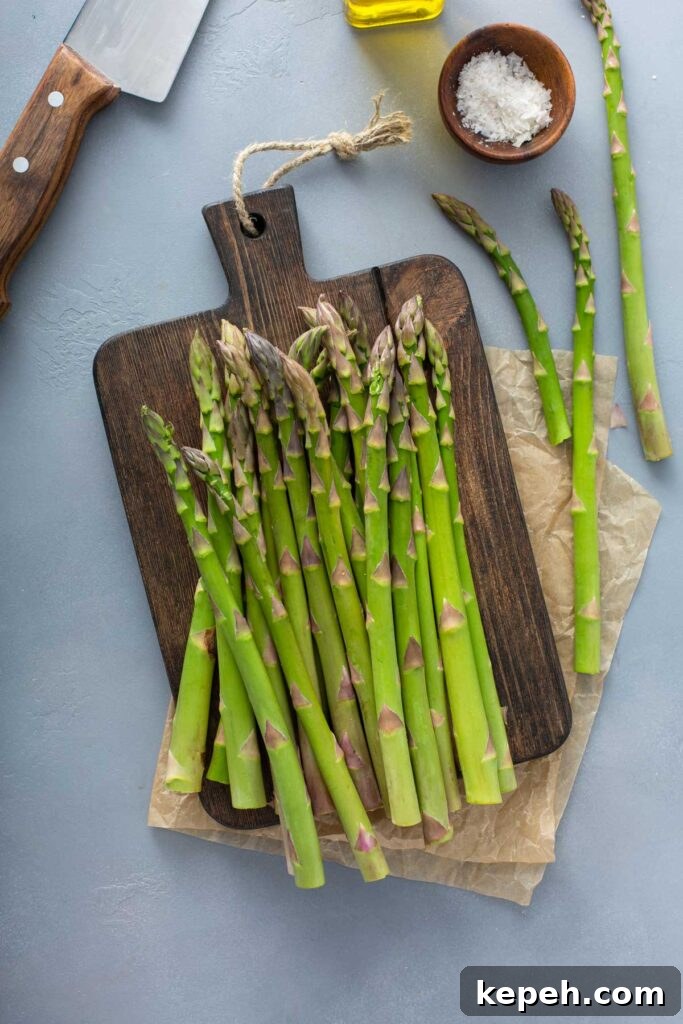
🔎 How Can You Tell If Raw Asparagus Are Bad?
Asparagus that are slimy, mushy, or have darkened to a deep green are past their prime and should be discarded.
🔎 How to Freeze Asparagus
Freezing is the best option to preserve asparagus beyond a week. Follow these steps to maintain texture and color:
-
Trim: Rinse under cold water and trim about 1 inch from the woody ends.
-
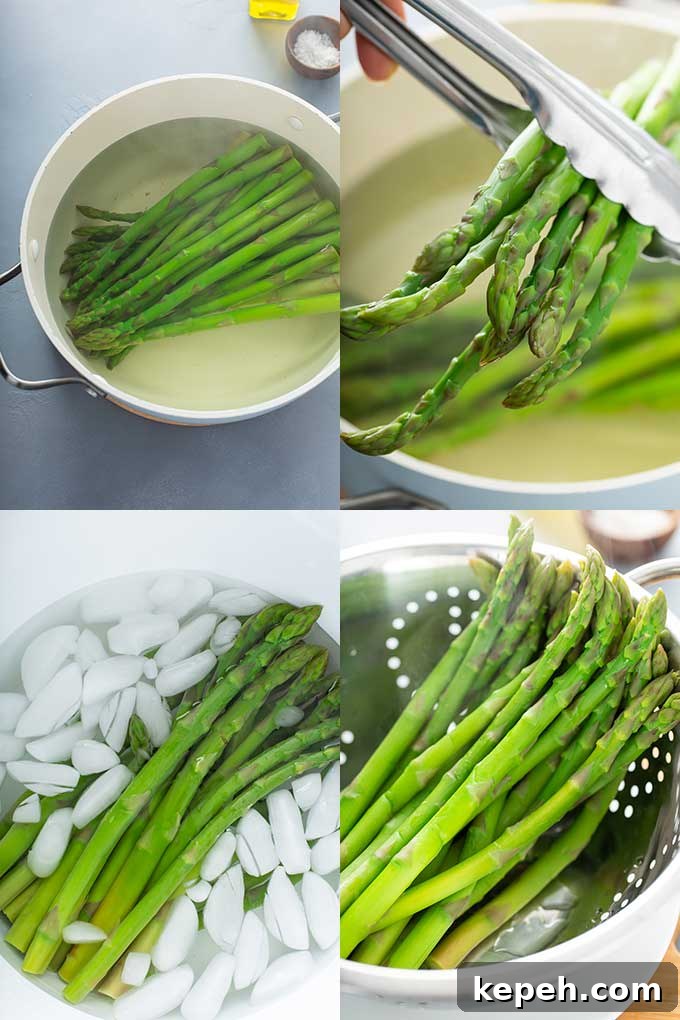
Blanch: Bring a pot of water to a boil and prepare an ice bath. Boil asparagus 2–4 minutes depending on thickness, then immediately transfer to the ice bath to stop cooking. Blanching preserves texture and color.
-
Flash Freeze: Pat spears dry, place them in a single layer on a sheet pan lined with parchment or paper towels, and freeze until solid (about 2 hours).
-
Store: Transfer frozen spears to a freezer-safe bag or airtight container, label, and store up to a year.
Take A Look At These Asparagus Recipes
-
Grilled Asparagus with Lemon Garlic Butter
-
How To Cook Asparagus
-
Pasta with Asparagus in Lemon Cream Sauce
-
Crispy Oven Roasted Asparagus
How To Store Asparagus
 Kathy McDaniel
Pin
Ingredients
- 1 pound asparagus
- 1 glass jar or cup
- water
- small bag to cover the asparagus
Instructions
-
Rinse the asparagus under cold running water. Trim the woody ends about one inch from the bottom of each stalk. Pat dry with a clean dishcloth or paper towels.
-
Fill a jar or cup with about one inch of cold water.
-
Stand the asparagus in the jar with cut ends in the water, upright like flowers.
-
Loosely cover the tops with a plastic bag or wrap to reduce evaporation.
-
Place the jar in the fridge and replace the water when it becomes cloudy.